Nepal’s political landscape shifts as Sushila Karki takes charge amidst calls for reform. Nepal’s President Ramchandra Paudel dissolved parliament on Friday, September 12, 2025, announcing elections for March 5, 2026, following the appointment of Sushila Karki named interim PM after deadly anti-graft protests. This historic move marks Karki as Nepal’s first woman prime minister, tasked with leading the nation to stability.
Why It Matters
The appointment of Sushila Karki and the upcoming March 2026 elections in Nepal signal a critical juncture for the Himalayan nation, addressing deep-seated issues of corruption and governance that have sparked widespread unrest. This development resonates across South Asia, where youth-led movements are increasingly challenging entrenched political systems.
Sushila Karki’s Historic Appointment as Interim PM
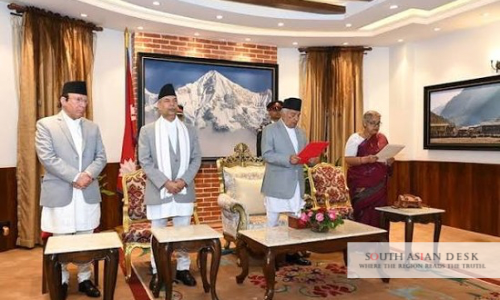
On Friday, September 12, 2025, at 7:00 PM, President Ramchandra Paudel administered the oath of office to Sushila Karki at Sheetal Niwas, Kathmandu, making her Nepal’s first female prime minister. Karki, a former Chief Justice known for her anti-corruption stance, was chosen after intense negotiations involving Paudel, army chief Ashok Raj Sigdel, and protest leaders. Her appointment follows the resignation of Prime Minister KP Sharma Oli on Tuesday, September 9, 2025, prompted by violent protests that left at least 51 dead and 1,300 injured.
According to the President’s office, “The House of Representatives was dissolved, and elections are fixed for Thursday, March 5, 2026.” Karki’s interim government is mandated to organise these elections within six months, a task critical to restoring political stability.
Anti-Graft Protests Spark Change
The protests, led primarily by Nepal’s Gen Z, erupted on Monday, September 8, 2025, initially in response to a government ban on major social media platforms, including Facebook, YouTube, X, and Instagram. The ban was enacted for failing to register with authorities despite a Supreme Court order. The demonstrations quickly escalated into a broader anti-corruption movement, targeting Nepal’s political elite for nepotism and lavish lifestyles in one of the world’s poorest nations.
By Tuesday, September 9, 2025, protesters stormed parliament, setting it ablaze, and attacked luxury hotels and residences. The violence, described as Nepal’s worst in decades, resulted in 51 deaths and over 1,300 injuries, with 14,307 prisoners reportedly escaping from various prisons. The Nepal Army took control of Kathmandu on Tuesday night, initiating dialogues with protest leaders, including Kathmandu Mayor Balen Shah, to form an interim government.
Sushila Karki: A Symbol of Integrity
Sushila Karki, aged 73, brings a formidable reputation to her new role. As Nepal’s first female Chief Justice from July 2016 to 2017, she gained acclaim for her uncompromising stand against corruption. Notably, in 2012, she oversaw the conviction of then-Information Technology Minister Jay Prakash Gupta, marking the first time a sitting minister was jailed for graft in Nepal. However, her tenure as Chief Justice was not without controversy; in 2017, a parliamentary coalition attempted to impeach her, alleging bias in a police chief appointment dispute.
Anil Kumar Sinha, a former Supreme Court justice, “She is a credible choice to lead the interim government.” Karki’s selection was backed by a majority of over 5,000 Gen Z representatives in an online poll, reflecting her widespread support among Nepal’s youth.
Regional Implications for March 2026 Elections Nepal Details
Nepal’s political crisis and the upcoming March 2026 elections have drawn regional attention. Indian Prime Minister Narendra Modi congratulated Karki on Saturday, September 13, 2025, at 10:58 AM, stating on X, “India is fully committed to the peace, progress, and prosperity of Nepal’s brothers and sisters.” India’s support underscores the importance of stability in Nepal, a nation strategically located between India and China.
Nepal’s economic challenges, including a lack of jobs driving millions to seek work abroad, amplify the stakes for the March 2026 elections. The interim government’s ability to address these issues will shape South Asia’s perception of youth-driven political reform.
Challenges Ahead for Interim Government
Karki’s interim government faces significant hurdles. The Gen Z protesters, while united in their anti-corruption demands, remain a leaderless network lacking governance experience. Divisions emerged over leadership, with Dharan Mayor Harka Sampang being floated as an alternative to Karki. On September 12, 2025, Sushila Karki, former Chief Justice, was appointed interim Prime Minister and parliament was dissolved. Elections are now scheduled for March 5, 2026. Details on the interim constitution, cabinet appointments, and electoral preparations are still being worked out and have not been fully released.
Path to March 2026 Elections
The dissolution of parliament and the setting of the March 5, 2026, election date mark a step towards normalcy. By Friday, September 12, 2025, Kathmandu saw shops reopening and police replacing guns with batons, indicating a de-escalation of tensions. The interim government must now ensure free and fair elections while addressing public discontent over corruption and economic instability.
What’s Next
Sushila Karki’s interim government will focus on organising the March 2026 elections in Nepal, a critical test of the nation’s democratic resilience. Her leadership, rooted in a legacy of integrity, offers hope for reform, but the path to stability remains fraught with challenges.
Published in SouthAsianDesk, September 13th, 2025
Follow SouthAsianDesk on X, Instagram, and Facebook for insights on business and current affairs from across South Asia.