Kathmandu, Wednesday, December 17, 2025 – Nepal inflation rate fell to 1.11 percent year-on-year in mid-November, Nepal Rastra Bank reported. This marks a steep drop from 5.60 percent in the same period last year.
The sharp decline in Nepal low inflation stems mainly from stagnating domestic demand. Outmigration for foreign employment continues to rise. Many households shift spending abroad or to essentials.
Food and beverage prices fell 3.32 percent. This drove much of the overall Nepal inflation 2025 slowdown. Non-food and services inflation rose modestly to 3.69 percent.
Nepal Low Inflation: Category Breakdown
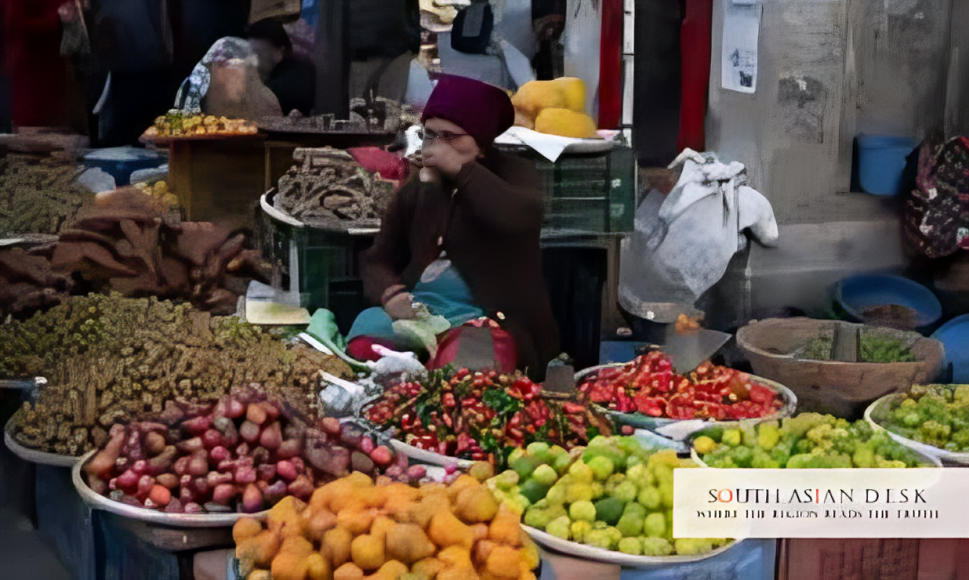
Vegetables prices plunged 14.43 percent. Spices dropped 7.85 percent. Pulses and legumes declined 5.36 percent.
These falls offset rises elsewhere. Ghee and oil prices increased 5.25 percent. Non-alcoholic drinks rose 3.61 percent. Milk products and eggs gained 1.97 percent. In non-food categories, education costs jumped 7.56 percent. Clothes and footwear rose 6.29 percent. Furnishing and household equipment advanced 4.55 percent.
Wholesale price inflation stood at 2.65 percent. This indicates stable supply chains despite border disruptions.
Regional Variations in Nepal Inflation Rate
Inflation varied across provinces. Koshi Province recorded the highest rate at 1.80 percent. Sudurpashchim Province had the lowest at 0.26 percent.
Rural areas saw inflation at 0.66 percent. Urban centres registered 1.26 percent. Kathmandu Valley stood at 1.16 percent. These differences reflect uneven demand patterns. Remote regions face sharper Nepal economy slowdown effects.
Drivers of Nepal Economy Slowdown
Nara Bahadur Thapa, former Nepal Rastra Bank executive director, attributed Nepal low inflation to multiple factors. Global economic uncertainty dampens commodity prices. Trade policy shifts reduce demand worldwide.
India maintains stable prices. Nepal’s currency peg to the Indian rupee transmits this stability. India’s consumer inflation reached 0.71 percent in November. Domestic factors dominate. Outmigration rises steadily. Families move to India or overseas for work. This reduces local spending.
Supply remains stable. But demand falls historically low. This creates the current Nepal inflation 2025 environment. Border disruptions affect some imports from China. Goods remain stuck since August. This raises costs in clothing and footwear.
Supporting Indicators Mask Nepal Economy Slowdown
Remittances surged 31.4 percent to Rs 687.13 billion in the first four months. This bolsters the external sector. Foreign exchange reserves reached USD 21.52 billion. This covers 17.4 months of imports.
Exports grew 77.5 percent. Imports rose 18.7 percent. Balance of payments recorded a Rs 318.40 billion surplus. These strengths provide buffers. Yet they highlight reliance on remittances amid weak domestic activity.
Background on Nepal Inflation Trends
Nepal inflation rate began easing in late 2023. It fell from higher levels amid post-pandemic recovery. The current 1.11 percent marks the lowest since mid-2003-04. Then rates hovered around 1.8 percent.
Average inflation for the first four months of fiscal 2025/26 stands at 1.53 percent. This compares to 4.59 percent last year. South Asian neighbours influence Nepal’s prices. The fixed exchange rate links outcomes closely to India.
What’s Next for Nepal Inflation 2025
Economists express concern over prolonged Nepal economy slowdown. Growth remains sluggish over recent years.
Policy measures to stimulate demand stay limited. Political instability reduces investor and consumer confidence. Low Nepal inflation rate offers purchasing power relief. But risks of deflation emerge if demand weakens further. Policymakers monitor developments. Strong reserves allow room for potential interventions.
The trajectory of Nepal inflation rate in coming months will signal recovery strength or deeper challenges.
Published in SouthAsianDesk, December 17th, 2025
Follow SouthAsianDesk on X, Instagram, and Facebook for insights on business and current affairs from across South Asia.