Kathmandu: Nepal interim government faces a major legal battle as 11 petitions challenge its formation and the dissolution of parliament, filed in the Supreme Court following deadly protests that toppled the previous administration led by KP Sharma Oli. The Nepal interim government legal battle highlights regional concerns over democratic stability, potentially influencing neighbouring South Asian nations like India and Bhutan through economic ties and migration flows.
Background of Nepal Interim Government
Protests erupted on 8 September 2025 in Nepal over a social media ban, economic woes and corruption. They escalated into violence, killing at least 73 people and damaging parliament and government buildings. The unrest forced the collapse of Oli’s government.
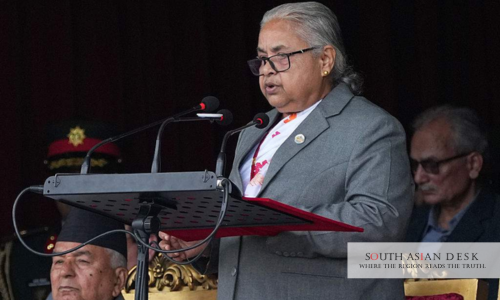
On 12 September 2025, former Chief Justice Sushila Karki was appointed interim prime minister on the recommendation of Gen Z protest representatives. She took oath that day. Acting on her advice, President Ramchandra Paudel dissolved the House of Representatives and set elections for 5 March 2026.
This move sparked immediate backlash. A day later, leaders of eight political parties issued a joint statement criticising the dissolution and urging reinstatement of parliament. The parties included Nepali Congress, CPN-UML, CPN (Maoist Centre), CPN (Unified Socialist), Janata Samajbadi Party, Loktantrik Samajbadi Party, Rastriya Swatantra Party and Rastriya Janamorcha.
Sushila Karki Premiership Challenge
The Sushila Karki premiership challenge centres on claims that her appointment violates Nepal’s constitution. Petitioners argue the interim setup lacks legal basis, as the charter does not envision such a crisis response.
Former chief election commissioner Neel Kantha Uprety stated: “Everything about this process is unconstitutional.” His view echoes concerns from legal experts that the rushed formation bypassed established procedures.
Karki, 73, served as Nepal’s first female chief justice from 2016 to 2017. Her nomination aimed to steer the country towards stability post-uprising. Yet critics say it undermines elected institutions.
The Nepal interim government legal battle gained momentum when the Supreme Court resumed operations on 14 October 2025 after fire damage from protests. Petitions were registered that day.
Nepal Parliament Dissolution Petitions
The Nepal parliament dissolution petitions form the core of the legal action. Eleven writs claim the lower house dissolution is invalid, demanding its restoration.
Supreme Court assistant spokesperson Nirajan Pandey confirmed: “Eleven petitions have been filed stating that the formation of the new interim government and the dissolution of the lower house is unconstitutional.” Procedures to register the petitions are complete. Hearings will follow soon. Lawyer Dinesh Tripathi noted: “It was not envisioned in the constitution that such a situation would arise. It is a challenge, but the court will decide.”
Former prime minister KP Sharma Oli, 73, addressed supporters earlier in October 2025. He demanded reinstatement of the “unconstitutionally dissolved” parliament. Oli, ousted amid the chaos, has led four governments previously. The petitions seek interim orders to halt government functions until resolution. Experts predict a prolonged court process, given the constitutional ambiguities.
Data from the Election Commission shows the dissolved house had 275 members, elected in 2022. Reinstatement could restore them midway through their five-year term. The Nepal interim government legal battle also raises questions on electoral preparedness. The commission has begun preparations for 5 March 2026 polls, but funding remains uncertain.
Regional Implications
Nepal’s turmoil affects South Asia. As a landlocked nation between India and China, instability could disrupt trade routes. Annual remittances from Nepali workers abroad exceed USD 10 billion, vital for the economy. The Sushila Karki premiership challenge tests judicial independence in a region prone to political upheavals. Similar crises in Bangladesh and Sri Lanka show how youth-led movements can reshape governance.
Human rights groups have called for accountability over protest deaths. Amnesty International urged investigations into police actions during the violence.
What’s Next
The Supreme Court will schedule hearings on the Nepal parliament dissolution petitions soon. Outcomes could either validate the interim setup or trigger further chaos. If petitions succeed, parliament might reconvene, delaying elections. Failure could solidify Karki’s role until polls. President Paudel’s office has not commented further on the challenges. The interim cabinet meets regularly to address economic recovery. As the Nepal interim government legal battle unfolds, observers watch for impacts on democratic norms in South Asia.
Published in SouthAsianDesk, October 16th, 2025
Follow SouthAsianDesk on X, Instagram, and Facebook for insights on business and current affairs from across South Asia.