Nepal’s interim leader signals a new era of reform by naming anti-corruption figures to critical posts, but can they heal the wounds of deadly youth unrest? Are new ministers that much capable?
On Monday, September 15, 2025, Nepal’s Prime Minister Sushila Karki appointed three ministers to her interim cabinet in Kathmandu, following deadly Gen Z protests that claimed 72 lives; the move aims to address corruption and stabilise the nation until March elections.
Why It Matters
The appointment of Nepal ministers in 2025 comes at a pivotal moment for South Asia, where youth-led demands for governance reform echo across borders from India to Bangladesh. This interim setup could foster regional stability by curbing Nepal’s political volatility, which has long strained cross-border trade and migration flows. A successful anti-corruption drive might inspire similar movements, bolstering democratic resilience in the Himalayas.
Nepal Ministers Appointed 2025: A Response to Turmoil
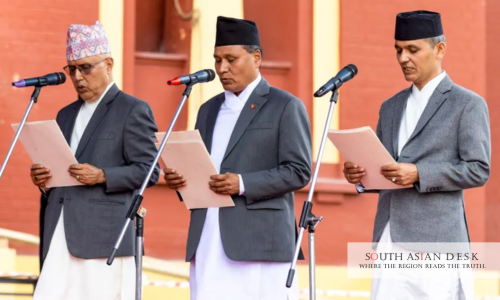
Prime Minister Sushila Karki’s decision to appoint Nepal ministers in 2025 marks her first major action since assuming office as the country’s first female leader. The ceremony, held outside the fire-damaged presidential office in Kathmandu, underscored the fragility of the transition. President Ram Chandra Paudel administered the oaths at 6:15 PM, in a televised event broadcast nationwide.
The appointees, Om Prakash Aryal as Home Minister, Rameshwar Prasad Khanal as Finance Minister, and Kulman Ghising as Energy Minister, bring reputations as reformists. Aryal, a legal advisor, is tasked with restoring law and order amid the recent chaos. Khanal, known for advocating economic overhauls, will oversee fiscal policies in a nation grappling with poverty. Ghising, credited with resolving chronic power shortages, steps in to tackle energy woes exacerbated by unrest.
“This is according to the thinking of the Gen Z generation,” Prime Minister Karki stated, echoing the youth activists’ calls for transparency. Her words highlight how the Nepal PM Karki after protests era is reshaping governance, with young voices influencing cabinet choices.
Details of the Appointments
The expansion of the interim cabinet followed Karki’s late Friday assumption of power on September 12, 2025, after predecessor KP Sharma Oli’s resignation amid escalating violence. Official records confirm the trio’s swearing-in, with the first cabinet meeting immediately addressing protest fallout, including aid for victims.
Nepal ministers appointed 2025 in this manner prioritise anti-graft measures, as Khanal recently proposed sweeping reforms to boost investor confidence. Ghising’s inclusion addresses immediate infrastructure needs, while Aryal’s role focuses on investigations into the clashes. These selections align with demands from the Gen Z movement, which began over a brief social media blackout but ballooned into widespread fury over systemic issues.
Nepal PM Karki After Protests: From Streets to Statehouse
The backdrop to these Nepal ministers appointed 2025 is the harrowing Gen Z protests that gripped Nepal from September 8, 2025. What started as outrage over a short-lived internet restriction in Kathmandu quickly morphed into nationwide demonstrations against corruption and inequality. Protesters torched public buildings, including Parliament, leading to clashes with security forces.
By Sunday, September 14, 2025, the Health Ministry reported 72 deaths and over 2,113 injuries, with many young demonstrators among the casualties. According to the Ministry of Health and Population, the toll climbed steadily from initial figures of 19 on September 8. A 19-year-old protester, Subash Dhakal, recovering in Kathmandu’s Civil Service Hospital, captured the sentiment: “This pain is ephemeral, but this will definitely bring about some changes.”
Prime Minister Karki, elevated by the crisis, has pledged to honour these sacrifices. “What this group is demanding is the end of corruption, good governance and economic equality,” she affirmed in her inaugural address. The Nepal PM Karki after protests narrative thus frames her leadership as a bridge between fury and reform, with the new ministers embodying that shift.
The Gen Z Spark
Youth frustration, amplified by social media before the ban, exposed deep-seated grievances. Nepal’s economy, burdened by debt and uneven growth, saw unemployment rates among under-25s hit 19 per cent last year. The protests, while deadly, forced political realignment, toppling Oli’s government and installing Karki’s interim administration for a six-month mandate.
Background
Nepal’s political landscape has been turbulent, with frequent cabinet reshuffles undermining development. The Gen Z uprising draws parallels to 2006’s pro-democracy movement but leverages digital tools for mobilisation. Official data from the Nepal Police indicate over 1,000 arrests during the unrest, though many were released post-resignation.
Karki’s ascent, backed by a coalition of independents and activists, breaks from traditional party dominance. Her cabinet’s lean structure, initially just three ministers signals efficiency, but critics question its capacity to deliver on promises without broader representation.
What’s Next for Nepal Ministers Appointed 2025
As the interim government settles, focus shifts to economic recovery and election preparations. The cabinet plans audits of public funds and energy grid repairs, with international partners like India pledging support. Yet, sustaining youth trust will test the Nepal PM Karki after protests resolve.
In conclusion, the Nepal ministers appointed 2025 represent a fragile hope for renewal, potentially steering the nation towards equitable growth if reforms take root.
Published in SouthAsianDesk, September 16th, 2025
Follow SouthAsianDesk on X, Instagram, and Facebook for insights on business and current affairs from across South Asia.