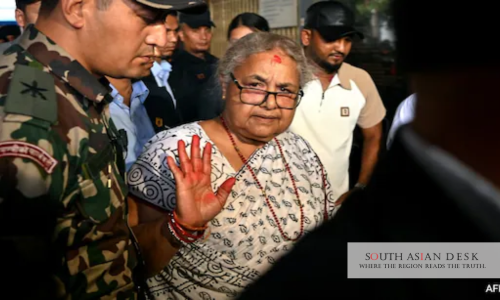
KATHMANDU: Nepal’s interim Prime Minister Sushila Karki, a 73-year-old former chief justice, on Monday, September 15, 2025, vowed to implement the core demands of the Nepal protest 2025, focusing on anti-corruption push and promoting good governance, following violent clashes in Kathmandu that claimed 72 lives and injured 191 others last week.
The Nepal protest 2025 underscore deepening youth disillusionment in South Asia’s fragile democracies, potentially destabilising regional trade routes and migration patterns from landlocked Nepal to neighbours like India and China. With unemployment ravaging a fifth of Nepal’s 15-24 age group and GDP per capita at $1,447, such upheavals risk spilling over borders, exacerbating economic pressures in an interconnected subcontinent.
Nepal Protest 2025: From Social Media Ban to Nationwide Fury
The Nepal protest 2025 erupted last week, triggered by a government-imposed ban on social media platforms amid longstanding grievances over economic inequality and systemic corruption. Centred in Kathmandu, demonstrators—largely from the “Gen Z” generation—targeted key sites including Singha Durbar, the administrative hub, where several buildings were torched during two days of intense clashes ending around Friday, September 12, 2025.
Protesters demanded an end to corruption, enhanced governance, and equitable economic opportunities, reflecting broader frustrations in a nation of 30 million where youth unemployment stands at 20 per cent. The unrest marked the most severe turmoil since the abolition of Nepal’s monarchy in 2008 and the conclusion of a decade-long civil war. Over 12,500 inmates escaped from prisons during the chaos, posing acute security risks as authorities scramble to recapture them.
According to Chief Secretary Eaknarayan Aryal, the death toll rose to 72 by Monday, September 15, 2025, up from an initial count of 51, with injuries numbering 191. Soldiers, initially deployed in large contingents, have since scaled back street presence to de-escalate tensions.
Sushila Karki Vow Nepal: Pledging Alignment with Youth Aspirations
Appointed as interim prime minister on Friday, September 12, 2025, following negotiations involving army chief General Ashok Raj Sigdel and President Ram Chandra Paudel, Sushila Karki assumed office amid the political vacuum left by the protests. In her first public address on Sunday, September 14, 2025, she explicitly aligned her administration with the protesters’ calls.
Sushila Karki stated: “We have to work according to the thinking of the Gen Z generation.” She elaborated on the movement’s objectives, noting: “What this group is seeking is the end of corruption, good governance and economic equality.” Karki, who described her elevation as an unsolicited “street” nomination, committed to a limited tenure, affirming: “We will not stay here more than six months in any situation, we will complete our responsibilities and pledge to hand over to the next parliament and ministers.”
Her Sushila Karki vow Nepal extends to judicial impartiality, drawing on her background as a former chief justice known for independence. On Monday, September 15, 2025, she observed a minute’s silence for the victims before convening meetings at the scarred Singha Durbar complex. President Paudel hailed the transition as “a peaceful solution… through a difficult process,” underscoring the fragility of the arrangement.
Government Actions Amid Escalating Challenges
The interim government’s initial moves include dissolving parliament on President Paudel’s recommendation late Friday, September 12, 2025, paving the way for elections on March 5, 2026. Karki has termed the violence during the Nepal protest 2025 as “criminal acts,” vowing accountability for perpetrators while prioritising restorative measures.
Regional powers have extended support: India, China, and even the Dalai Lama congratulated Karki, with the latter wishing her success in “fulfilling the hopes and aspirations of Nepalese people.” However, opposition from eight political parties has labelled the lower house dissolution “unconstitutional,” signalling potential friction in the coming months.
Economic data from the World Bank highlights the urgency: Nepal’s per capita GDP of $1,447 lags behind South Asian averages, fuelling the very inequalities that ignited the Nepal protest 2025. Authorities face the dual task of quelling dissent and addressing the escaped prisoners, with rights groups urging voluntary returns to avoid further escalation.
Background
Nepal’s tussle with corruption predates the Nepal protest 2025, embedded in a post-2008 federal republic plagued by political instability and cronyism. The social media ban, imposed to curb misinformation, instead amplified youth outrage, echoing similar digital-age mobilisations across South Asia. Karki’s appointment, endorsed by protesting youth via an online poll, represents a rare grassroots influence on leadership, though her non-partisan stance may test alliances in a polarised landscape.
What’s Next for Nepal Protest 2025 Legacy
As Sushila Karki’s vow Nepal takes shape through anti-corruption drives and governance overhauls, the interim regime eyes stability until the March 2026 polls. Yet, with unresolved prisoner hunts and economic scars from the Nepal protest 2025, her six-month window demands rapid, tangible progress to rebuild trust among a restless Gen Z cohort.
In the shadow of Kathmandu’s smouldering symbols, the Nepal protest 2025 may yet redefine governance, if Karki’s commitments translate into enduring reforms.
Published in SouthAsianDesk, September 15th, 2025
Follow SouthAsianDesk on X, Instagram, and Facebook for insights on business and current affairs from across South Asia.