Nepal protest death toll from Nepal’s anti-corruption protests has surged, raising questions about the nation’s path to stability after violent clashes.
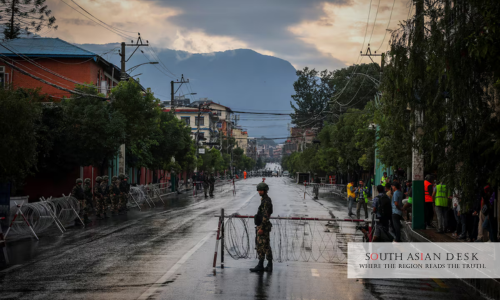
On Sunday, September 14, 2025, in Kathmandu, the Nepal protest death toll reached 72 as search teams recovered bodies from buildings damaged in anti-corruption demonstrations, which forced Prime Minister KP Sharma Oli to resign, according to the Health Ministry.
The escalating Nepal protest death toll underscores the severity of the country’s political crisis, reflecting broader South Asian struggles with governance, corruption, and youth-led demands for accountability, potentially influencing regional stability.
Nepal Protest Death Toll Climbs
The Nepal protest death toll has risen sharply, with Nepal’s Health Ministry reporting 72 fatalities and 2,113 injuries on Sunday, September 14, 2025, at 11:49 AM. Health Ministry spokesperson Prakash Budathoki stated: “Bodies of many people who died in shopping malls, houses, and other buildings that were set on fire or attacked are now being discovered.” The protests, led by young Nepalis targeting corruption, began on Monday, September 8, 2025, and escalated after security forces used tear gas and rubber bullets to disperse crowds attempting to storm parliament.
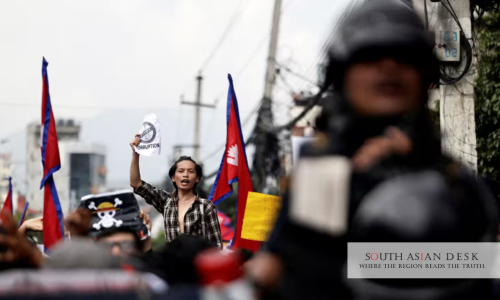
The unrest, described as Nepal’s worst in decades, saw protesters torch government buildings, including the Supreme Court, parliament, and politicians’ homes, as well as private businesses. The violence was initially triggered by a government ban on 26 social media platforms, including WhatsApp and Instagram, on September 4, 2025, which was lifted after 19 deaths on the first day of protests. According to the Home Ministry, the social media ban aimed to curb misinformation but inflamed public anger over perceived censorship and corruption.
Families of victims have demanded justice, with Sumitra Mahat, sister of 21-year-old Umesh Mahat, who died in the protests, stating: “My brother should be declared a martyr as he died for the country, and the government should give compensation to my parents.” Nepal’s government has announced NPR 1 million in compensation for families of those killed and free treatment for the injured.
Political Fallout and Interim Leadership
The Nepal protest death toll contributed to the resignation of Prime Minister KP Sharma Oli on Tuesday, September 9, 2025, following intense pressure from demonstrators. The protests, led by the “Gen Z” movement and organised by Hami Nepal, reflected frustration over corruption, unemployment, and economic inequality. Sushila Karki, Nepal’s first female chief justice, was sworn in as interim prime minister on September 12, 2025, by President Ramchandra Paudel to lead until elections on likely March 5, 2026.
The Nepal protest death toll has galvanised calls for systemic reform. President Paudel’s office announced the dissolution of parliament and scheduled elections, stating: “The House of Representatives has been dissolved to facilitate a solution to the crisis.” Protesters, including activists like Sudan Gurung, have pushed for new leaders untainted by corruption, with negotiations ongoing to form an interim cabinet.
Background
Nepal has faced political instability since abolishing its monarchy in 2008, with 14 governments in as many years. The Nepal protest death toll highlights longstanding grievances over corruption and economic stagnation, which have driven millions of young Nepalis to seek work abroad. The recent protests, amplified by social media, mark a shift toward youth-driven activism, distinct in their scale and digital organisation.
What’s Next
As the Nepal protest death toll continues to rise, the interim government faces the challenge of restoring order and addressing demands for justice and reform. Reconstruction of damaged infrastructure, including government buildings, is underway, while the focus remains on holding fair elections and curbing corruption to prevent further Nepal protests.
Published in SouthAsianDesk, September 14th, 2025
Follow SouthAsianDesk on X, Instagram, and Facebook for insights on business and current affairs from across South Asia.