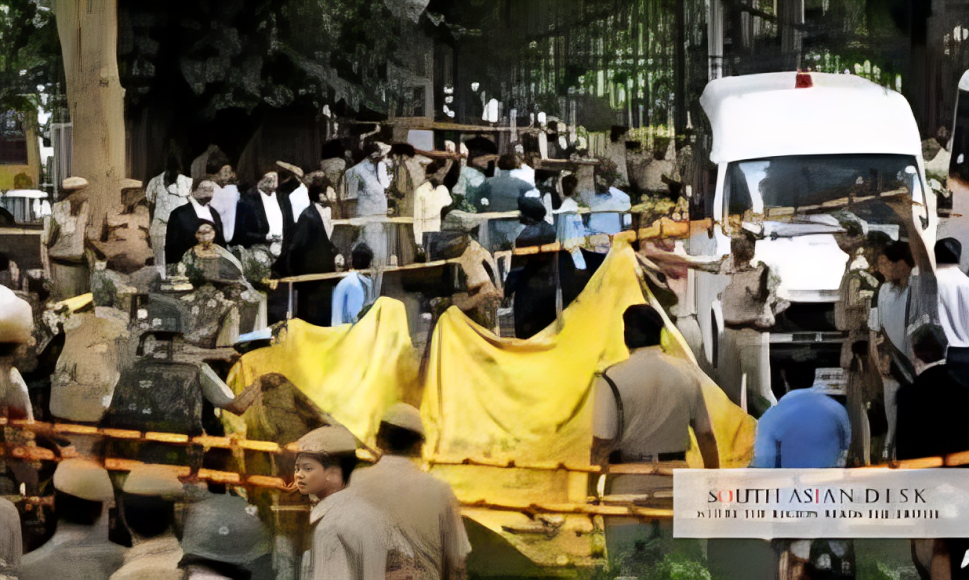
The New Delhi Red Fort blast struck at 6:52pm on Monday, November 10, 2025, when a slow-moving car exploded at a red light near Gate No. 1 of the Lal Quila metro station, killing nine people and injuring 20 others in a crowded heritage zone.
Delhi Car Explosion Casualties Mount Amid Chaos
Emergency responders raced to the scene as flames engulfed three to four vehicles and an autorickshaw. Delhi Fire Department dispatched seven tenders within minutes. Ambulances ferried the wounded to Lok Nayak Hospital, where doctors treated burns and shrapnel injuries.
Delhi Police Commissioner Satish Golcha detailed the sequence. “A slow-moving vehicle stopped at the red light. An explosion happened in that vehicle, and due to the explosion, nearby vehicles were also damaged,” he said. All agencies, including the Forensic Science Laboratory and National Investigation Agency, converged on the site.
Casualties included pedestrians and drivers in the congested old Delhi quarter. Sources confirmed nine deaths, with 20 injured, many in critical condition. Families gathered outside the hospital, demanding updates on missing relatives.
Red Fort Terror Attack Probe Invokes Anti-Terror Laws
Investigators classified the New Delhi Red Fort blast as a potential terror incident. Delhi Police registered a First Information Report under the Unlawful Activities (Prevention) Act and Explosives Act. A post-blast team from the National Security Guard arrived to collect explosive traces.
Union Home Minister Amit Shah visited the site and hospital. “We are exploring all possibilities and will conduct a thorough investigation, taking all possibilities into account. All options will be investigated immediately, and we will present the results to the public,” Shah stated.
Prime Minister Narendra Modi expressed grief on X. “Condolences to those who have lost their loved ones in the blast in Delhi earlier this evening. May the injured recover at the earliest,” he posted.
The probe focuses on the vehicle’s contents. Preliminary reports suggest improvised explosives, though officials withhold details. No group claimed responsibility by Tuesday morning.
India High Alert Post Delhi Blast Sweeps Major Cities
The New Delhi Red Fort blast triggered immediate security upgrades. India’s central police force placed Uttar Pradesh, Mumbai, and Indira Gandhi International Airport on high alert. Patrols intensified at tourist sites and transport hubs.
Delhi Police cordoned off the area, pushing back crowds. Special Cell teams scoured for clues. Forensic experts examined wreckage, including a Hyundai i20 model linked to the blast.
This response echoes past threats in the capital. Authorities bolstered checks at metro stations and markets. “The situation is being monitored,” Golcha added, noting coordination with intelligence agencies.
Ripple Effects Across South Asia
The New Delhi Red Fort blast underscores vulnerabilities in urban India, a hub for South Asian diplomacy and trade. As the world’s most populous democracy grapples with potential terror links, it raises alarms for neighbours like Pakistan and Bangladesh. Heightened alerts could strain cross-border ties, while economic disruptions from tourism dips affect regional stability. Investors watch closely, fearing broader unrest in a zone prone to militancy.
Immediate Aftermath and Witness Accounts
Chaos erupted seconds after the 6:52pm detonation. Videos captured billowing smoke and twisted metal on the narrow street. A witness, e-rickshaw driver near the site, described a “sudden boom” that hurled debris 50 metres.
Fire chief Atul Garg reported six vehicles and three autorickshaws ablaze. Responders contained the blaze in 45 minutes, averting wider spread in the dense neighbourhood.
At Lok Nayak Hospital, triage teams prioritised severe cases. One relative, Nazish Malik, sought news of his brother-in-law, an e-rickshaw operator missing post-blast. “His phone turned up at a police post, but security blocks access to casualty lists,” Malik said.
Independent observers noted the Red Fort’s exposure. The 17th-century Mughal fortress draws millions yearly, yet its metro-adjacent location invites risks. “This shatters the capital’s calm,” said journalist Amit Baruah.
Historical Context of Red Fort Vulnerabilities
The Red Fort, a UNESCO site, symbolises India’s independence. Yet it has faced threats before. In 2000, militants stormed the complex during Republic Day rehearsals, killing three. Post-26/11 Mumbai attacks, security ramped up nationwide.
This New Delhi Red Fort blast revives memories of those episodes. Urban blasts, like the 2008 Delhi serial bombings that claimed 30 lives, highlight persistent challenges. Experts link such incidents to cross-border networks, though no evidence surfaces here yet.
Government data from the Ministry of Home Affairs shows 150 terror incidents in 2024, down from prior years. Still, Delhi’s 30 million residents demand vigilance. The current probe draws on lessons from past cases, including digital surveillance and informant networks.
Delhi Car Explosion Casualties: Official Toll and Aid
By 10pm on November 10, officials tallied nine fatalities. Compensation pledges followed swiftly. The Delhi government announced INR 10 lakh (about USD 11,900) per deceased family and INR 2 lakh for the injured.
Home Minister Shah coordinated with Intelligence Bureau Director. “Teams from the NSG, NIA, and forensic department were rushed to the spot,” a ministry release confirmed. Continuous updates flow to the Prime Minister’s Office.
Political leaders united in condemnation. Opposition figures urged transparency, while ruling party allies backed the UAPA invocation. This bipartisan stance aids the multi-agency effort.
Security Enhancements Nationwide
India’s high alert post Delhi blast extends beyond the capital. Mumbai Police mirrored Delhi’s measures, screening vehicles at key chokepoints. Uttar Pradesh deployed additional forces along borders.
Aviation security at Indira Gandhi International Airport introduced random checks. “No specific threat, but prudence dictates action,” a Central Industrial Security Force spokesperson said.
Tourism operators near Red Fort halted operations Tuesday. The site remains closed, impacting local vendors. Economists estimate daily losses at INR 5 crore (USD 600,000) for the heritage zone.
Challenges in Urban Counter-Terrorism
Probing the Red Fort terror attack exposes gaps in detection. The vehicle’s path evaded checkpoints, raising questions on surveillance. Delhi’s 1,500 CCTV cameras in Old Delhi captured footage, now under analysis.
Experts call for AI-driven monitoring, but privacy concerns linger. Past blasts, like the 2011 Delhi High Court attack killing 11, prompted reforms. Yet implementation lags in crowded areas.
International allies offered support. The US embassy in New Delhi extended condolences, pledging intelligence sharing if needed.
What’s Next: Unfolding Investigation
As dawn broke on November 11, 2025, forensics sifted residues for explosive signatures. NIA leads the charge, with arrests possible soon. Officials promise updates within 48 hours. The New Delhi Red Fort blast tests India’s resolve. A swift resolution could restore confidence; delays might fuel speculation. Families await closure, while the nation braces for answers. In the shadow of this historic bastion, vigilance defines the path forward.
Published in SouthAsianDesk, November 11th, 2025
Follow SouthAsianDesk on X, Instagram, and Facebook for insights on business and current affairs from across South Asia.