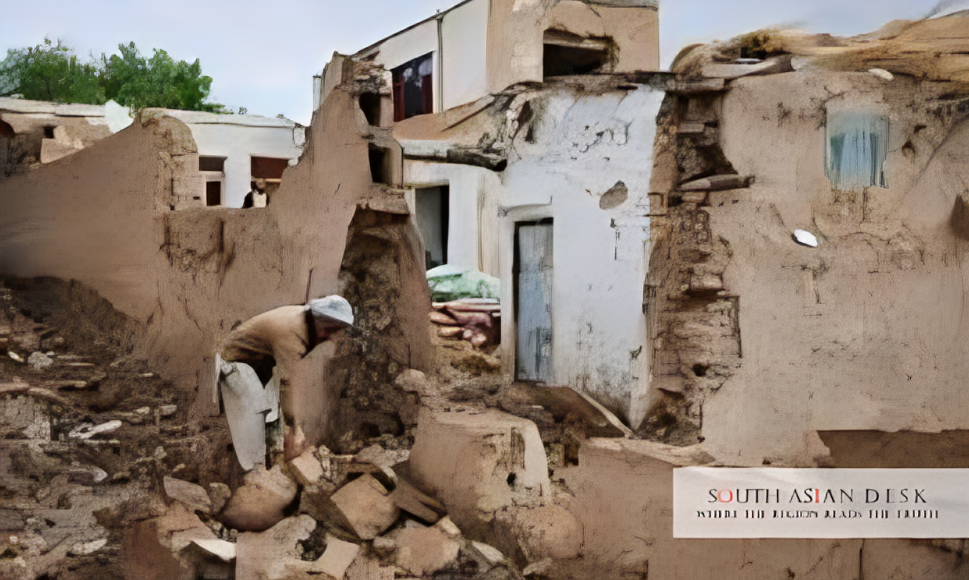
A 6.3-magnitude earthquake struck northern Afghanistan on Tuesday, November 4, killing at least 158 people and injuring over 300 in provinces including Baghlan and Takhar. The tremor, centred near Pul-e-Khumri, affected thousands, with the Taliban government declaring a state of emergency. Rescue operations continue as aftershocks hinder efforts.
The Northern Afghanistan earthquake November underscores the region’s vulnerability to seismic activity, which is compounded by decades of conflict and underdevelopment. In South Asia, the event amplifies cross-border concerns, straining resources in neighbouring Pakistan and India while highlighting the need for coordinated regional disaster response mechanisms. With Afghanistan’s aid-dependent economy already reeling from floods and droughts, the quake risks deepening food insecurity and displacement, potentially spilling over into refugee flows across the Durand Line.
Afghanistan Earthquake Death Toll Climbs Amid Rescue Challenges
The Afghanistan earthquake death toll stood at 158 as of Wednesday morning, according to the Afghan Ministry of Public Health. Officials reported 312 injuries, with many victims trapped under collapsed mud-brick homes. In Baghlan province alone, 92 deaths occurred, while Takhar saw 45 fatalities.
The epicentre lay 15 km southwest of Pul-e-Khumri, at a shallow depth of 10 km, intensifying surface damage. Landslides blocked key roads, isolating remote villages and complicating access for emergency teams. The United Nations Office for the Coordination of Humanitarian Affairs (OCHA) estimated that 50,000 people require immediate assistance, including shelter and medical supplies.
Zabihullah Mujahid, spokesperson for the Taliban administration, stated in an official release: “Our teams are working around the clock to reach every affected family. The Islamic Emirate calls on all brothers and sisters to unite in this trial.” This marks the deadliest seismic event in northern Afghanistan since the 2022 magnitude 6.2 quake that killed 10.
Data from the Afghan Red Crescent Society indicates that 1,200 homes were destroyed, displacing 8,000 residents. Hospitals in Mazar-i-Sharif overflowed with casualties suffering fractures and crush injuries. Power outages persisted into Wednesday, hampering communication and water pumping.
Relief Efforts in Northern Afghanistan Quake Gain Momentum
Relief efforts in northern Afghanistan after the quake mobilised swiftly, with local volunteers distributing tents and blankets from pre-positioned stocks. The World Health Organisation deployed mobile clinics to treat trauma cases, focusing on preventing secondary infections in unsanitary conditions.
OCHA’s situation report, released hours after the tremor, detailed initial assessments: “The Northern Afghanistan earthquake in November has exacerbated existing vulnerabilities, with 70% of affected households lacking access to clean water.” The agency allocated USD 5 million from its emergency fund for the first 72 hours.
International partners pledged support. The European Union committed EUR 2 million for emergency kits, while Turkey sent 20 tons of medical aid via airlift. Within Afghanistan, the Taliban coordinated with provincial governors to establish 15 temporary camps in Baghlan.
Challenges persist. Fuel shortages delayed helicopter deployments, and poor mobile coverage isolated 20 villages. Engineers assessed bridges over the Kunduz River, which are at risk of collapse due to aftershocks measuring up to 4.8 magnitude.
Pakistan Aid to Afghanistan Earthquake Bolsters Regional Ties
Pakistan’s aid to the Afghanistan earthquake emerged as a cornerstone of the response, reflecting the longstanding neighbourly bonds between the two countries despite political tensions. On Wednesday, Islamabad announced PKR 500 million in immediate humanitarian assistance, including food rations for 10,000 families.
Foreign Minister Ishaq Dar announced the package during a press briefing: “Pakistan stands with the brotherly people of Afghanistan in this hour of need. Our border agencies are facilitating unhindered aid transit.” The aid includes 5,000 tents, blankets, and hygiene kits, transported via the Torkham crossing.
This gesture builds on prior collaborations, such as Pakistan’s 2023 flood relief to Afghanistan. The Pakistan Red Crescent dispatched convoys from Peshawar, which reached Baghlan by midday on Wednesday. Bilateral talks in Kabul focused on opening additional routes for heavy machinery.
The move carries geopolitical weight in South Asia. With over 1.3 million Afghan refugees in Pakistan, the Northern Afghanistan earthquake in November could prompt renewed migration pressures. Analysts note it fosters goodwill, potentially easing visa restrictions for medical evacuations.
Indian officials monitored the situation, offering technical expertise in seismic monitoring through the Indian Technical and Economic Cooperation programme. However, direct aid remained pending, amid frosty ties with the Taliban.
Background: Seismic History in Northern Afghanistan
Northern Afghanistan lies along the Hindu Kush fault line, a tectonically active zone where the Indian and Eurasian plates converge. Historical records log over 200 quakes with a magnitude of five or greater since 1900, with the 1998 Takhar event claiming 4,700 lives.
Post-2021, Taliban rule has limited foreign investment in resilient infrastructure, leaving rural areas reliant on adobe structures prone to collapse. Climate change intensifies risks, as heavier monsoons weaken soil stability.
The 2023 Herat quakes, killing 1,500, exposed aid delivery gaps under sanctions. Lessons learned from that disaster informed current protocols, including the use of drones for damage assessment.
OCHA data shows Afghanistan averages 1,000 natural disaster-related deaths annually, with earthquakes contributing 40%. International donors, through the Afghanistan Humanitarian Response Plan, fund 60% of resilience projects; however, funding gaps reached 50% in 2025.
What’s Next: Sustaining Recovery Post-Northern Afghanistan Earthquake November
Recovery from the November earthquake in Northern Afghanistan demands long-term commitments. The Taliban plans a reconstruction conference in Doha next month, seeking USD 100 million for rebuilding.
OCHA urges pre-winter stockpiling, as snow could isolate northern districts by December. Engineers will retrofit 500 schools and clinics with earthquake-resistant designs, funded by grants from the Asian Development Bank.
Regional forums, including the South Asian Association for Regional Cooperation, may convene virtual sessions on disaster risk reduction. Pakistan’s role could expand to joint early-warning systems, enhancing cross-border preparedness.
As aftershocks subside, focus shifts to psychosocial support for orphans and widows, numbering over 200. The international community watches closely, striking a balance between aid and diplomatic engagement.
In conclusion, the November earthquake in Northern Afghanistan serves as a stark reminder of the shared perils facing South Asia, urging unified action to mitigate future tragedies.
Published in SouthAsianDesk, November 5th, 2025
Follow SouthAsianDesk on X, Instagram, and Facebook for insights on business and current affairs from across South Asia.