Dhaka, Monday, August 25, 2025, 4:35 PM – Norwegian ambassador on Bangladesh elections, Håkon Arald Gulbrandsen, called for a mature political culture to ensure credible polls, speaking at a key seminar and in recent engagements with local leaders.
This push comes as Bangladesh navigates its interim government’s reforms ahead of the February 2026 parliamentary vote. Gulbrandsen’s remarks highlight Norway’s support for transparent processes, amid regional calls for stability.
Why This Matters in South Asia
Bangladesh’s electoral success shapes South Asia’s democratic landscape. A fair vote could bolster economic ties and counter instability, benefiting neighbours like India and Pakistan through enhanced trade and security cooperation. Norway Bangladesh political culture exchanges offer a blueprint for reconciliation in a volatile region.
Ambassador’s Vision for Healthy Political Culture
Håkon Arald Gulbrandsen, Norwegian ambassador to Bangladesh, opened a seminar on democratic transition with stark observations. Hosted by Dhaka Tribune and backed by the Norwegian embassy, the event gathered experts to dissect Bangladesh’s path forward.
“In Norway, candidates maintain friendly relations during election campaigns because politics is not personal – it is public service,” Gulbrandsen stated. He linked this to Bangladesh’s potential: “Bangladesh holds immense potential, and a healthy political culture will always expand the country’s opportunities.”
The seminar, held at a Gulshan hotel in Dhaka, featured panellists like Dr Rounaq Jahan from the Centre for Policy Dialogue and Barrister Shishir Manir of Bangladesh Jamaat-e-Islami. Discussions centred on avoiding past pitfalls of confrontation and corruption. Gulbrandsen praised the interim government’s reform commissions, noting several recommendations already implemented.
Norway Bangladesh political culture ties trace back to diplomatic support for free polls. Gulbrandsen’s input underscores Oslo’s role in fostering dialogue, with the embassy funding such initiatives since 2022.
Håkon Arald Gulbrandsen Jamaat Meeting Sparks Dialogue
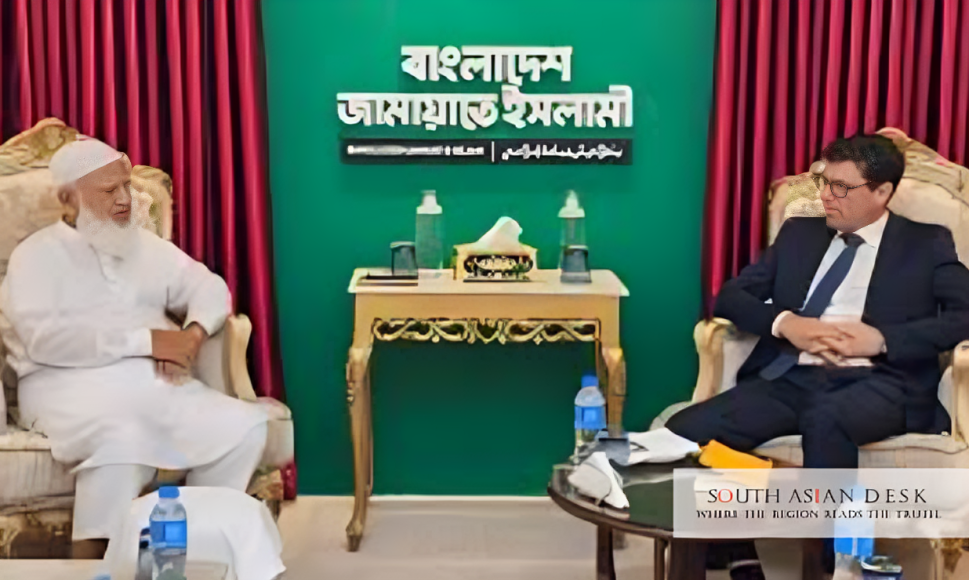
In a separate courtesy call, Håkon Arald Gulbrandsen Jamaat meeting took place on October 15, 2025, at Jamaat-e-Islami’s Dhaka office. The Norwegian ambassador on Bangladesh elections met Ameer Dr Shafiqur Rahman, joined by party officials including Secretary General Mia Golam Parwar and Foreign Affairs Advisor Professor Dr Mahmudul Hasan.
The encounter focused on bilateral ties and democratic hurdles. Gulbrandsen enquired about Rahman’s health post-recovery, wishing swift wellness. Talks delved into the upcoming national elections, stressing transparency and international aid.
Dr Rahman advocated for “a free, fair and credible election to advance the democratic process in Bangladesh.” He sought technical assistance for election management. Both sides explored economic cooperation in trade, investment and education.
This Håkon Arald Gulbrandsen Jamaat meeting reflects Norway’s outreach to diverse stakeholders. It aligns with prior engagements, like 2022 discussions with BNP leaders, to build consensus ahead of polls.
Electoral Transparency in Focus
Norway Bangladesh political culture exchanges emphasise credible voting. Gulbrandsen, in the meeting, reaffirmed Oslo’s commitment to peaceful processes. Rahman highlighted human rights and institutional independence as pillars for sustainable democracy.
Such interactions counter narratives of exclusion, vital as Bangladesh’s Election Commission prepares voter lists for 2026. Official data shows over 120 million eligible voters, with reforms targeting digital verification to curb fraud.
Insights from Norway’s Democratic Playbook
Gulbrandsen’s September 2025 op-ed in Dhaka Tribune elaborated on the Norwegian ambassador on Bangladesh elections stance. Titled “Democracy: It’s not the destination but the journey,” it contrasts models while offering pointers.
Norway’s system, rooted in the 1814 constitution, features proportional representation since 1921. Elections occur every two years, with civil campaigns free of intimidation. “Representatives of political parties with very different views are often friends,” he wrote, calling political culture the “software of democracy.”
For Bangladesh, he urged participation and dialogue: “Free, fair, and inclusive elections are the cornerstone of any democracy… May the coming months in Bangladesh be marked by participation, dialogue, and a renewed commitment to democratic values.”
The piece timed with Norway’s September 8 parliamentary vote, mirroring Bangladesh’s February 2026 timeline. It cites 169 Storting seats from 19 constituencies, with gender-balanced lists standard.
Bangladesh data from the interim government reveals 15 reform commissions active, implementing measures like judicial tweaks. Yet, Gulbrandsen warns: without cultural shifts, authoritarian echoes persist.
Background: Norway-Bangladesh Ties
Norway has backed Bangladesh since 1971 independence, channelling aid via Norad for governance. Embassy records show over USD 100 million (EUR 92 million) in recent development funds, focusing on elections and rights.
Past seminars, like the 2022 Dhaka Tribune event on fair polls, set precedents. Gulbrandsen’s X post on that occasion noted: “Free and fair elections are vital for democracy.”
The current wave builds on this, with the embassy partnering media for discourse.
What’s Next for Reforms
As February 2026 nears, the Election Commission targets full biometric registration by December 2025. International observers, including from Norway, eye participation rates above 80 per cent.
Gulbrandsen’s engagements signal sustained support, but local buy-in remains key.
The Norwegian ambassador on Bangladesh elections continues to champion a respectful arena, where polls reflect true will and politics serves all.
Published in SouthAsianDesk, November 4th, 2025
Follow SouthAsianDesk on X, Instagram, and Facebook for insights on business and current affairs from across South Asia.