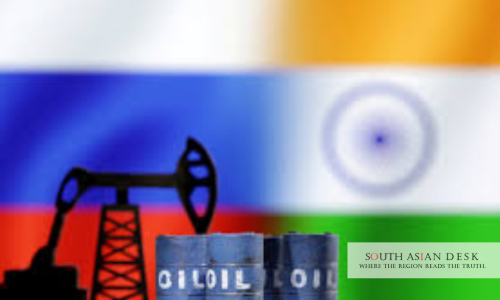
Indian Oil Corporation bought five cargoes of Russian crude from non-sanctioned Russian suppliers for December delivery. The move follows US sanctions on major Russian oil firms. Traders confirmed the purchases. This step highlights India’s efforts to maintain oil supplies while adhering to international rules.
IOC Russian Crude Purchases Resume Amid Sanctions
Indian Oil Corporation, India’s largest refiner, has purchased 3.5 million barrels of ESPO crude. The oil arrives at an eastern Indian port in December. Traders say the price matches Dubai quotes. This marks a resumption of buys after a brief pause.
The company acted despite fresh US sanctions on Rosneft and Lukoil. These firms supply much of Russia’s oil exports. Washington imposed the curbs last week to pressure Moscow over Ukraine. The sanctions target entities and shipping lines linked to Russia.
IOC head of finance Anuj Jain stated the firm will buy Russian oil if it complies with sanctions. “Russian crude is not sanctioned. It is the entities and the shipping lines that have come under sanctions,” Jain said on an investor call. “Today, if somebody comes to me with a non-sanctioned entity, and the cap is being complied with, and the shipping is okay, then I will continue to buy it.” He added, “We are absolutely not going to discontinue as long as we are complying with the sanctions.”
This approach allows Indian Oil buys oil from non-sanctioned companies to continue. It avoids risks from secondary sanctions. Earlier, IOC cancelled seven or eight cargoes. Those came from subsidiaries of sanctioned entities.
India Refiners Russian Oil Sanctions Compliance in October
Other Indian refiners paused Russian oil imports after the sanctions. Mangalore Refinery and Petrochemicals Ltd stopped buys to dodge risks. HPCL-Mittal Energy Ltd also halted purchases. Reliance Industries, with a big refining complex, said it will follow Western rules.
IOC Chairman Arvinder Singh Sahney affirmed compliance. “We will abide by all sanctions imposed by the international community,” Sahney told media. He linked this to the firm’s strong quarterly profits. IOC reported a net profit of INR 7,610 crore for July-September 2025.
The Petroleum and Natural Gas Minister Hardeep Singh Puri eased concerns. He noted global oil supplies suffice for India’s needs. India imported 1.75 million barrels per day of Russian crude from January to September 2025. This made Russia the top supplier.
Russian oil filled 21 per cent of IOC’s crude needs in April-September. Sanctions forced a rethink. Chennai Petroleum Corporation Ltd, an IOC unit, cut Russian imports by half this month.
Impact on Supply Chains
US sanctions require winding down Rosneft and Lukoil deals by November 21, 2025. These firms handled over two-thirds of India’s Russian oil. Indian banks and refiners fear secondary penalties. Exposure to US markets adds caution.
Rosneft once supplied much ESPO crude to IOC. Now, non-sanctioned suppliers step in. China’s demand for ESPO fell after its refiners suspended buys. This dropped prices, aiding Indian deals.
India’s total crude imports stay steady. The nation processes 5.5 million barrels daily across refineries. Russian discounts cut costs by 20-30 per cent versus Middle East oil. This saved billions in 2024-2025.
Why This Matters for South Asia
Indian Oil buys oil non-sanctioned companies ensures energy security for 1.4 billion people. South Asia relies on India for refined products. Stable supplies curb fuel price hikes. Disruptions could raise petrol and diesel costs by 10-15 per cent.
The story ties into regional geopolitics. Pakistan and Bangladesh import Indian petroleum. Russian oil flows lowered import bills across the subcontinent. Sanctions compliance tests India’s ties with the West and Russia.
New Delhi prioritises affordable energy. It boosted strategic reserves to 5.3 million tonnes. This buffers shocks. Yet, prolonged curbs might push reliance on OPEC, raising costs.
Background
India ramped up Russian oil buys post-2022 Ukraine invasion. Volumes hit record 2 million barrels per day in 2024. Discounts averaged USD 10-15 per barrel. This offset global price surges.
US waived some sanctions earlier. But October 2025 measures target key exporters. EU bans hit Rosneft transactions too. India seeks exemptions, citing energy needs.
IOC expanded capacity to 80 million tonnes yearly. Paradip refinery processes heavy Russian grades well.
What’s Next in Non-Sanctioned Russian Suppliers
Refiners await banking clarity on payments. Non-sanctioned channels may sustain 1 million barrels daily from Russia. IOC plans more buys if compliant.
Long-term, India eyes US LNG and Australian coal. Diversification cuts risks. Indian Oil buys oil non-sanctioned companies could set a model for balanced diplomacy.
Published in SouthAsianDesk, October 31st, 2025
Follow SouthAsianDesk on X, Instagram, and Facebook for insights on business and current affairs from across South Asia.