India pioneers satellite connectivity for disaster response as Cyclone Ditwah floods devastate neighbour. The Indian Army has deployed satellite-based internet for the first time in a humanitarian mission to restore communications in Cyclone Ditwah-hit areas of Sri Lanka under Operation Sagar Bandhu.
Cyclone Ditwah struck Sri Lanka on 28 November 2025. It triggered severe flooding and landslides across all 25 districts. The storm killed over 600 people and affected more than 2 million residents. India launched Operation Sagar Bandhu immediately to provide urgent search, rescue, and relief support.
This operation highlights India’s role as a rapid responder in the region. It aligns with the Neighbourhood First policy.
Indian Army Sri Lanka Relief Efforts
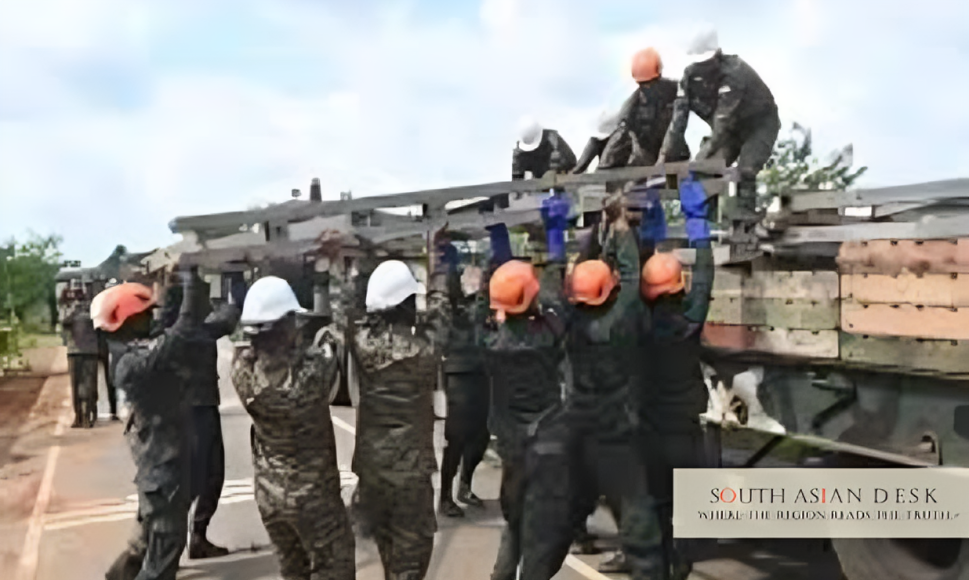
The Indian Army leads multiple initiatives under Operation Sagar Bandhu. Engineers airlifted task forces to repair damaged infrastructure. They restored optical fibre cables in areas like Mahiyanganaya near Kandy. Teams launched Bailey bridges in Kilinochchi and other sites to reconnect roads.
Field hospitals treated thousands of patients. One facility in a flood-hit zone provided care to over 7,000 people before wrapping up. Medical teams offered surgeries, trauma care, and daily consultations.
The Indian Navy delivered over 1,000 tonnes of relief material via ships. The Air Force airlifted supplies and evacuated stranded civilians, including Indians.
Cyclone Ditwah Sri Lanka Floods Impact
Cyclone Ditwah caused one of Sri Lanka’s worst disasters in decades. It inundated nearly 20% of the land. Floods and landslides displaced hundreds of thousands. They damaged homes, roads, bridges, and communication networks.
Terrestrial lines collapsed in remote areas. This isolated communities and hindered rescue coordination. Sri Lankan authorities declared a nationwide emergency.
India Satellite Internet Sri Lanka Deployment
The Indian Army introduced a key innovation: satellite internet via Eutelsat’s OneWeb Low Earth Orbit network in partnership with Airtel.
Teams deployed terminals in devastated zones. This restored high-speed, low-latency links where ground infrastructure failed.
The connectivity enabled 24/7 telemedicine links to specialists in India. It supported real-time coordination, logistics, and updates for Indian Army Sri Lanka relief teams.
Eutelsat’s Regional Vice President for APAC, Neha Idnani, stated the deployment ensures reliable communications in crises. It helps safeguard lives and maintain essential services.
This marks the first use of such technology in India’s overseas HADR operations under Operation Sagar Bandhu.
Background on Cyclone Ditwah
Cyclone Ditwah formed in the Bay of Bengal. It made landfall on Sri Lanka’s eastern coast on 28 November 2025. Heavy rains continued for days. They caused widespread flooding in districts like Colombo, Badulla, and Mullaitivu.
Over 1.1 million hectares flooded. More than 600 deaths occurred. Hundreds remain missing. The disaster strained health systems and supply chains.
India responded swiftly. It mobilised assets from the Navy’s INS Vikrant and Air Force transports.
What’s Next
Recovery efforts continue under Operation Sagar Bandhu. Indian teams focus on rebuilding bridges and roads. They aid long-term rehabilitation.
Sri Lanka progresses in reconstruction. International partners support the process. Advanced tools like satellite internet show promise for future regional disaster response.
Operation Sagar Bandhu reinforces bilateral ties. It demonstrates India’s commitment to humanitarian support in South Asia.
Published in SouthAsianDesk, December 16th, 2025
Follow SouthAsianDesk on X, Instagram, and Facebook for insights on business and current affairs from across South Asia.