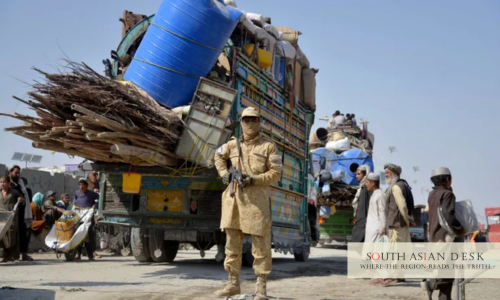
At least six Pakistani soldiers died in a Pakistan-Afghanistan attack in Kurram on Monday night, when militants targeted a security checkpoint in Khyber Pakhtunkhwa province. The assault wounded four more troops and killed two attackers. It unfolded around 10:00 PM local time in the Manato area, near the Afghan border. Police and security sources confirmed the details to Reuters. The Tehreek-e-Taliban Pakistan (TTP) took responsibility, according to AFP reports. This incident marks a sharp escalation in Pakistan-Afghanistan border skirmishes in 2025.
The attack highlights the fragile security in northwest Pakistan, where militants exploit porous borders to strike. Islamabad blames Afghan soil for harbouring fighters, a charge Kabul rejects as an internal matter. Security forces repelled the raid after heavy gunfire. Troops secured the site by dawn. No civilians suffered harm in the direct clash.
TTP Checkpoint Attack Khyber Pakhtunkhwa Escalates Fears
The TTP checkpoint attack in Khyber Pakhtunkhwa targeted a frontier corps post manned by 12 personnel. More than a dozen gunmen approached under cover of darkness. They opened fire with automatic weapons and grenades. The ensuing battle lasted 45 minutes. “Six security personnel were martyred and four were injured, while two militants were also killed in the fighting,” a Kurram government official told AFP on condition of anonymity. This quote came from a press release shared with international media.
Pakistan’s Inter-Services Public Relations (ISPR) issued a statement confirming the casualties. ISPR Director General Lieutenant General Ahmed Sharif Chaudhry said, “Our brave soldiers foiled the terrorists’ attempt to overrun the post. We mourn the shahadat of our jawans and stand resolute against such cowards.” The statement detailed recovery of assault rifles and explosives from the dead militants. It urged locals to report suspicious activity.
The TTP, formed in 2007, seeks to impose strict Islamic rule in Pakistan. It has allied loosely with the Afghan Taliban but operates independently. Since the Afghan Taliban’s 2021 takeover, TTP strikes have surged by 60 per cent, per Pakistan Institute for Peace Studies data from January to November 2025. This TTP checkpoint attack in Khyber Pakhtunkhwa fits a pattern of ambushes on isolated outposts.
Khyber Pakhtunkhwa borders Afghanistan’s restive provinces. The region hosts over 1.4 million Afghan refugees, many in makeshift camps near Kurram. Pakistan expelled 500,000 undocumented Afghans since October 2024, citing security risks. Officials link TTP recruitment to these displaced groups. A UN report from November 2025 noted 200,000 more returns expected by year-end, straining border resources.
Pakistan-Afghanistan Border Skirmishes 2025 Strain Truce
Pakistan-Afghanistan border skirmishes in 2025 have claimed over 150 lives, including troops and civilians. The latest Pakistan-Afghanistan attack in Kurram adds to this toll. It follows a December 6 exchange of artillery that killed four Afghan civilians and one Pakistani soldier at Torkham crossing. That clash shut the border for 48 hours.
October saw the worst violence. Week-long shelling along the Durand Line killed 70 people and wounded 200. Pakistani forces fired into Paktia province, Afghanistan, after militants infiltrated from there. Afghan officials reported 42 civilian deaths. Islamabad accused Kabul of inaction against TTP sanctuaries. The Afghan Taliban denied sheltering foes of Pakistan.
Qatar, Turkiye, and Saudi Arabia mediated a ceasefire on October 19 in Doha. It halted direct fire but not militant raids. “The agreement holds on paper, but ground realities differ,” said a Pakistani foreign ministry briefing on December 5. Border posts remain on high alert. Pakistan deployed 5,000 more troops to Khyber Pakhtunkhwa last month.
Data from the South Asia Terrorism Portal shows 450 militant incidents in Pakistan this year, up 25 per cent from 2024. Khyber Pakhtunkhwa accounts for 70 per cent. The TTP executed 120, per verified claims. Economic costs hit PKR 2.5 billion in damages and lost trade. Bilateral commerce fell 15 per cent to USD 2.8 billion in the first 10 months.
Afghanistan’s acting interior minister, Sirajuddin Haqqani, addressed the issue in a Kabul press conference on December 7. “Pakistan must resolve its internal conflicts without blaming neighbours. We support peace but reject aggression,” he stated. Haqqani heads the Haqqani network, once accused by Pakistan of TTP ties. His remarks underscore Kabul’s stance.
Six Soldiers Killed Kurram District: Human Cost Mounts
Six soldiers killed in Kurram district came from diverse units. They included two from the Frontier Corps and four army personnel on rotation. Ages ranged from 22 to 35. Families in Peshawar and Kohat received bodies by Tuesday noon. Funerals drew crowds under tight security.
One widow spoke briefly outside a hospital. “My husband served to protect our home. These attacks steal futures,” she said, voice steady but eyes red. Officials arranged PKR 10 million compensation per family, plus education for children. The injured received treatment at Combined Military Hospital in Parachinar. Two remain critical with shrapnel wounds.
Kurram, once part of tribal agencies, merged into Khyber Pakhtunkhwa in 2018. It spans 3,380 square kilometres with 800,000 residents, mostly Shia Pashtuns. Sectarian clashes add layers to militancy. Last year, 50 died in intra-tribal feuds. The district’s coal mines fuel extortion rackets, drawing TTP interest.
Security analysts point to intelligence gaps. A January 2025 report by the Pakistan Council on Security Research warned of underfunded border surveillance. Drones cover only 40 per cent of the 2,600-kilometre frontier. Pakistan requested USD 500 million in US aid for fencing, but talks stall.
The assault echoes a July 2025 raid in North Waziristan, where TTP killed eight. That prompted Operation Azm-e-Istehkam, a counter-terror drive. It neutralised 300 militants but displaced 50,000 civilians. Rights groups like Human Rights Watch flagged civilian hardships.
Background
Tensions trace to the 1947 partition, when the Durand Line divided Pashtun lands. The 1893 border spans ethnic ties ignored by both states. Post-9/11, millions fled US strikes into Pakistan. TTP emerged amid drone campaigns that killed 2,500, per Bureau of Investigative Journalism figures.
The Afghan Taliban’s 2021 victory revived TTP. Its emir, Noor Wali Mehsud, pledged bay’ah to Kabul leaders. Safe havens in Nangarhar and Kunar provinces enable cross-border ops. Pakistan conducted 20 airstrikes into Afghanistan this year, killing 100 militants but sparking protests.
Refugee expulsions tie to security. Pakistan hosts 3 million Afghans, costing PKR 500 million monthly in aid. Deportations since 2023 total 1.7 million. The UN decries forced returns amid Afghanistan’s drought, affecting 20 million.
Peace talks faltered thrice. A 2022 truce collapsed after TTP violations. Current Doha channel yields no progress. Regional powers push dialogue, but trust erodes.
This Pakistan-Afghanistan attack in Kurram underscores unresolved grievances. Militant flux threatens stability from Kabul to Islamabad.
What’s Next
Islamabad plans a high-level review on border security. Foreign Secretary Amna Baloch meets Afghan counterparts in Islamabad on December 15. Agenda includes TTP extraditions and aid corridors. Failure risks renewed shelling.
Pakistan eyes tech upgrades: AI-monitored fences and joint patrols. Kabul demands economic incentives, like eased trade barriers. Analysts predict 20 per cent more attacks by March 2026 absent de-escalation.
The cycle burdens South Asia. Stable borders could boost GDP by 2 per cent via trade, per World Bank estimates. Yet, without political will, the Pakistan-Afghanistan attack in Kurram foreshadows prolonged strife.
Published in SouthAsianDesk, December 9th, 2025
Follow SouthAsianDesk on X, Instagram, and Facebook for insights on business and current affairs from across South Asia.