Islamabad, Monday, August 25, 2025 – Pakistan rejected nuclear tests allegations levelled by India on Friday, affirming no such activities since May 1998. The Foreign Office (FO) branded the claims baseless and malicious. This came after India’s Ministry of External Affairs (MEA) cited US President Donald Trump’s recent comments on clandestine testing. Through a pointed press statement highlighting Pakistan’s non-proliferation stance.
The spat highlights enduring nuclear tensions between Pakistan and India, two atomic-armed neighbours whose rivalry shapes South Asia’s security landscape. With both nations holding around 170 warheads each, per recent estimates, any perceived breach risks escalation. It tests global non-proliferation efforts and underscores the fragility of regional peace, where missteps could draw in major powers like the US. Simple deterrence pacts, such as annual nuclear site exchanges, now face strain, potentially fuelling arms races or diplomatic isolation for either side.
FO Rejects Indian Nuclear Claims Trump
Pakistan’s FO issued a firm rebuttal to what it called a disinformation campaign by India. Spokesperson Tahir Andrabi stated: “For the record, Pakistan’s last nuclear tests were conducted in May 1998. Our position on nuclear testing is well established and consistent.” He accused India of distorting facts to malign Islamabad.
The response followed India’s MEA briefing on November 7, where spokesperson Randhir Jaiswal linked Trump’s remarks to Pakistan’s alleged history. Jaiswal said: “Clandestine and illegal nuclear activities are in keeping with Pakistan’s history, that is centered around decades of smuggling, export control violations, secret partnerships, AQ Khan network and further proliferation.” India positioned this as part of its long-standing alerts to the world on Pakistan’s record.
Andrabi countered that Pakistan supports United Nations General Assembly resolutions for a comprehensive nuclear test ban, unlike India, which has abstained. “India’s abstentions on these resolutions reflect its ambiguous and questionable intentions on future nuclear testing,” he added. This FO rejects Indian nuclear claims Trump narrative gained traction amid Trump’s interview, where he claimed: “Pakistan’s been testing.” The US later clarified its stance to media, per FO sources, though details remain limited.
Pakistan emphasised its nuclear programme’s integrity. “Pakistan’s nuclear program operates under a robust command and control structure, comprehensive export controls, and an impeccable record of compliance with the global non-proliferation regime,” Andrabi noted. No evidence supports India’s assertions, he said, urging focus on verifiable facts.
Pakistan No Nuclear Tests Since 1998
Pakistan’s nuclear timeline traces back to 1998, when it conducted six tests at Chagai Hills in direct response to India’s Pokhran-II series earlier that month. Those detonations, yielding up to 40 kilotons combined, established Pakistan as the world’s seventh nuclear power. Since then, Islamabad has upheld a voluntary moratorium, aligning with its doctrine of credible minimum deterrence.
Official records confirm zero tests post-1998. The FO reiterated this in its statement, noting Pakistan’s non-signatory status to the Comprehensive Nuclear-Test-Ban Treaty (CTBT) preserves flexibility amid security threats, primarily from India. “We retain the right to resume if our security environment deteriorates,” Andrabi explained, without indicating intent.
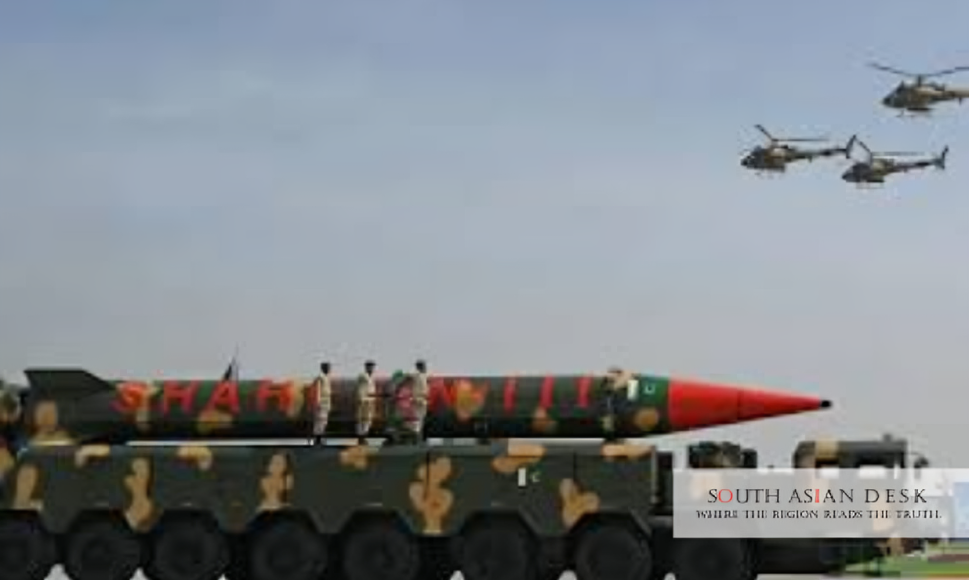
Data from the Stockholm International Peace Research Institute (SIPRI) corroborates this: Pakistan’s arsenal has grown modestly to 170 warheads by 2025, focused on delivery systems like the Shaheen-III missile, tested conventionally in 2015. No seismic or radionuclide signatures indicate underground blasts, as monitored by global networks like the CTBT’s International Monitoring System.
India, too, observed its own moratorium post-1998, yet both nations exchange lists of nuclear facilities annually under a 1988 bilateral accord. The 2025 exchange occurred on January 1 via diplomatic channels in Islamabad and New Delhi, covering 24 Pakistani and 22 Indian sites. This mechanism, renewed yearly, underscores mutual restraint despite rhetoric.
India Misrepresents Trump Pakistan Nukes
Trump’s comment surfaced during a CBS 60 Minutes interview on November 2, 2025, with Norah O’Donnell. Discussing US nuclear policy, he said: “And certainly North Korea’s been testing. Pakistan’s been testing.” O’Donnell pressed: “Not nuclear weapons, is my understanding.” Trump replied: “Of course they have, they test way underground, where people can’t see it.”
India seized on this, framing it as validation of longstanding concerns. Jaiswal’s briefing tied it to the AQ Khan proliferation network, exposed in 2004, which supplied technology to Iran, Libya and North Korea. “India has always drawn the attention of the international community to these aspects,” he stressed.
Pakistan dismissed this as India misrepresents Trump Pakistan nukes ploy. Andrabi noted the US clarification distanced official policy from Trump’s off-the-cuff remark. No State Department readout confirmed testing; instead, it aligned with assessments of Pakistan’s CTBT compliance.
Experts view Trump’s words as hyperbolic, echoing his past claims on averting Indo-Pak conflicts. A 2020 tweet boasted of stopping a “nuclear war,” later walked back. This pattern amplifies bilateral friction, with India leveraging it for domestic optics ahead of polls.
Historical Nuclear Rivalry and Nuclear Tests Allegations
South Asia’s atomic age began with India’s 1974 “peaceful” test, codenamed Smiling Buddha. Pakistan accelerated its programme under Zulfikar Ali Bhutto, vowing “an Islamic bomb.” The 1998 tit-for-tat tests, amid Kargil skirmishes, prompted sanctions lifted only in 2001 post-9/11.
Both joined the Missile Technology Control Regime informally. Pakistan as observer, India as member yet disputes persist over fissile material stockpiles. Pakistan seeks parity in negotiations, citing India’s larger conventional forces.
Incidents like India’s 2022 accidental missile firing into Pakistan highlight risks. The FO then demanded a probe, citing nuclear safety lapses. Andrabi referenced similar concerns: “Over the past several decades, numerous incidents involving the theft and illicit trafficking of sensitive nuclear material… have exposed serious deficiencies in India’s ability to safeguard its facilities.”
Last year, radioactive Californium worth over USD 100 million from Bhabha Atomic Research Centre surfaced in black market sales. “Such recurring incidents point to the existence of a thriving nuclear black market,” Andrabi warned, calling for international scrutiny.
Background
The 1998 tests reshaped geopolitics. Pakistan’s Chagai-I and II yielded seismic data confirming yields of 5-12 kilotons each. India claimed 45 kilotons for Pokhran, disputed by experts. Both imposed moratoria, but simulations via supercomputers sustain arsenals, US-style, without live blasts.
Global bodies like the IAEA monitor safeguards, though neither is full NPT signatory. Pakistan ratified the Treaty on Prohibition of Nuclear Weapons? No, neither has. Bilateral hotlines, established post-1999 Kargil, prevent miscalculations.
Trump’s revival of testing talk stems from his push for US arsenal modernisation, budgeted at USD 1.5 trillion over decades. Allies worry it could unravel the 1996 CTBT, signed by 187 states but ratified by 178.
What’s Next
Diplomatic channels may cool tempers via backchannels or UN forums. Pakistan eyes raising India’s safety lapses at the IAEA. India could push NSG waiver extensions. Analysts predict no immediate tests, but rhetoric may spur missile drills. The annual nuclear list exchange in January offers a reset point.
Pakistan maintains vigilance, with its doctrine prioritising survival against existential threats. As Andrabi concluded: “The international community must take serious note of these alarming gaps, which pose a grave threat to both regional and global security.”
In this charged atmosphere, Pakistan rejects nuclear tests allegations once more, reaffirming its commitment to responsible stewardship amid South Asia’s delicate balance.
Published in SouthAsianDesk, November 8th, 2025
Follow SouthAsianDesk on X, Instagram, and Facebook for insights on business and current affairs from across South Asia.