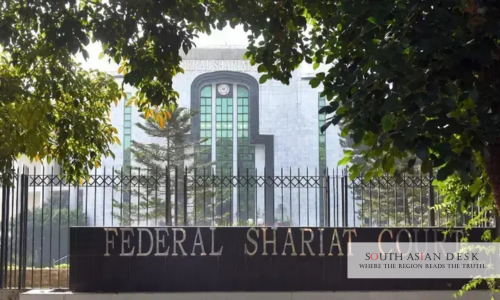
Pakistan 27th Amendment FSC petition filed on Tuesday, November 25, 2025, in Islamabad by Barrister Ali Tahir. He argues the amendment violates Islamic teachings on accountability. Respondents include federal ministries. The court has yet to schedule hearings.
Core Claims in Pakistan 27th Amendment FSC Petition
Barrister Ali Tahir invoked Article 203D of the Constitution. This empowers the Federal Shariat Court to review laws for repugnancy to Islam. The petition targets the entire 27th Amendment, passed last week. It seeks a declaration that the changes contradict the Quran and Sunnah injunctions.
The lawyer cited centralisation of executive power as a key flaw. Provisions weaken judicial independence. They entrench military influence in governance. Lifetime immunity for the president and the army chiefs forms the crux. Tahir argued this creates an elite class exempt from law. Such privileges defy Quranic mandates for universal equality.
The petition lists the Ministry of Law and Justice as the primary respondent. Ministry of Parliamentary Affairs follows. Both must respond under FSC rules.
27th Amendment Repugnant to Islam: Petitioner’s Case
Petitioner asserts the 27th Amendment is repugnant to Islam on multiple grounds. Islamic governance rests on justice, trust, and accountability. Quran commands rulers and judges to uphold these. Interference from the executive or legislature offends core jurisprudence.
Tahir quoted Surah An-Nisa 4:58. It demands that rulers judge with fairness. Immunity clauses erode public faith in institutions. They question state legitimacy under divine law. The amendment shifts the power balance fundamentally. It subordinates courts to executive whims.
Federal Shariat Court challenges the 27th Amendment through this lens. Past rulings have struck down customs like denying inheritance to women. This case echoes that scrutiny. Barrister Tahir demanded the suspension of implementation pending the verdict.
Federal Shariat Court Challenges 27th Amendment Framework
The Federal Shariat Court challenges the 27th Amendment by examining its provisions. The court was established in 1980 under Chapter 3A. It ensures all laws align with the Holy Quran and Sunnah. Article 227 mandates conformity for existing statutes.
The petition highlights Article 243 revisions. These formalise military command structures. Top appointments gain constitutional weight. Critics see this as supremacy entrenchment. Tahir linked it to broader executive overreach. Court jurisdiction covers constitutional amendments, too. Prior cases tested the riba and khula laws. This marks the first major post-27th Amendment test.
Pakistan Constitutional Amendment Shariat Review Implications
Pakistan’s constitutional amendment and Shariat review test fresh boundaries. The 27th Amendment was approved on November 12, 2025, and gained presidential assent the following day. It creates the Federal Constitutional Court (FCC). Supreme Court jurisdiction narrows to appeals.
FCC handles intergovernmental disputes. It binds lower courts without precedent obligation. The Chief Justice serves till 68, outranking the Supreme Court head. Joint seniority list for high court judges enables transfers sans consent. The petition argues these erode the separation of powers. Islamic principles demand an independent judiciary. Executive dominance invites corruption. Tahir urged the court to reaffirm the state’s duty for Sharia-compliant arrangements.
Details of the 27th Amendment Under Scrutiny
The amendment addresses judicial overload. The government cited rising constitutional petitions delaying civil cases. FCC aims for efficiency. It is staffed with a provincial parity plus an Islamabad judge. Article 175A outlines appointments. The executive plays a key role. This drew ire for politicization. Transfers under Article 200 bypass the judge’s consent. Petition sees retaliation risk.
Military provisions revise Article 243. Chief of Defence Forces gains life tenure. Field Marshal rank constitutionalised. Supporters call it modernisation. Opponents decry unbridled authority. Bill tabled post-cabinet nod on November 8, 2025. Coalition partners backed it amid opposition walkouts.
Background: Evolution of Constitutional Amendments in Pakistan
Pakistan’s 1973 Constitution was amended 26 times before this. Each shifted the power equilibria. 18th devolved to provinces. 21st curbed judicial activism. The 27th follows the 26th from the October 2024 elections. Shehbaz Sharif’s government pushed reforms for clarity. The draft stemmed from the Supreme Court backlog. Yet it centralises amid economic woes. NFC award tweaks were proposed but dropped due to a lack of consensus.
FSC history includes the RIBA ban in 2002. It declared the interest un-Islamic. Recent judgments hit chaddar practices. This petition aligns with that legacy of Sharia enforcement. JUI-F leader Maulana Fazlur Rehman rejected the amendment outright. He called the approval forced. The party demands an active Shariat appellate bench. Tensions simmer with PTI echoes.
Other Legal Challenges Mounting
Separate petitions hit the Supreme Court and the Sindh High Court. IHC judges sought suo motu but were redirected to the FCC. SHC issued notices to ministries. Hearing set for December 18, 2025.
Petitioners there decry fundamental structure violations. Executive handpicks FCC judges pre-amendment. Parallel judiciary risks precedent chaos. Transfers expose benches to manipulation. Al Jazeera noted the rationale for overload relief. Yet critics warn of irrelevance for the Supreme Court. It becomes “Supreme District Court” per the seniors.
What’s Next for Pakistan 27th Amendment FSC Petition
FSC registry processes the filing. Notices will be issued soon to the respondents. Hearing likely early December 2025. Suspension plea tests urgency. Broader fallout awaits. FCC setup progresses with building shifts. FSC may relocate to the IHC third floor.
NGOs monitor for rights impact. International observers track judicial independence. Verdict could reshape amendment fate. Pakistan 27th Amendment FSC petition probes deep constitutional fault lines. Resolution demands a balance of faith, power, and justice.
Published in SouthAsianDesk, November 26th, 2025
Follow SouthAsianDesk on X, Instagram, and Facebook for insights on business and current affairs from across South Asia.