Islamabad, Monday, 13 October 2025 – Pakistan Afghanistan border crossings closed on Sunday following intense overnight clashes along the disputed frontier, resulting in heavy casualties on both sides. The skirmishes, which erupted on the night of 11-12 October in Kurram, North Waziristan, and Bajaur districts, prompted Pakistan to seal key points including Torkham and Chaman, stranding thousands of travellers and halting trade worth millions.
The closure underscores escalating tensions in South Asia, where cross-border militancy threatens economic ties and regional peace. With Afghanistan hosting groups like Tehreek-e-Taliban Pakistan (TTP), the incident risks broader instability, affecting trade corridors vital for Central Asian connectivity and exacerbating humanitarian challenges in a volatile area.
Escalation at the Frontier
Clashes began when Afghan forces launched attacks on Pakistani border posts, according to official accounts. Pakistan’s military responded, inflicting significant losses. The Inter-Services Public Relations (ISPR) stated: “Afghan Taliban and Indian-sponsored Fitna al Khawarij initiated unwarranted and unprovoked aggression on multiple Pakistan Border posts.” It reported 23 Pakistani soldiers killed and over 200 casualties among Afghan forces and militants.
Afghan officials countered with claims of 58 Pakistani soldiers killed in retaliatory operations. Taliban spokesman Zabihullah Mujahid said Afghan forces captured 25 Pakistani army posts, describing the actions as responses to repeated sovereignty violations by Pakistan.
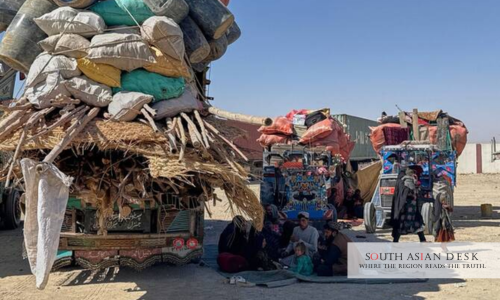
The Torkham border closure Pakistan Afghanistan has immediate effects, with reports of hundreds of cargo trucks idled on both sides. Afghan traders highlighted disruptions during peak export season for apples, grapes, and pomegranates.
Impacts on Trade and People
Pakistan Afghanistan border crossings closed have halted bilateral trade, which has fallen from $7 billion annually to just over $2 billion due to ongoing tensions. Traders on both sides face losses in the millions, as Pakistan’s export season also begins.
At Torkham, thousands of travellers, including patients seeking medical care, remain stranded. Similar scenes unfold at Chaman (Spin Boldak), Ghulam Khan, Dand-e-Patan, and Shahr Naw crossings. One Afghan trader, Watanyar Hamidi, said: “This is a major challenge that has disrupted Afghanistan’s export process, especially since we are currently in the export season for apples, grapes, and pomegranates. After the closure of Torkham, trucks have been halted en route, and I haven’t loaded my shipment today.”
Another trader, Abdul Ghafour Nasir, added: “Since yesterday, all Pakistan borders have been closed. In my opinion, this issue not only harms Afghanistan but also damages Pakistan’s interests, as its own export season is also beginning. Therefore, trade must be kept separate from politics.” Humanitarian concerns mount, with patients and families facing delays in critical travel.
Official Responses and Calls for Dialogue
Pakistan’s Ministry of Foreign Affairs expressed deep concern over the “unwarranted aggression” by Afghan Taliban and affiliated groups. It urged Afghan authorities to act against terrorists using Afghan soil for attacks on Pakistan and called for resolution through dialogue. “Pakistan remains committed to peace and stability in the region,” the statement read.
Afghan claims frame the operations as defensive against Pakistani incursions. The escalation follows Pakistan’s demands for Kabul to curb militants like TTP, accused of stepping up attacks in Pakistan.
International reactions include statements from Saudi Arabia and Qatar. The Saudi Foreign Ministry called for de-escalation and protection of civilians, while Qatar’s Foreign Ministry urged dialogue to avoid regional repercussions.
Background
Relations between Pakistan and Afghanistan have deteriorated since the Taliban regained power in 2021. Border disputes along the 2,600-kilometre Durand Line, not recognised by Afghanistan, fuel recurring conflicts. Pakistan accuses Kabul of sheltering TTP, responsible for attacks killing hundreds in recent years. Afghanistan denies this, alleging Pakistani airstrikes violate its sovereignty, as seen in March 2024 incidents.
Trade, once a stabilising factor, suffers amid political rifts. The Torkham border closure Pakistan Afghanistan echoes previous shutdowns, like in September 2023 over visa issues, which cost traders dearly.
Economic interdependence persists: Afghanistan relies on Pakistan for imports, while Pakistan uses Afghan routes for Central Asian access. Annual trade involves goods worth millions, including fruits, coal, and textiles. The current Pakistan Afghanistan border crossings closed amplify losses, with perishable goods rotting in trucks.
What’s Next
Diplomatic channels may reopen soon, given mutual economic stakes. Pakistan has signalled willingness for talks, and Arab nations’ involvement could facilitate mediation. However, without addressing militancy, such incidents may recur.
Observers watch for potential UN or regional intervention. Traders urge separating trade from politics to reopen routes swiftly. The Pakistan Afghanistan border crossings closed highlight the fragility of ties, demanding urgent de-escalation to prevent further economic and human costs.
Published in SouthAsianDesk, October 13th, 2025
Follow SouthAsianDesk on X, Instagram, and Facebook for insights on business and current affairs from across South Asia.