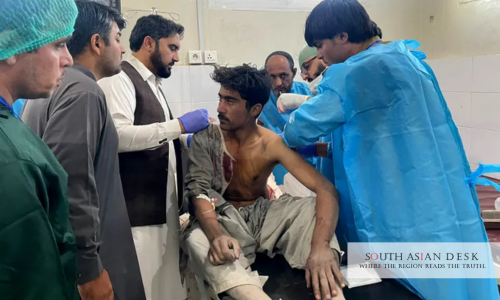
Islamabad and Kabul agreed to a 48-hour ceasefire on Wednesday after intense Pakistan Afghanistan ceasefire border clashes left at least 12 Afghan civilians dead and over 100 injured in the Spin Boldak and Chaman districts. The fighting, which erupted overnight on 14 October 2025, involved heavy weapons and prompted mutual accusations of aggression.
The escalation in Pakistan Afghanistan ceasefire border clashes underscores the fragility of South Asian security. With both nations grappling with militancy and economic woes, such conflicts risk broader instability, disrupting trade routes and exacerbating humanitarian crises across the region.
Recent Escalation in Taliban Pakistan Border Fighting
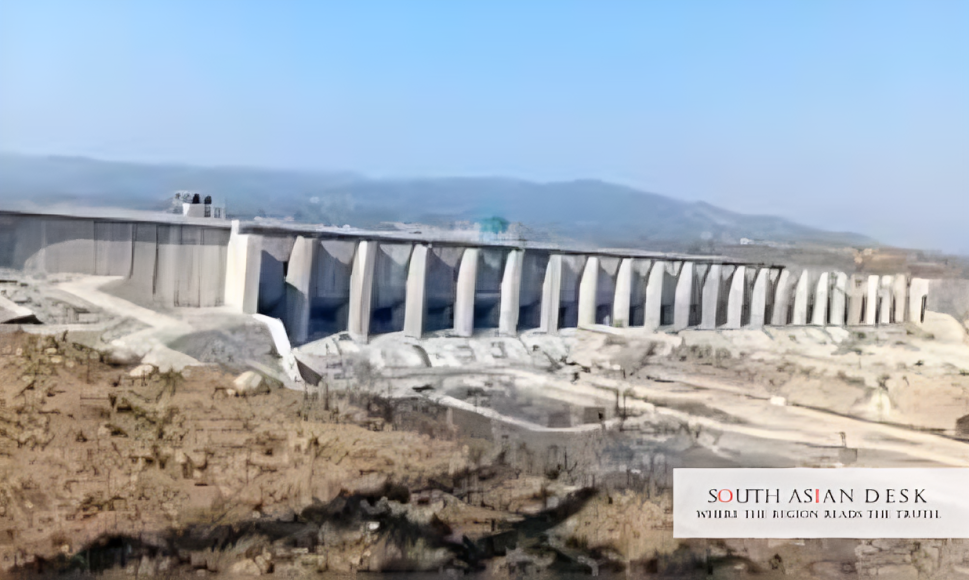
The latest round of Taliban Pakistan border fighting began late on Tuesday in southeastern Afghanistan’s Spin Boldak district and Pakistan’s adjacent Chaman area. Afghan Taliban spokesman Zabihullah Mujahid stated that Pakistani forces initiated the assault with light and heavy weapons, resulting in 12 civilian deaths and more than 100 injuries. Afghan forces responded, claiming to have inflicted heavy losses on Pakistani troops, including the seizure of weapons and destruction of military posts.
Pakistan rejected these claims. Its military reported repulsing attacks from Afghan Taliban fighters, killing 15 to 20 militants and injuring others. Pakistani officials confirmed four civilians wounded and six soldiers killed in the five-hour exchange. The army’s statement described Afghan insinuations of Pakistani initiation as “outrageous and blatant lies”.
This incident followed a brief lull after earlier Taliban Pakistan border fighting over the weekend. On 12 October 2025, Afghan forces targeted Pakistani posts in retaliation for alleged violations. Kabul claimed 58 Pakistani soldiers killed, while Islamabad reported 23 losses and over 200 militants eliminated.
Diplomatic Interventions and Ceasefire Agreement
Appeals from Saudi Arabia and Qatar helped halt the weekend Taliban Pakistan border fighting temporarily. However, borders remained closed, affecting trade and movement.
On 15 October 2025, fresh Pakistan Afghanistan ceasefire border clashes prompted urgent talks. Pakistan’s Foreign Ministry announced a 48-hour truce starting at 6:00 PM local time (1300 GMT). The statement emphasised dialogue to resolve issues.
Zabihullah Mujahid confirmed the ceasefire on X, saying: “At the request and insistence of the Pakistani side, the ceasefire between the two countries will begin after 5:30 PM today. The Islamic Emirate also directs all its forces to adhere to the ceasefire and not to violate it after 5:30 PM today unless there is a violation.”
Pakistan’s Foreign Secretary Amna Baloch briefed ambassadors on border developments, highlighting security concerns. Both sides expressed commitment to the pause, but mutual distrust persists.
Background
Pakistan and Afghanistan share a 2,600-kilometre porous border, the Durand Line, drawn in 1893 and disputed by Kabul. Tensions escalated after the Taliban’s 2021 takeover, with Pakistan alleging increased TTP incursions from Afghan soil.
In recent years, cross-border incidents have risen. Pakistan has conducted several operations, including Pakistan airstrikes Afghanistan 2025, to counter threats. The TTP, allied with the Afghan Taliban but focused on Pakistan, has claimed attacks killing hundreds.
Economic ties suffer; trade via Chaman and Torkham crossings exceeds USD 2 billion annually. Closures disrupt supplies, worsening Afghanistan’s humanitarian crisis, where over 23 million need aid.
Regional dynamics complicate matters. Afghan Foreign Minister Amir Khan Muttaqi’s recent visit to India drew Pakistani ire. Islamabad noted elements in the India-Afghanistan joint statement that raised concerns over border stability.
The Pakistan Afghanistan ceasefire border clashes highlight how internal militancy spills over, affecting South Asian geopolitics. Neighbours like India and Iran watch closely, as instability could fuel extremism.
What’s Next
The 48-hour truce ends on Friday, 17 October 2025. Diplomats expect talks on de-escalation, possibly mediated by Qatar or Saudi Arabia. Pakistan seeks assurances against TTP havens, while Afghanistan demands an end to airspace violations.
If the ceasefire holds, border crossings may reopen, easing economic pressure. Failure could reignite Taliban Pakistan border fighting, drawing international intervention.
Analysts warn that without addressing root causes like the Durand Line and militancy, such Pakistan Afghanistan ceasefire border clashes will recur. Both governments face domestic pressure: Pakistan from opposition parties, Afghanistan from internal factions.
The international community, including the UN, has called for restraint. The US, a former ally to both, urged dialogue amid its reduced regional footprint.
In conclusion, the fragile Pakistan Afghanistan ceasefire border clashes truce offers a brief respite, but lasting peace requires sustained diplomacy to prevent further bloodshed along the volatile frontier.
Published in SouthAsianDesk, October 16th, 2025
Follow SouthAsianDesk on X, Instagram, and Facebook for insights on business and current affairs from across South Asia.