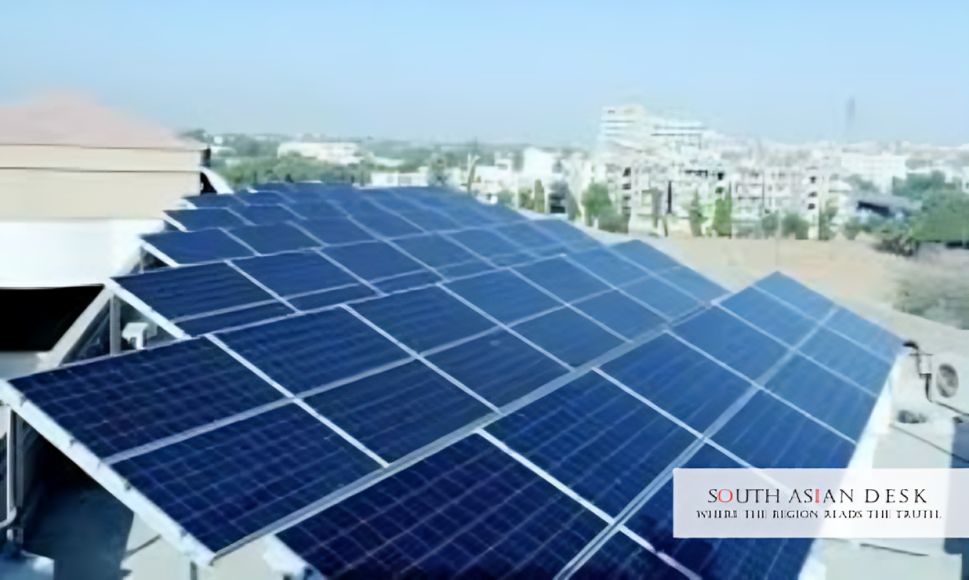
The United Nations Economic and Social Commission for Asia and the Pacific has agreed to assist Pakistan in developing Pakistan Energy Transition Investment Plan. This follows a recent scoping mission that engaged ministries and development partners in Islamabad to assess needs and opportunities. The initiative addresses Pakistan’s heavy reliance on imported fossil fuels and a circular debt exceeding PKR 2.6 trillion.
This development holds significance for South Asia. Pakistan’s progress in Pakistan energy transition can bolster regional efforts to combat climate change and improve energy security amid shared challenges like fossil fuel dependency and fiscal pressures.
UN Pakistan Energy Plan Details
UN-ESCAP will offer policy advisory and technical support focused on energy financing. The scoping mission identified entry points for a robust Energy Transition Investment Plan Pakistan. UN-ESCAP stated that Pakistan energy transition is vital for economic resilience, climate commitments and fiscal stability.
The organisation draws from its Financing Energy Transition work, which aided Indonesia, the Philippines and Vietnam. It produced three analytical reports on finance gaps and conducted capacity-building sessions. UN-ESCAP aims to contribute to Pakistan’s national energy mix, industrial competitiveness and Net-Zero goals through tools like green bonds and carbon markets.
Energy Transition Investment Plan Pakistan Framework
The Energy Transition Investment Plan Pakistan seeks to attract green foreign direct investment and blended finance models. These combine public and philanthropic funds to mobilise private capital. Concessional funding, such as low-interest loans and guarantees, will make renewable projects viable, especially in underserved areas.
Existing instruments like Green Eurobonds, Panda Bonds and Green Sukuk will be strengthened. Pay-as-you-go models are also targeted for expansion. Funds will support grid modernisation to resolve circular debt and integrate distributed solar and battery systems.
Pakistan’s energy mix remains dominated by imported oil, LNG and coal, posing risks to sustainability and security. The plan emphasises a shift to renewables to meet 2030 energy needs.
Renewable Energy Pakistan Challenges
Pakistan faces policy inconsistencies, fossil fuel dependency and limited concessional financing. Current installed capacity stands at 43,775 MW, with renewables (wind, solar, biomass) at 7 percent. Hydropower adds 9,000 MW.
The circular debt crisis hampers investment. Outdated transmission systems and high fuel costs exacerbate issues. Rising electricity prices have spurred captive solar adoption.
Despite these hurdles, opportunities abound. Pakistan boasts high solar irradiation in Balochistan, Sindh and Punjab. Wind corridors in southern coastal regions hold commercial potential. Biomass from agricultural waste offers further scope.
Background
Pakistan’s renewable energy efforts trace back to the Policy for Development of Renewable Energy for Power Generation 2006. It set a target of 9,700 MW renewables by 2030 and provided incentives like duty exemptions, income tax holidays and guaranteed purchases.
The Alternative and Renewable Energy Policy 2019 built on this. It aims for 20 percent on-grid capacity from alternative renewables by 2025 and 30 percent by 2030. Technologies include solar, wind, biomass, geothermal and hybrids, excluding small hydro under 50 MW.
The 2019 policy promotes competitive bidding, private investment and indigenisation. It establishes a Steering Committee for procurement and transforms the Alternative Energy Development Board into a promoter of technology transfer and skills training.
Government data from the Ministry of Energy confirms these targets. The Indicative Generation Capacity Expansion Plan plans to add 13,000 MW hydropower by 2030. Net metering regulations since 2015 support distributed generation up to 1 MW.
The SDG7 Roadmap for Pakistan, launched in 2022 with UN-ESCAP support, assists in achieving universal energy access, higher renewable shares and improved efficiency by 2030. It includes technology matrices and policy measures, though specific investment figures require verification.
What’s Next
Implementation of the Energy Transition Investment Plan Pakistan will involve capacity-building and scenario analysis. Auctions for renewable projects will accelerate under the 2019 policy. Grid upgrades and carbon market integration are priorities.
Pakistan aims to displace expensive thermal generation with renewables to lower costs. Provinces will facilitate land and security for projects.
With UN support, Pakistan energy transition could see increased international funding and technology inflows.
Pakistan energy transition remains essential to reduce import bills and meet climate pledges. This UN Pakistan energy plan marks a step forward in addressing Renewable Energy Pakistan gaps.
Published in SouthAsianDesk, January 5th, 2026
Follow SouthAsianDesk on X, Instagram and Facebook for insights on business and current affairs from across South Asia.