Pakistan’s government and opposition clashed over federal flood relief efforts in the National Assembly, highlighting inefficiencies in disaster response.
On Friday, September 5, 2025, Pakistan’s National Assembly witnessed heated exchanges between the government and opposition over federal flood relief efforts for Khyber Pakhtunkhwa (KP), as the opposition staged a walkout, alleging inadequate support for flood victims. The debate, sparked by devastating floods that began on August 15, 2025, underscored deep political divides and systemic challenges in disaster management.
Why It Matters
The floods, which have killed at least 874 people and displaced millions across Pakistan, particularly in KP and Punjab, expose the region’s vulnerability to climate-induced disasters. Effective federal flood relief is critical to addressing immediate humanitarian needs and building long-term resilience in South Asia, where climate change amplifies such crises.
Opposition Slams Federal Flood Relief Efforts
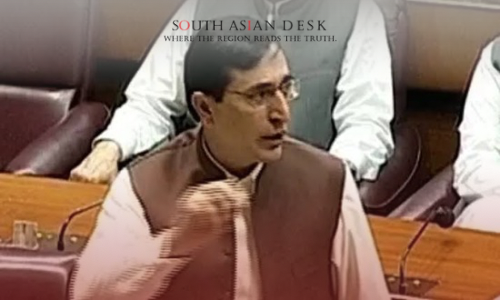
The Pakistan Tehreek-e-Insaf (PTI) led the charge against the National Disaster Management Authority (NDMA), accusing it of failing to deliver adequate aid to flood-hit areas, particularly Buner in KP. PTI Chairman Barrister Gohar Ali Khan stated, “The NDMA only provided minimal supplies in Buner, where 236 people have died, 120 are injured, 1,470 shops and 875 homes destroyed.” Gohar’s remarks, made during the National Assembly session, highlighted the scale of destruction and the perceived inadequacy of federal support. He vowed to continue challenging the NDMA’s response.
The opposition’s frustration culminated in a walkout, signaling deep dissatisfaction with the government’s disaster management strategy. Gohar’s claims were met with pushback from Law and Human Rights Minister Azam Nazeer Tarar, who accused the PTI of politicising the crisis. “This is politics for the sake of politics,” Tarar said, urging the opposition to focus on public welfare rather than grandstanding.
Government Defends Relief Operations
Tarar outlined the NDMA’s structure, explaining its three-tier system involving district, provincial, and national disaster management authorities. He clarified that provincial authorities, including those in KP, manage local operations, while the NDMA focuses on coordination and information sharing. “The NDMA has released PKR 1.3 billion for flood relief and other activities,” Tarar announced, emphasising federal support for ongoing operations. He also promoted the NDMA’s mobile app, noting that “92 per cent of its predictions are accurate,” and urged affected communities to use it for timely alerts.
National Assembly Speaker Ayaz Sadiq intervened to defuse tensions, offering to arrange a visit for opposition members to the NDMA’s head office to verify relief efforts. Sadiq also noted that PTI lawmakers, including Gohar and Asad Qaiser, had been given ample speaking opportunities, countering claims of being silenced.
Scale of the Crisis
The 2025 floods, triggered by heavy monsoon rains and exacerbated by water releases from Indian dams, have caused widespread devastation. According to the NDMA, 874 deaths have been reported nationwide since June 26, 2025, with KP and Punjab bearing the brunt. In Punjab alone, 3.8 million people have been affected, with 1.8 million rescued and relocated to 415 relief camps. Infrastructure damage is extensive, with over 9,000 homes damaged and 2,000 destroyed across the country.
The provincial government in KP declared an emergency as flash floods ravaged Buner, Swat, Shangla, and Mansehra, displacing thousands and destroying livelihoods. Punjab faced a multi-river crisis, with the Sutlej, Ravi, and Chenab rivers reaching record flood levels, submerging over 1,400 villages.
Calls for Unified Action
Both sides acknowledged the need for a collective response. Tarar called for national unity, stating, “The nation needs to work together for flood relief.” The government highlighted its coordination with provincial authorities and the Pakistan Army, which has deployed over 2,000 personnel for rescue and evacuation. Meanwhile, opposition lawmakers, including PTI’s Ali Muhammad Khan, pushed for long-term solutions like a national policy on water reservoirs to mitigate future floods.
The debate also touched on systemic issues, such as encroachments on riverbeds and deforestation, which exacerbate flood impacts. Defence Minister Khawaja Asif and others urged action against illegal settlements and the timber mafia to prevent recurring losses.
Background
Pakistan’s 2025 floods follow a pattern of climate-driven disasters, with the 2022 floods causing over USD 30 billion in damages. Despite international pledges, such as USD 9 billion at the 2023 Geneva Conference, disbursement delays have hampered recovery efforts. The NDMA’s 2025 Monsoon Infrastructure Guidelines aim to improve preparedness, but under-resourced district authorities remain a challenge.
What’s Next
As monsoon rains are expected to continue until mid-September 2025, federal flood relief efforts will face further scrutiny. The government’s promise of compensation for affected communities, with surveys underway to assess losses, will test its ability to deliver. Strengthening disaster management systems and addressing systemic issues like encroachments will be crucial to mitigating future crises.
Published in SouthAsianDesk, September 5th, 2025
Follow SouthAsianDesk on X, Instagram, and Facebook for insights on business and current affairs from across South Asia.