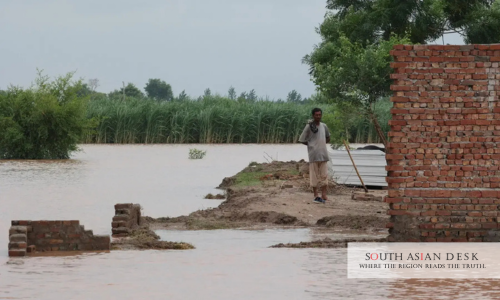
The 2025 Pakistan floods caused significant crop damage this August. Torrential monsoons submerged 849,000 hectares of standing crops across Punjab and Sindh. The disaster affected 9 million people. FAO released preliminary assessments on Monday at 4:35 PM. Officials warn of cascading effects on national harvests.
This catastrophe amplifies vulnerabilities across South Asia. Agriculture employs 42 percent of Pakistan’s workforce and contributes 24 percent to the country’s GDP. Crop failures drive food inflation and rural distress. Neighbouring India and Bangladesh face similar monsoon threats. The event exposes gaps in regional resilience. It demands cross-border strategies to protect shared river basins and supply chains.
2025 Pakistan Floods Agriculture Impact
Heavy rains from mid-August triggered the floods. Rivers like the Chenab and the Ravi overflowed. Punjab reported the worst losses. Satellite data from GEOGLAM confirmed 220,000 hectares of rice paddies underwater by early September. NDMA tallies show that maize, cotton, and sugarcane fields were hit equally hard. Vegetable growers in affected districts lost over 90 percent of their yields.
USDA’s September update slashed rice production forecasts. Officials now predict 8 million tonnes for 2025/26, an 18 percent decrease from prior estimates. The 2025 Pakistan floods’ agricultural impact ripples through exports. Pakistan supplies approximately 20 percent of the global basmati rice. Shortfalls could add $1 billion to import bills. Livestock sectors suffered too. NDMA records 6,500 animals drowned. Feed shortages from maize damage threaten poultry output.
Farmers in Okara and Faisalabad districts described scenes of devastation. Floodwaters carried away seeds and topsoil. Salinisation now affects 200,000 hectares long-term. Recovery hinges on quick replanting for winter wheat. Yet irrigation canals remain breached. The NDMA estimates PKR 500 billion in direct damages. This figure excludes lost incomes for 2 million smallholders.
The broader impact of the 2025 Pakistan floods on agriculture includes soil erosion. It reduces future productivity by 10 per cent in flood zones. Groundwater contamination adds risks. FAO teams deployed drones for damage mapping. Their surveys aid distribution. International donors pledged $200 million in seeds and tools. Still, delays in federal funding slow progress.
UN Pakistan Floods Food Security
The floods exacerbate the UN’s food security woes in Pakistan. IPC analysis pre-floods flagged 10 million in acute hunger. Now, experts project that 18 million people are at risk. Rice and wheat form 70 per cent of diets. Losses here spike malnutrition rates among children, already at 40 per cent stunting.
ReliefWeb’s September report details the toll. It cites satellite imagery showing a 15 percent decrease in rice acreage compared to 2024. This UN Pakistan floods food security crisis hits women and girls hardest. They manage household food amid shortages. Price surges followed immediately. Wheat flour costs rose 25 per cent in Lahore markets.
FAO leads the response. Its teams coordinate with NDMA on assessments. Director General Qu Dongyu emphasized the use of proactive tools. He said digital early warnings saved lives in prior events. “We must scale these for agriculture,” he added in a Rome briefing. UN agencies airlifted 50,000 tonnes of fortified grains. Yet logistics falter in remote Sindh villages.
UN Pakistan floods food security efforts extend to cash transfers. The World Food Programme targets 1.5 million households. Vouchers cover essentials for three months. Health clusters report a rise in diarrhoea cases linked to contaminated water. Vaccination drives now include 2 million children. In the long term, the UN promotes climate-resilient varieties. Trials in Punjab have shown 20 percent higher yields under stress.
Crop-Specific Losses
Rice bore the brunt of the 2025 Pakistan floods’ crop damage. Basmatilands in Sheikhupura flooded first. Harvests rotted in fields. Cotton belts in Multan saw bolls washed away. This reduces textile exports by 10 percent. Sugarcane crushers idle without feedstock. Fruit orchards in Sahiwal lost mango and citrus crops due to weeks of underwater conditions.
Maize fields in Bahawalnagar turned to mud. It feeds 80 per cent of poultry. Shortages could increase egg prices by 30 percent. Vegetable patches vanished entirely in low-lying areas. Onion and tomato gaps fuel urban inflation. NDMA’s agricultural wing verifies these losses via ground teams.
Background
Pakistan’s flood-prone geography is primarily attributed to the Indus system. Monsoons deliver 80 per cent of the annual rain. Climate shifts intensify events. The 2022 super-floods resulted in 1,700 deaths and a cost of $30 billion. They destroyed 1.2 million hectares. 2025’s deluge echoes that scale but strikes areas that are still recovering. Glacial melts add upstream pressures. Shared with India, disputes over dams complicate flows.
FAO’s global report contextualises this. It tallies $3.26 trillion in disaster losses since 1991. Asia accounts for 47 percent at $1.53 trillion. Pakistan ranks high in exposure. Small farms produce 90 percent of the food yet lack insurance. Only 5 per cent of growers hold policies.
What’s Next
The government plans a PKR 100 billion reconstruction fund. It focuses on embankments and crop insurance. UN partners train 500,000 farmers in resilient practices. SAARC summits eye joint monitoring. Early warnings via apps reached 70 per cent of at-risk areas this year.
Investments in digital mapping promise faster responses. FAO eyes $500 million for South Asia-wide tools. These could reduce future damages by 30 percent. Coordination with India on data sharing builds trust.
The 2025 Pakistan floods underscore the fragility of agrarian economies through crop damage. Swift action now can avert deeper hunger. It paves the way for sustainable harvests amid rising waters.
Published in SouthAsianDesk, November 15th, 2025
Follow SouthAsianDesk on X, Instagram, and Facebook for insights on business and current affairs from across South Asia.