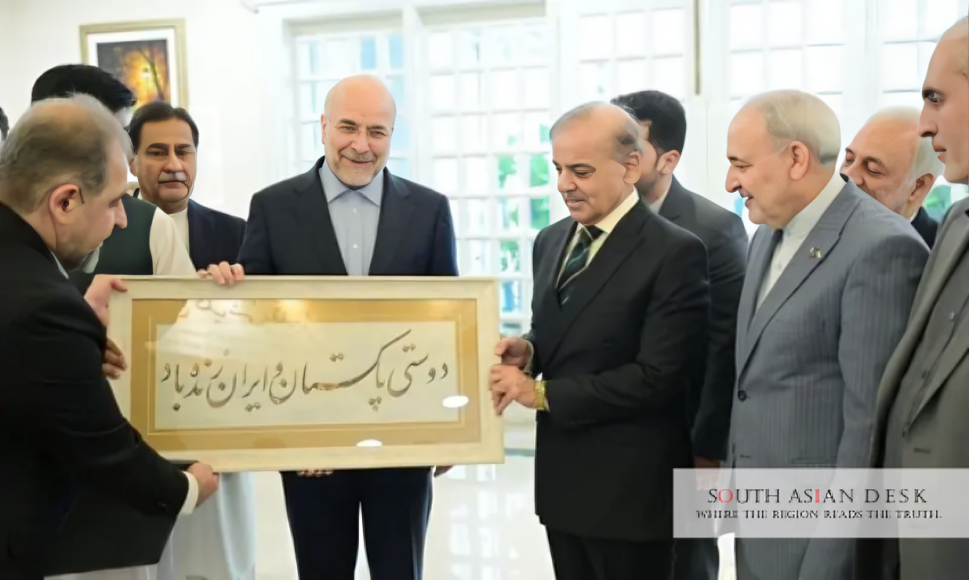
Islamabad, Pakistan – On Friday, November 7, 2025, Prime Minister Shehbaz Sharif met Speaker of the Iranian Parliament Dr Mohammad Bagher Ghalibaf in Islamabad. The two leaders issued a Pakistan Iran counter terrorism vow to intensify joint efforts against terrorism. This commitment addresses cross-border threats and promotes diplomatic resolutions to global disputes. The meeting lasted about 45 minutes and included key Pakistani officials.
This development holds profound significance for South Asia. Pakistan and Iran share a 959-kilometre border prone to militant incursions. Enhanced cooperation could curb terrorism spillover from Afghanistan and reduce sectarian tensions. It bolsters regional security amid rising global conflicts, fostering economic ties that benefit trade-dependent economies in the area. Such unity counters external influences and supports the stability of the Muslim Ummah, impacting over 1.8 billion people worldwide.
Pakistan Iran Boost Anti-Terror Cooperation
Prime Minister Shehbaz Sharif and Dr Ghalibaf condemned state-sponsored terrorism during their talks. Both nations have endured attacks from groups like the Tehrik-i-Taliban Pakistan (TTP) and Jaish-ul-Adl. Sharif stated, “Both countries condemn state-sponsored terrorism and have always supported each other in the wake of unilateral aggression against their sovereign states.”
The Pakistan Iran counter terrorism vow extends to mutual defence. Pakistan backed Iran in the recent 12-day Iran-Israel conflict that ended in October 2025. Ghalibaf expressed gratitude for this stance. He said, “The support shown by Pakistan in the 12-day war is deeply appreciated and cherished by the people of Iran.”
Officials highlighted shared victimhood. Pakistan reported 1,000 terrorism-related deaths in 2024, per government data. Iran faced similar losses from border clashes. The vow aims to eradicate such threats through intelligence sharing and joint operations.
This boost in Pakistan Iran boost anti-terror cooperation builds on prior pacts. In April 2024, both sides agreed to a united front against terrorism. Recent exchanges focus on real-time monitoring of militant movements.
Shehbaz, Pezeshkian Terrorism Talks Advance Dialogue
The meeting featured indirect Shehbaz Pezeshkian terrorism talks. Ghalibaf relayed a message from Iranian President Masoud Pezeshkian, emphasising unity against terror. Pezeshkian, who visited Pakistan in August 2025, had signed 12 agreements covering security and trade.
Sharif reciprocated with reverence for Pezeshkian and Supreme Leader Ayatollah Ali Khamenei. He noted, “Pakistan and Iran had unfortunately been victims of terrorism; thus, they firmly shared the resolve of global peace, prosperity and positive cooperation in the region.”
These Shehbaz Pezeshkian terrorism talks underscore diplomatic channels. Pezeshkian’s August trip yielded memoranda on counter-terrorism training. Officials exchanged views on threats from Afghan-based groups. Sharif added, “Pakistan and Iran are determined to work in cohesion and cooperation for the unity of the Muslim Ummah.”
Parliamentary ties featured prominently. Ghalibaf thanked National Assembly Speaker Ayaz Sadiq for robust exchanges. Both legislatures plan joint sessions on security in 2026.
Pakistan Iran Joint Counterterrorism Framework Takes Shape
Discussions touched on a Pakistan Iran joint counterterrorism framework. Leaders vowed to finalise mechanisms for verification and monitoring.
This framework would include border patrols and data exchanges. Past efforts, like the 2024 joint statement, called for such structures. Ghalibaf stressed economic incentives, saying, “Iran and Pakistan firmly believe in the unity of the Muslim Ummah and in the message of global peace.”
Sharif echoed this, pushing for trade growth. Bilateral volume reached USD 2.5 billion in 2024, with potential to double via secure routes. Energy deals from August feature gas pipelines worth PKR 500 million initially.
The vow integrates with broader diplomacy. Both reject unilateral actions, aligning with UN resolutions on terrorism.
Background
Pakistan and Iran enjoy deep historical bonds dating to 1947. Shared culture and faith drive relations despite occasional border flare-ups. In January 2024, tit-for-tat strikes targeted militants, but dialogue restored calm.
The August 2025 Pezeshkian visit marked a milestone. Twelve MoUs spanned health, agriculture and defence. Counter-terrorism featured in three documents, focusing on capacity building.
Recent events, including the Iran-Israel clash, tested ties. Pakistan’s neutral yet supportive position earned praise. Over 500 Iranian pilgrims crossed via Pakistan during the conflict, highlighting logistical cooperation.
Global context amplifies the Pakistan Iran counter terrorism vow. South Asia faces 40% of worldwide terror incidents, per the Global Terrorism Index 2025. Joint efforts could model regional pacts, involving Afghanistan and India.
What’s Next
Implementation starts with technical committees in December 2025. A bilateral summit in Tehran is slated for Q1 2026. Focus areas include drone surveillance and youth deradicalisation programmes.
Trade forums will link security to prosperity. Iran proposes a free trade zone at the border, targeting USD 5 billion annually. Parliamentary groups will monitor progress quarterly.
This roadmap ensures the Pakistan Iran counter terrorism vow translates to action, securing futures across borders.
As leaders part, the Pakistan Iran counter terrorism vow stands as a beacon for enduring partnership, promising a terror-free horizon for generations.
Published in SouthAsianDesk, November 8th, 2025
Follow SouthAsianDesk on X, Instagram, and Facebook for insights on business and current affairs from across South Asia.