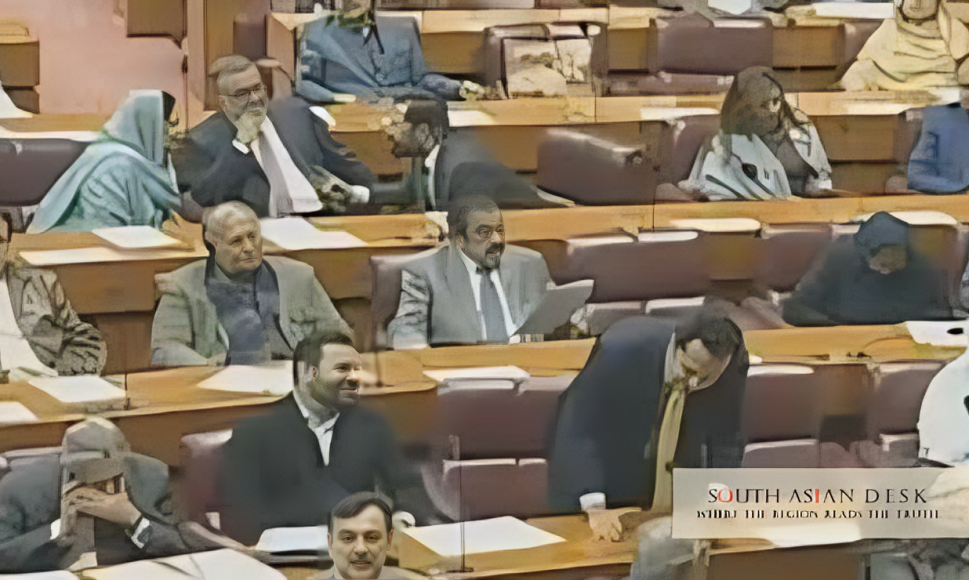
ISLAMABAD – Pakistan’s parliament approved the National Commission for Minorities Rights Bill on Tuesday, December 2, 2025, establishing a statutory body to safeguard non-Muslim communities. The joint sitting saw 160 votes in favour against 79, following heated debate over constitutional concerns.
Law Minister Azam Nazeer Tarar tabled the Pakistan minorities bill, which stems from a 2014 Supreme Court directive. The vote marks a decade-long push to formalise minority protections. Critics, including JUI-F and PTI members, raised alarms about potential conflicts with anti-Ahmadiyya laws.
National Commission for Minorities Rights Pakistan Takes Shape
The National Commission for Minorities Rights Pakistan will comprise 18 members, including representatives from Hindu, Christian, Sikh, Bahai, and Parsi communities. Two Muslim members with human rights expertise will join, alongside provincial officials and one from Islamabad.
Tarar emphasised the body’s advisory role. “Neither the law nor the Constitution, nor our conscience, allows us to make a proposal that contradicts the Holy Quran and Sunnah,” he stated during the session. The commission lacks punitive powers and will forward recommendations to the government on issues like forced conversions and job quotas.
Amendments addressed presidential objections. These included removing a clause for overriding effect and suo motu powers, which Tarar said would have mirrored curtailed judicial authorities under the 27th Amendment. The National Assembly Secretariat must initiate chairperson appointments within 60 days of the act’s commencement.
Opposition voices dominated early proceedings. PTI Chairman Gohar Ali Khan questioned the president’s initial refusal to assent. “It should be seen why the president did not give his assent to the bill,” Khan said. JUI-F Senator Kamran Murtaza criticised the shift of powers from courts to commissions. “On the one hand, you are taking away suo motu powers from courts. And on the other hand, you are giving this power to commissions.”
JUI-F chief Maulana Fazlur Rehman urged caution on inclusions. “But at the same time, I will ask the minister that he should also be aware of the past tricks of Qadianis,” he remarked, referencing sensitivities around the Ahmadi community. PTI’s Noorul Haq Qadri echoed this stance.
The session, chaired by National Assembly Speaker Ayaz Sadiq, convened after President Arif Alvi returned the bill unsigned. A four-member parliamentary committee, with two non-Muslim senators and two assembly members, reviewed it. Consensus emerged on key changes during an August 31, 2025, meeting at Aiwan-e-Sadr.
Pakistan Minorities Commission Passed Despite Divisions
The Pakistan minorities commission passed reflects constitutional mandates under Article 36, which directs the state to enable minorities to freely profess and practise their religions. The bill defines minorities as non-Muslims per the Constitution, explicitly excluding groups rejecting this status.
Tarar clarified safeguards. “The bill will not dilute anti-Ahmadiyya provisions nor affect any court judgement,” he assured. The 1984 ordinance declaring Ahmadis non-Muslims remains intact, he added. The commission aims to foster inclusivity, addressing grievances on sanitation workers’ rights and dignity matters.
Voting broke along party lines. The ruling coalition, including PML-N and PPP, secured the majority. PPP’s Abdul Qadir Patel supported the measure, while JUI-F’s Allama Raja Nasir Abbas highlighted procedural flaws. “There is democracy, (and) you are presiding over a session where there is no opposition … It is not a good sign,” Abbas noted.
Data from the National Assembly shows 239 members attended the joint sitting. The bill’s passage aligns with international obligations under human rights treaties, which Pakistan ratified.
Minorities Rights Bill Controversy Pakistan Unfolds
The minorities rights bill controversy Pakistan centred on fears of overriding Islamic laws. Opponents argued the original draft could open a “Pandora’s box” by challenging 1974 amendments declaring Ahmadis non-Muslims. Tarar countered that the Constitution bars such protections for non-compliant groups.
JUI-F pushed for referral to the Council of Islamic Ideology. Senator Murtaza warned against hasty legislation without broader consultation. The outcry delayed proceedings, with one-third of members opposing immediate consideration.
Human rights advocates welcomed the step. The bill responds to rising incidents of forced conversions, documented in annual reports. In 2024, over 1,000 cases surfaced in Sindh alone, per official data. The commission will monitor quotas, currently set at five per cent for minorities in federal jobs.
Provincial human rights departments will nominate members, ensuring regional balance. Three Hindu slots prioritise scheduled castes, acknowledging intra-community disparities.
Background: From Court Directive to Legislation
The push for a National Commission for Minorities Rights Pakistan traces to June 19, 2014, when the Supreme Court ordered its formation. Chief Justice Iftikhar Muhammad Chaudhry’s suo motu case highlighted systemic neglect. Subsequent governments introduced drafts in 2015, 2022, and 2023, but none passed.
The 2023 version, tabled in the National Assembly, lapsed amid elections. Revived in 2025, it incorporated stakeholder inputs. The Ministry of Religious Affairs and Interfaith Harmony oversaw consultations, involving 12 non-official members in prior advisory bodies.
Earlier commissions, like the 2020-2023 panel, held 18 meetings and drafted policies. Chaired by Hindu leader Chela Ram Kewlani, it addressed interfaith harmony and discriminatory laws. The new statutory framework builds on this, with PKR 500 million allocated initially for operations.
International scrutiny added pressure. The UN Human Rights Committee urged Pakistan in 2023 to enact such laws. South Asian neighbours, like India’s National Commission for Minorities, offer models, though Pakistan’s emphasises non-punitive oversight.
What’s Next for the Pakistan Minorities Bill
The Pakistan minorities bill now awaits presidential assent for enactment. Once signed, the commission must convene within 90 days. Initial focus will target forced marriage probes and educational reforms for minority youth.
Stakeholders anticipate challenges in implementation. Civil society groups plan monitoring to ensure autonomy. The body could influence bilateral ties, showcasing Pakistan’s commitment to pluralism in South Asia.
Parliament’s approval signals progress amid regional tensions. Yet, the minorities rights bill controversy Pakistan underscores enduring divides on religious identity. As the commission launches, it holds potential to bridge gaps, provided it navigates political currents effectively.
This development bolsters protections for four per cent of Pakistan’s 240 million population identifying as non-Muslim. Hindus form the largest group at 1.6 per cent, followed by Christians at 1.3 per cent. Enhanced oversight may reduce emigration trends, stabilising communities.
In the broader South Asian context, the Pakistan minorities commission passed sets a benchmark. Neighbours grapple with similar issues, India’s citizenship laws, Bangladesh’s Hindu safety concerns. Pakistan’s model, rooted in constitutional safeguards, could inspire cross-border dialogues on minority resilience.
The joint sitting’s decorum, despite protests, reflects maturing democracy. Future sessions may tackle related reforms, like blasphemy law reviews. For now, the National Commission for Minorities Rights Pakistan emerges as a vital tool for equity.
Published in SouthAsianDesk, December 3rd, 2025
Follow SouthAsianDesk on X, Instagram, and Facebook for insights on business and current affairs from across South Asia.