Pakistan’s army chief engaged with global leaders at the Munich Security Conference 2026, focusing on security and defence.
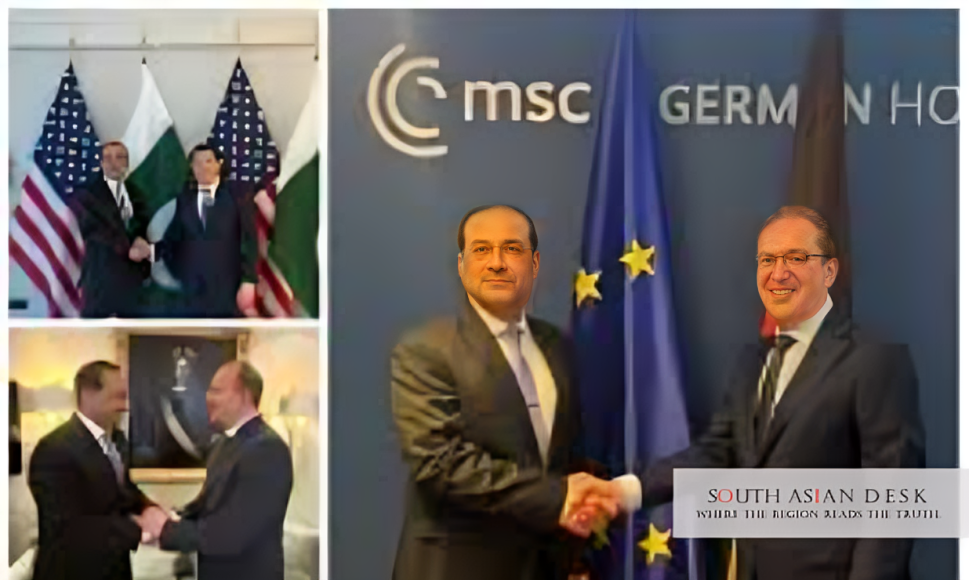
Field Marshal Syed Asim Munir met US Secretary of State Marco Rubio and other officials during the Pakistan Munich Security Conference sidelines in Munich from 12 to 14 February 2026. The discussions covered regional security and counterterrorism cooperation Pakistan aims to strengthen.
Pakistan’s participation in the Munich Security Conference 2026 underscores its vital position in addressing South Asian stability amid ongoing tensions.
Munich Security Conference 2026 Pakistan Engagements
Field Marshal Syed Asim Munir arrived in Germany on 12 February 2026. He attended meetings linked to the 62nd Munich Security Conference. The event gathered world leaders to debate security issues.
Munir’s first key meeting was with Marco Rubio. They discussed global and regional security dynamics. The focus included counterterrorism cooperation Pakistan has pursued with the US. This aligns with Pakistan’s efforts to combat threats in the region.
Next, Munir met German Interior Minister Alexander Dobrindt. Talks centred on security challenges. They explored bilateral defence ties. Munir also spoke with Gunter Sautter, the Chancellor’s foreign and security policy adviser. Discussions emphasised multilateral dialogue for peace.
Munir engaged Carsten Breuer, Germany’s Chief of Defence. The pair addressed contemporary threats. They stressed global peace through cooperation. These interactions highlight Pakistan’s push for stronger European links.
Munir held talks with Renato Rodrigues de Aguiar Freire from Brazil. As chief of the joint staff of the Brazilian Armed Forces, Freire discussed defence collaboration. Regional security challenges featured prominently.
Finally, Munir met Rodolph Haykal, commander of the Lebanese Armed Forces. The meeting aimed to enhance bilateral defence. It covered shared security concerns.
These five meetings demonstrate Pakistan Munich Security Conference’s role in fostering international partnerships.
Pakistan Strategic Role South Asia Highlighted
US Ambassador to the United Nations Mike Waltz spoke at the conference. He noted Pakistan’s importance in US diplomacy. “We could walk around the world — Kashmir and India and Pakistan — where we faced a very serious nuclear escalation,” Waltz said. This points to risks in South Asia.
Waltz linked Pakistan to UN efforts. “The United Nations Security Council created the ‘Board of Peace’ unanimously with countries such as Pakistan, our friends in the UK, France and others.” He stressed Pakistan’s involvement.
Waltz added: “Having our goal of a network of friends, Muslim-majority nations such as Turkiye, Pakistan and Indonesia involved.” He mentioned President Donald Trump convening regional and Muslim-majority nations, including Pakistan, Turkiye and Indonesia.
These remarks affirm Pakistan strategic role South Asia. Pakistan contributes to stability and nuclear risk management. Its position influences broader Asian dynamics.
Counterterrorism cooperation Pakistan remains key. Munir’s talks with Rubio built on past US-Pakistan efforts. Pakistan has led operations against groups in its borders. Data from Pakistan’s military shows over 2000 operations in 2025 alone, neutralising threats.
Pakistan’s defence budget for 2026 stands at PKR 2.1 trillion. This supports its strategic posture. The Munich meetings may lead to joint exercises or intelligence sharing.
Counterterrorism Cooperation Pakistan Advances
In the Rubio meeting, counterterrorism topped the agenda. Pakistan has shared intelligence with the US on regional threats. This cooperation dates back decades.
Pakistan strategic role South Asia involves countering extremism. Its forces have cleared areas in the northwest. Successes include reduced incidents by 40 percent since 2023.
Munich Security Conference 2026 Pakistan discussions extended to multilateral forums. Pakistan pushes for UN-led initiatives. The Board of Peace involves Pakistan in global decisions.
Brazil and Lebanon meetings focused on similar issues. Brazil shares concerns on transnational crime. Lebanon faces Middle East instability. Pakistan offers expertise in peacekeeping.
Pakistan has deployed over 5000 troops to UN missions in 2025. This bolsters its international standing.
Background
Pakistan’s involvement in the Munich Security Conference dates to earlier years. Past chiefs attended to discuss Afghanistan and terrorism. The 2026 edition follows shifts in US policy under Trump.
South Asia remains tense. Kashmir disputes persist. Nuclear concerns loom. Pakistan Munich Security Conference participation signals commitment to dialogue.
US-Pakistan ties fluctuate. Recent focus on counterterrorism revives partnerships. Munich meetings build on this.
What’s Next
Future collaborations may include joint drills. Pakistan Munich Security Conference engagements could expand to economic ties. Watch for follow-up visits or agreements in counterterrorism cooperation Pakistan pursues.
Pakistan Munich Security Conference outcomes position the nation as a key player in global security.
Published in SouthAsianDesk, February 16th, 2026
Follow SouthAsianDesk on X, Instagram and Facebook for insights on business and current affairs from across South Asia.