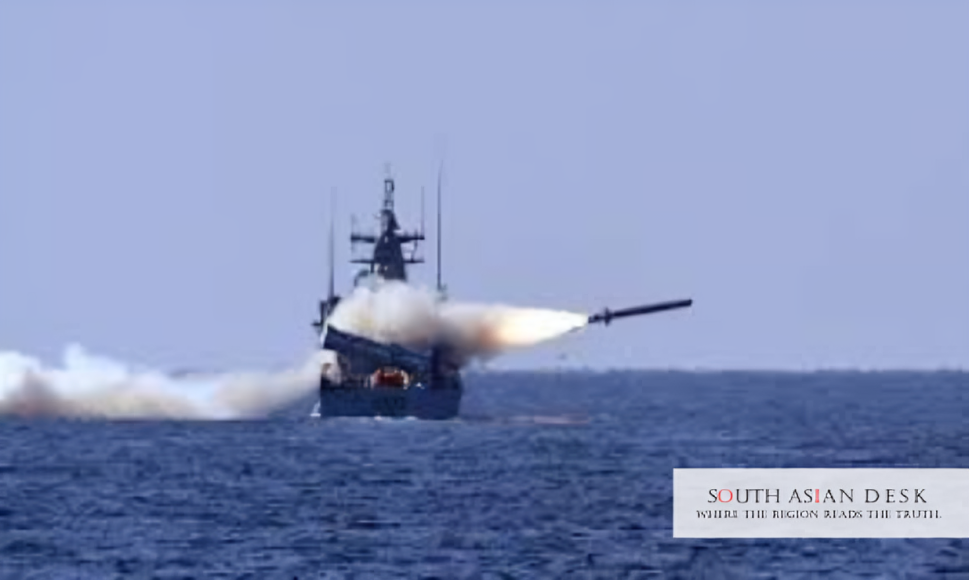
Pakistan Navy conducted a successful missile test in the North Arabian Sea, firing the LY-80 (N) surface-to-air missile from a vertical launching system. The exercise on Saturday, January 10, 2026, validated long-range capabilities by neutralising an aerial target.
The Pakistan Navy missile test underscores the force’s commitment to modernising its defences amid evolving maritime threats in South Asia. This demonstration of precision and readiness contributes to regional stability by strengthening Pakistan’s ability to protect vital sea lanes.
Pakistan Navy Missile Test Details
The Pakistan Navy missile test involved the live firing of the LY-80 (N) surface-to-air missile. Launched at an extended range, the missile successfully engaged and neutralised an aerial target. This achievement highlights the effectiveness of Pakistan Navy air defence systems.
According to official statements, the exercise showcased operational readiness and combat preparedness. The vertical launching system allowed for rapid deployment, proving the integration of advanced technology in naval operations. The surface to air missile Pakistan deployed in this test is part of a broader effort to counter aerial threats at sea.
In addition to the LY-80 missile test, the exercise included the use of loitering munition. This system engaged and destroyed surface targets, demonstrating precision strike capabilities. Such munitions provide flexible options for engaging threats without risking manned assets.
The Pakistan Navy missile test also featured open-sea trials of an unmanned surface vessel. This platform exhibited high-speed performance, extreme manoeuvrability, precision navigation, and resilience to adverse weather conditions. The unmanned vessel offers a low-risk, high-impact solution, combining stealth with tactical interception abilities.
Commander Pakistan Fleet observed the proceedings. Chief of Naval Staff Admiral Naveed Ashraf commended the officers and personnel for their professionalism and operational competence.
Role of Surface to Air Missile Pakistan in Regional Security
The surface to air missile Pakistan tested enhances the nation’s maritime defence posture. In South Asia, where sea routes are critical for trade and energy supplies, robust air defence is essential. The LY-80 missile test validates the system’s ability to protect naval assets from fast-moving aerial threats.
Pakistan Navy air defence has evolved with the incorporation of systems like the LY-80. This medium-range missile can intercept targets at extended distances, providing layered protection for fleet operations. The Pakistan Navy missile test confirms the reliability of these assets in real-world scenarios.
Regional dynamics, including tensions in the Indian Ocean, make such advancements vital. The surface to air missile Pakistan utilises contributes to deterrence, ensuring safe passage through international waters. This test aligns with Pakistan’s strategy to maintain balance in South Asian naval capabilities.
Background on LY-80 Missile Test
The LY-80, also known as HQ-16 in its original designation, is a Chinese-origin system adapted for Pakistan’s needs. Integrated into Pakistan Navy air defence, it features vertical launch technology for quick response times. Previous exercises have tested its components, but this LY-80 missile test at sea marks a significant validation of extended-range performance.
Pakistan acquired the LY-80 system to bolster its defences against aircraft, drones, and missiles. The Pakistan Navy missile test builds on prior deployments, including ground-based variants. Official data indicates the missile’s radar-guided precision, with a range exceeding 40 kilometres.
In the context of South Asia, the LY-80 missile test reflects ongoing modernisation efforts. Neighbouring countries have similar systems, prompting Pakistan to enhance its capabilities. The surface to air missile Pakistan fired demonstrates interoperability with existing naval platforms.
Historical context shows Pakistan Navy has conducted multiple tests to refine air defence. For instance, earlier firings of FM-90 missiles focused on short-range threats. This latest Pakistan Navy missile test expands to longer engagements, addressing gaps in coverage.
The unmanned surface vessel trialled complements the LY-80. Autonomous technologies reduce human exposure to risks, aligning with global trends in naval warfare. The Pakistan Navy air defence integration of such vessels could transform patrol and surveillance operations.
What’s Next for Pakistan Navy Air Defence
Future developments may include further integrations of the surface to air missile Pakistan with new platforms. The LY-80 missile test paves the way for joint exercises with allies, enhancing interoperability. Pakistan Navy plans to incorporate more unmanned systems, building on this demonstration.
Admiral Naveed Ashraf reaffirmed the resolve to safeguard maritime interests. Upcoming procurements and training could focus on countering emerging threats like hypersonic weapons.
The Pakistan Navy missile test sets a benchmark for ongoing readiness. It ensures the force remains prepared for any contingencies in the region.
In conclusion, the Pakistan Navy missile test reinforces the nation’s defensive capabilities at sea.
Published in SouthAsianDesk, January 11th, 2026
Follow SouthAsianDesk on X, Instagram and Facebook for insights on business and current affairs from across South Asia.