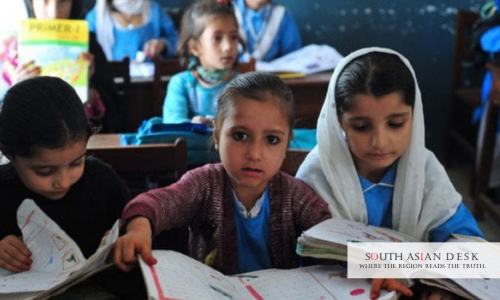
Islamabad: Pakistan’s federal and provincial authorities have approved a national education action plan to address the crisis of out-of-school children in Pakistan. The plan unveiled on January 8, 2026, aims to enroll over 25 million out-of-school children within five years. Officials met at the 38th Inter-Provincial Education Ministers Conference to endorse the strategy amid a declared state of emergency in Pakistan’s education sector.
This initiative holds significance for South Asia, where education gaps hinder development. Pakistan’s efforts could inspire neighbouring countries facing similar issues, boosting regional human capital and economic growth.
National Education Action Plan Unveiled
The national education action plan was developed over six months of consultations led by the Pakistan Institute of Education. It focuses on increasing the enrollment of out-of-school children through targeted interventions. Provinces committed to specific measures during the conference.
Punjab plans to outsource 10,000 schools to private entities. Sindh aims to recruit 93,000 teachers on a merit basis. Balochistan has restored 3,200 closed schools, bringing back 140,000 children. Khyber Pakhtunkhwa reports a 6% increase in enrollment and the addition of 10,000 new teachers. Azad Jammu and Kashmir allocates PKR 7 billion for 10,000 classrooms. Gilgit-Baltistan expands school meal programs and sets aside special funds for Pakistan’s out-of-school children.
A federal challenge fund supports these efforts. It aids innovative strategies for reintegration. The plan aligns with the Pakistan education emergency declared earlier.
Federal Minister for Education Dr Khalid Maqbool Siddiqui chaired the meeting. He stated participation reflects commitment to challenges. “Sustaining this coordination is essential to meeting evolving global standards,” he said. Priorities include informal education, remote outreach, and mainstreaming of madrasas.
Secretary of Education Nadeem Mahbub noted projects need ratification by the Education Emergency Task Force. Chaired by the Prime Minister, it oversees implementation. He invited provinces to join federal reforms, aligning programmes with global standards.
Dr. Muhammad Shahid Saroya from the Pakistan Institute of Education briefed the audience on the plan. He highlighted 25 million out-of-school children in Pakistan as per UN data. Economic hardship and climate events exacerbate the issue.
Out-of-School Children Enrollment Strategies
Out-of-school children enrollment forms the core of the national education action plan. It includes community-based teaching and nutritional support. A national nutritional programme is launched via the Benazir Income Support Programme. It prioritises school meals in backward districts.
The Out-of-School Children Fund allocates PKR 25 billion over five years. These funds intervene for Pakistan’s out-of-school children. A task force reports to the Prime Minister. It includes provincial representatives and partners.
Teacher recruitment accelerates nationwide. Provinces coordinate with federal authorities. The Pakistan Education Endowment Fund offers scholarships for underprivileged students.
Daanish Schools expand as centres of excellence. A National Skill Development Programme trains 60,000 students with certifications. An online portal offers resources and virtual learning opportunities.
Waseela-e-Taleem Fund expands for disadvantaged students. The National Disaster Risk Management Fund bolsters facilities in areas prone to disasters. Financial literacy is integrated via the State Bank of Pakistan.
The national education action plan promotes the STEAM approach. It modernises the curriculum for quality education.
Pakistan Education Emergency Context
The declaration of an education emergency in Pakistan spurred these actions. Prime Minister’s directives mandate reviews of Pakistan’s out-of-school children. Targeted plans address the crisis.
Budgets aim to reach 4% of GDP by 2029. These funds are for infrastructure and quality improvements. Provinces align with federal goals.
UN agencies, such as UNICEF, report that over 25 million people have been affected. This ranks Pakistan high globally. Factors include poverty and disasters.
Conference attendees included ministers from all units. They endorsed technical education data regimes and curriculum reforms.
Character-building strategies are approved alongside. The Chairman of the National Rahmatul-lil-Aalameen Authority presented on this.
Background
Pakistan’s education challenges trace to resource constraints. Post-independence efforts built schools, but gaps persist. Rural areas suffer the most, with Pakistan’s out-of-school children concentrated there.
Previous drives enrolled millions, yet the numbers continued to rise. Conflicts and floods displaced families. Girls face barriers in conservative regions.
Comparisons with South Asia show that India and Bangladesh are progressing. Pakistan’s national education action plan seeks parity.
Data from the 2023-2024 surveys indicate that 26 million are out of school.
Historical policies, such as the 2010 Article 25-A, mandate free education. Implementation lags due to funding.
The Pakistan education emergency aims to enforce this right. It builds on the 2024 declarations.
Provincial autonomy post-18th Amendment decentralises education. Federal coordination via conferences bridges gaps.
What’s Next
The Education Emergency Task Force meets soon for ratification. Provinces submit detailed targets for out-of-school children enrollment.
Implementation is scheduled to start in fiscal year 2026-2027. Monitoring ensures progress on the national education action plan.
Revisions incorporate feedback. Partnerships with UN agencies expand.
Budgets are allocated in upcoming cycles. Success metrics include achieving an enrollment rate of 2030.
Challenges like funding shortfalls need addressing. Sustained efforts to combat Pakistan’s education emergency.
The national education action plan rollout is monitored annually. Adjustments tackle emerging issues.
Stakeholders convene regularly. This fosters accountability.
Out-of-school children enrollment drives launch nationwide. Community involvement is key to success.
The initiative transforms the education landscape. It prioritises vulnerable groups.
Forward momentum depends on execution. Provinces lead with federal support.
The plan’s five-year horizon sets milestones. Annual reports track the reduction in out-of-school children in Pakistan.
This collective push addresses a longstanding crisis.
Published in SouthAsianDesk, January 8th, 2026
Follow SouthAsianDesk on X, Instagram and Facebook for insights on business and current affairs from across South Asia.