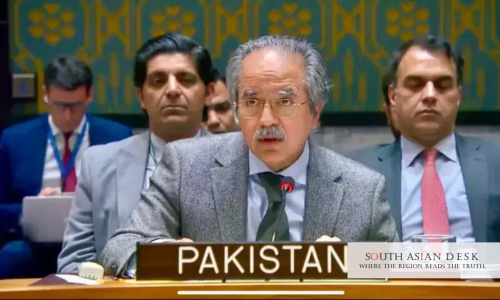
Pakistan delivered a strong Pakistan UN statement at the United Nations Security Council on 15 January 2026, expressing hope for early normalisation in Iran while firmly rejecting external interference in Iran. Ambassador Asim Iftikhar Ahmad, Pakistan’s Permanent Representative, addressed the emergency meeting convened by the United States amid ongoing protests in Iran.
The Pakistan UN statement emphasised adherence to the UN Charter, called for peaceful resolution of disputes, and highlighted deep bilateral ties with Iran. This position underscores Pakistan’s commitment to regional stability in a volatile neighbourhood with Iran.
In South Asia, where cross-border dynamics and shared security concerns prevail, Pakistan’s stance promotes non-interference and dialogue. A stable Iran supports broader regional peace, economic connectivity, and mutual interests among neighbouring states.
UN Security Council Iran Meeting Details
The UN Security Council held an emergency session on Thursday evening to discuss the situation in Iran. UN Assistant Secretary-General Martha Pobee briefed members on the fluid and concerning developments. Protests, which began on 28 December 2025 over economic issues like currency collapse, inflation, and living conditions, continue on a smaller scale.
UN Secretary-General António Guterres urged maximum restraint, stressing diplomacy to address nuclear concerns and protests while preventing escalation and loss of life.
In the Pakistan UN statement, Ambassador Ahmad stated: “The UN Charter prohibits the threat or use of force against other states’ territorial integrity or political independence, or interference in matters essentially within the domestic jurisdiction of states.”
He added: “We have been carefully observing developments in Iran and the region in recent days,” noting new threats to regional peace and stability as a serious concern.
Ahmad described Iran as a “brotherly country” with shared historical, friendly, cultural, and religious bonds. He affirmed: “A stable and peaceful Iran is in the interests of Pakistan, the region, and beyond.”
Pakistan expressed complete confidence in the wisdom of the Iranian people and leadership, rooted in their culture, history, and resilience.
The external interference Iran’s rejection aligned with UN Charter principles. Ahmad warned: “Any external interference in the internal affairs of states is inconsistent with international law and the principles of the UN Charter.”
He stressed: “We strongly believe that all disputes must be resolved through peaceful means and in accordance with international law,” cautioning that continued hostilities and unilateral actions would deepen crises and cause suffering.
The ambassador concluded: “We sincerely hope that the situation in Iran will soon return to calm and normalcy, free from any internal turmoil or external pressure, and that all relevant parties will return to the negotiating table to find a lasting solution to their differences, based on mutual respect and understanding.”
External Interference: Iran and Regional Positions
The UN Security Council briefing on Iran featured contrasting views. US Ambassador Mike Waltz criticised Iran’s actions against protesters and pledged support for the Iranian people under President Donald Trump.
Russia’s Ambassador to the UN, Vassily Nebenzia, accused the US of escalating tensions to justify aggression. China’s Ambassador Sun Lei condemned threats of force, advocating adherence to the principles of non-interference and sovereign equality.
Iran’s Deputy Permanent Representative Ambassador Gholamhossein Darzi described Iran as a nation in mourning, accusing the US of complicity in steering unrest toward violence and laying the groundwork for intervention.
Pakistan’s position reinforced calls for restraint and dialogue, contributing to a balanced discourse on regional stability.
Background
Pakistan and Iran maintain close neighbourly relations built on shared history, culture, faith, and geography. Bilateral engagements focus on trade, connectivity, and security cooperation despite occasional challenges.
The protests in Iran stem from economic hardships, with reports of violence, arrests, and internet restrictions complicating the situation.
Pakistan has consistently advocated for the peaceful resolution of regional issues, aligning with UN principles in multilateral forums.
What’s Next
The Pakistan UN statement calls for a swift return to calm in Iran through internal processes free from external pressures. Ongoing monitoring by the UN and member states will track developments.
Diplomatic channels remain open for dialogue. Future Security Council sessions may address progress or further escalation.
The Pakistan UN statement reinforces a principled approach to safeguarding regional stability, Pakistan and Iran, through respect for sovereignty and peaceful means.
Published in SouthAsianDesk, January 16th, 2026
Follow SouthAsianDesk on X, Instagram and Facebook for insights on business and current affairs from across South Asia.