Pakistan and the United States have agreed to enhance cooperation in the mining, minerals, and energy sectors following a high-level meeting in Islamabad on Thursday, February 12, 2026.
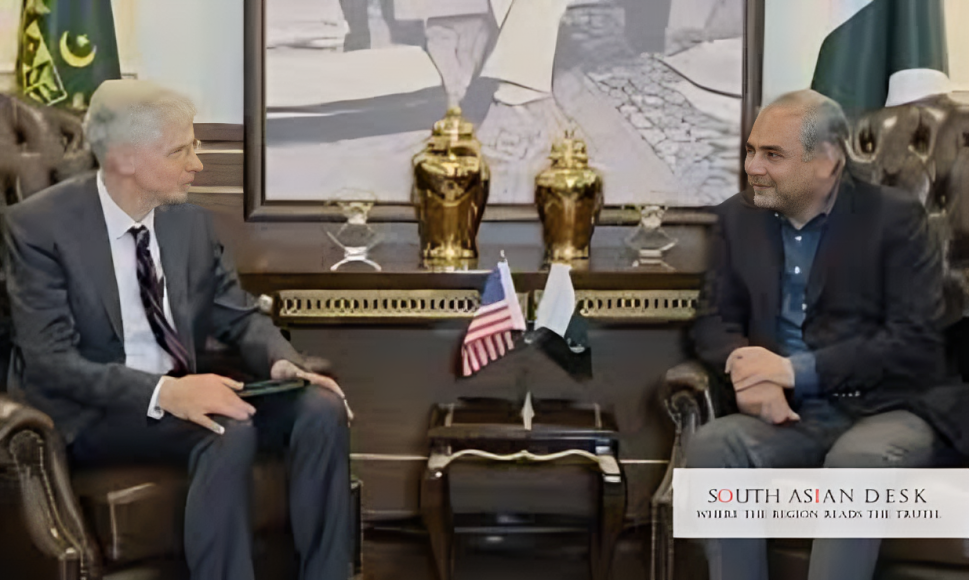
Interior Minister Mohsin Naqvi met US Assistant Secretary of State for South and Central Asian Affairs John Mark Pomeroy in Islamabad on Thursday, February 12, 2026. The two sides agreed to promote the Pakistan US mining partnership, alongside discussions on counterterrorism and regional security. US Chargé d’Affaires Natalie Baker attended the meeting, where officials committed to fostering investment in key areas.
This development underscores the growing importance of critical minerals in global supply chains, particularly for South Asian economies like Pakistan, which holds vast untapped reserves essential for clean energy technologies and defence applications. Such partnerships could drive economic growth in the region by attracting foreign investment and creating jobs in underdeveloped areas.
Key Discussions in the Meeting
The meeting focused on bilateral relations and ways to strengthen internal security cooperation. Both parties agreed to boost the Pakistan US mining partnership as part of broader economic ties. Pomeroy stated that the US attaches great importance to its relationship with Pakistan. He condemned recent terrorist attacks in Islamabad and Quetta, expressing condolences to the victims.
Naqvi emphasised that global cooperation is essential to combat terrorism, noting that relations with the US are key in this regard. He welcomed US investment in mining, minerals, and energy sectors, assuring a safe environment for American investors. The talks also covered the Pakistan US energy agreement, highlighting potential for joint ventures.
Officials from both sides discussed enhancing counterterrorism efforts. The meeting included Minister of State for Interior Talal Chaudhry, Interior Secretary Khurram Agha, and other senior personnel.
Advancing US Pakistan Minerals Cooperation
The agreement builds on recent initiatives in US Pakistan minerals cooperation. Earlier in February 2026, Pakistan participated in the inaugural Critical Minerals Ministerial hosted by the US Department of State on February 4. The event aimed to expand foreign investment and strategic partnerships in minerals and energy sectors.
Pakistan seeks to leverage its mineral wealth to forge such alliances. The country possesses significant deposits of copper, gold, lithium, cobalt, antimony, and rare earth elements, primarily in Balochistan and Khyber Pakhtunkhwa. Geological surveys estimate these resources could be worth up to USD 6 trillion, though extraction remains limited due to infrastructure challenges.
In September 2025, Pakistan signed a USD 500 million memorandum of understanding with US Strategic Metals for developing critical minerals, including antimony, copper, gold, tungsten, and rare earths. This deal marked a shift towards diversifying supply chains away from dominant players. The first shipment of rare earths and other minerals to the US occurred in October 2025, including neodymium and praseodymium, vital for electric vehicles and renewable energy systems.
Further, in December 2025, the US Export-Import Bank approved USD 1.25 billion in financing for the Reko Diq copper-gold project in Balochistan. This mine, one of the world’s largest undeveloped deposits, could yield 200,000 tonnes of copper and 250,000 ounces of gold annually once operational.
These steps align with the Pakistan US critical minerals focus, addressing global demand for materials in batteries, semiconductors, and defence equipment. Pakistan’s antimony reserves, for instance, are crucial for military applications and electronics.
Background on Pakistan’s Mineral Resources
Pakistan’s mineral sector has long been underexplored. The Reko Diq project, operated by Barrick Gold in partnership with the government, represents a major step forward. Reserves there are estimated at 5.9 billion tonnes of ore, containing 0.41 percent copper and 0.22 grams per tonne gold.
Other sites include the Saindak copper-gold mine and potential lithium deposits in Gilgit-Baltistan. The government has initiated reforms to attract investment, including updated mining policies and incentives for foreign firms.
However, challenges persist. Balochistan, home to many deposits, faces security issues from insurgent groups. Recent terrorist incidents, including attacks in Islamabad and Quetta, highlight risks to investors. Naqvi assured during the meeting that security measures would protect projects under the Pakistan US mining partnership.
Economically, mining contributes less than 3 percent to Pakistan’s GDP, but with enhanced US Pakistan minerals cooperation, this could rise significantly. The sector employs around 300,000 people directly, with potential for expansion through the Pakistan US energy agreement.
Regional Implications for South Asia
In South Asia, where energy demands are rising, the Pakistan US mining partnership could influence regional dynamics. Neighbouring countries like India and Afghanistan also hold mineral resources, but Pakistan’s strategic location offers access to Central Asian markets.
The focus on Pakistan US critical minerals comes amid efforts to reduce reliance on China, which dominates 70 percent of rare earth processing globally. US initiatives like the Minerals Security Partnership aim to build alternative supply chains.
For Pakistan, this partnership provides access to US technology and capital. It could generate USD 2.8 billion in annual exports from Reko Diq alone, boosting foreign reserves and creating 8,000 jobs.
Counterterrorism remains intertwined. The US and Pakistan have cooperated since 2001, with over USD 33 billion in aid provided. Recent discussions reaffirm commitment to joint operations against threats.
What’s Next
Looking ahead, both nations plan to implement the Pakistan US mining partnership through specific projects. Follow-up meetings may outline investment frameworks for the Pakistan US energy agreement.
Experts anticipate increased US involvement in exploration and processing facilities. Pakistan aims to develop midstream capabilities, such as refining, to add value before export.
This evolving Pakistan US mining partnership signals a pivot from security-focused ties to economic collaboration, potentially transforming South Asia’s resource landscape.
Published in SouthAsianDesk, February 13th, 2026
Follow SouthAsianDesk on X, Instagram and Facebook for insights on business and current affairs from across South Asia.