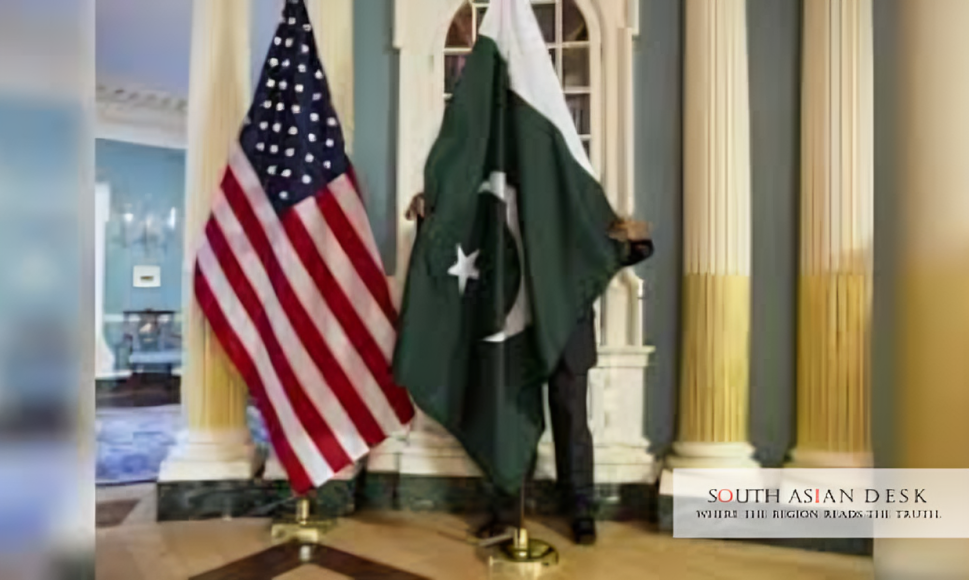
Islamabad’s top diplomat in Washington, Rizwan Saeed Sheikh, declared on Monday that Pakistan US ties never been better reflect recent diplomatic gains, but called for enhanced economic depth during a Georgetown University symposium. The event, attended by former envoys and experts, underscored strategic shifts amid regional tensions. (38 words)
This optimistic assessment from Rizwan Saeed Sheikh Pak US relations arrives at a pivotal moment for South Asia. Stronger Pakistan US ties could stabilise the region by boosting trade and counter-terrorism efforts, easing pressures from Afghanistan and India disputes. Yet without substance, gains risk fading, impacting economic recovery and security for 1.7 billion people across borders.
Rizwan Saeed Sheikh Pak US Relations Reach Historic High
Rizwan Saeed Sheikh, Pakistan’s ambassador to the United States, opened the Georgetown University discussion with a bold claim. He stated the relationship has “never been so good looking” in recent memory. This remark, drawn from President Trump’s style, signals a thaw after years of strain.
The symposium, hosted by Pakistani students, featured insights from Ambassador Robin Raphel, former Pakistani envoy Maleeha Lodhi, Senator Mushahid Hussain, and Professor Akbar S. Ahmed. Speakers agreed on the ties’ upward trajectory. Raphel Credited Trump for removing “emotionalism” that once blocked progress. She added, “Now is the time to strengthen the relationship with a country that remains strategically important.”
Sheikh elaborated on Pakistan’s appeal. He described it as “a large country with the fifth-largest population and many things to offer.” The Trump administration, he noted, sees Pakistan on its own terms, not just through Afghanistan or India lenses. This shift marks a departure from past dependencies.
Data supports this view. Bilateral trade hit USD 7.3 billion in fiscal year 2025, up 12 per cent from 2024, per official records. US investments in Pakistan’s IT sector alone reached USD 500 million by mid-year. These figures highlight growing economic interdependence.
Trump Pakistan Ties Envoy Statement Emphasises Independence
In his Trump Pakistan ties envoy statement, Sheikh praised US mediation in regional crises. He referenced the May 2025 India-Pakistan standoff, an 88-hour nuclear alert de-escalated by Washington’s intervention. “This vital act prevented escalation in a nuclear neighbourhood of 1.7 billion people,” Sheikh said at the Future Security Forum in October.
Official press releases echo this. At the forum, organised by Arizona State University and New America, Sheikh called good relations “indispensable” between “two mega countries of today and tomorrow.” He stressed collaboration on counter-terrorism and climate change, core pillars of the partnership.
Pakistan’s sacrifices in the war on terror total over 80,000 lives lost and USD 150 billion in damages, per government data. US recognition, as voiced by Secretary Marco Rubio in July, lauds these efforts. Rubio noted Pakistan’s “invaluable sacrifices” and role in global stability during a meeting with Deputy Prime Minister Ishaq Dar.
Sheikh’s remarks align with broader diplomacy. In July, Dar and Rubio reaffirmed commitments to deepen ties in trade, agriculture, and minerals. The Pakistan-US Trade Dialogue advanced, with Pakistan positioned as a hub for American firms. Diaspora communities, numbering over 600,000 in the US, bridge gaps through remittances exceeding USD 2 billion annually.
Pakistan US Partnership Envoy Dawn Insights on Economic Shift
The Pakistan US partnership envoy Dawn coverage reveals a pivot to economics. Sheikh observed at a Boston University fireside chat that ties, once security-focused, now embed in economic relations. “The United States is looking at a strategic partnership with Pakistan entrenched in economic relations,” he said.
Pakistan offers vast mineral resources, competitive labour, and a youthful workforce with median age 23. Its connectivity positions it as an economic gateway to Central Asia, West Asia, the Middle East, and Africa. US firms eye these assets, with recent pacts in IT and agriculture.
At the Georgetown event, Senator Mushahid Hussain urged Islamabad to leverage this focus for economic rebuild. He highlighted Pakistan’s potential in regional security, including Middle East roles. Maleeha Lodhi pointed to challenges like US-China tensions and Afghanistan dilemmas, but saw opportunities in balanced diplomacy.
Professor Akbar S. Ahmed stressed education and democracy for sustainability. He linked youth demographics to social movements shaping policy. These views reinforce Sheikh’s call for substance. Ties “still require more substance,” he warned, to translate optics into outcomes.
Bilateral mechanisms upgraded in 2025 include joint working groups on climate resilience. Pakistan faces existential floods, with losses topping PKR 5 trillion since 2022. US aid, at USD 200 million yearly, targets recovery, but Sheikh pushes for private investments.
Background
Pakistan US ties trace to 1947, with alliances during the Cold War and post-9/11 cooperation. Tensions peaked in 2018 over Afghanistan, but Trump’s return in 2025 revived momentum. Key milestones include the 2025 ceasefire facilitation and trade dialogue revival. These build on shared interests in stability, countering extremism, and economic growth.
Pakistan US Ties Never Been Better, But What’s Next
Upcoming visits by Pakistani officials to Washington signal intent. Focus areas include CPEC integration with US interests and tech transfers. Sheikh advocates mediated India talks for South Asian peace. Success hinges on converting rhetoric to deals, ensuring Pakistan US ties never better endure.
Pakistan US ties never better, as envoy Rizwan Saeed Sheikh asserts, promise a brighter horizon if paired with action. South Asia watches closely.
Published in SouthAsianDesk, November 17th, 2025
Follow SouthAsianDesk on X, Instagram, and Facebook for insights on business and current affairs from across South Asia.