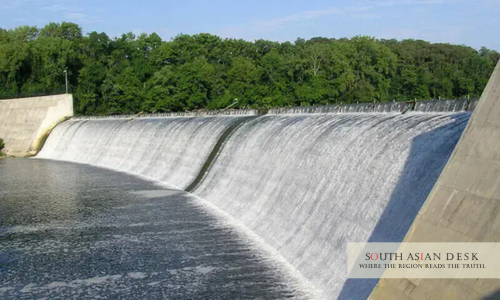
Pakistan water crisis economic impact escalates with per capita availability dipping below 500 cubic metres by 2025. This scarcity hampers growth in a nation where water fuels 90% of agriculture. Officials warn of urgent reforms. The issue spans federal and provincial levels. Reported on Monday, August 25, 2025, at 4:35 PM.
Pakistan Water Crisis Economic Impact: A Ticking Time Bomb
Pakistan water crisis economic impact manifests in stalled development and rising costs. The World Bank estimates inefficient water use drains 4% of GDP yearly. This equals PKR 1.5 trillion in losses. Agriculture absorbs 90% of supplies yet yields low productivity.
Per capita water fell from 5,260 cubic metres in 1951 to under 1,000 by 2010. Projections show absolute scarcity by 2025. The Pakistan Council of Research in Water Resources (PCRWR) classifies this as below 500 cubic metres per person. Population hits 251 million now and climbs to 315 million by 2050.
Demand surges for food and energy. The Senate Standing Committee on Water Resources notes an extra 60 million acre feet (MAF) needed for irrigation. Without it, economic output shrinks. Industries face shortages too. Textile mills cut production by 20% in dry spells.
Floods compound the Pakistan water crisis economic impact. The 2022 deluge cost USD 30 billion. Reconstruction needs USD 16.2 billion. Recurrent events disrupt supply chains. Balochistan endures droughts that halve crop yields.
Water Scarcity Pakistan Agriculture: Breadbasket Under Siege
Water scarcity Pakistan agriculture cripples the sector that employs 37% of the workforce. It contributes 24% to GDP. Irrigation draws 97% of freshwater. Yet, outdated canals waste 60%. The National Water Conservation Strategy 2023-27 highlights overdraft and salinity. Groundwater depletes at 9km³ annually. Saline intrusion ruins 20% of Punjab farmlands. Rice and wheat outputs drop 10-15% in scarcity years.
Climate change worsens water scarcity Pakistan agriculture faces. Temperatures rise 3°C by 2025. This boosts crop water needs by 6%. Monsoons vary by 20%. Glacial melts flood then dry rivers.
Farmers in Sindh abandon fields. Migration rises 15% in arid zones. The UNDP warns 207 million face scarcity by 2025. Food prices jump 25%. Exports like cotton fall 30%. The Ministry of Water Resources reports 23 MAF from the Chenab River yearly. India controls its catchment. Flow alterations threaten downstream farms. A proposed Chiniot reservoir aims to store floodwaters. Feasibility completes soon.
Pakistan Water Security GDP: Reforms for Resilience
Pakistan water security GDP hinges on better management. Current storage lasts 30 days. This exposes the economy to dry spells. The World Bank urges efficiency gains to unlock USD 12 billion in annual value. Reforms target subsidies. They distort use now. Pricing water at true cost cuts waste by 40%. Drip irrigation saves 50% in pilots. The Getting More from Water report stresses allocation fairness.
Encroachments erode riverbanks. Punjab clears 1,790 of 2,687 sites. Sindh removes 6 of 164. Progress lags elsewhere. The Senate Committee flags coordination gaps. Wapda builds dams for 11.13 MAF storage. Diamer-Bhasha adds 8.1 MAF. Mohmand and others follow. These bolster Pakistan water security GDP by stabilising supplies.
Senator Shahadat Awan, chairing the Senate Committee, states: “Water is crucial to economic security.” He directs better federal-provincial ties. The Water Resources Secretary, Syed Ali Murtaza, confirms Chiniot studies advance.
Provincial Disparities in Water Management
Balochistan tops scarcity lists. Quetta rations supplies. Service stations guzzle 19,000 litres daily. Regulations lag. Punjab leads in removals but faces salinity. Khyber Pakhtunkhwa clears 126 sites. Balochistan reports none. Suparco delays encroachment data. The Committee deems this a privilege breach.
Why This Matters in South Asia
Pakistan water crisis economic impact ripples across South Asia. The Indus Basin feeds 300 million. Disputes with India strain ties. Shared scarcity sparks conflicts.
India’s projects alter flows. This hits Pakistan’s 80% irrigated lands. Regional GDP loses 1.5% yearly to water woes. Migration swells borders. Bangladesh and Nepal face similar threats. Cooperation via SAARC forums aids. Joint monitoring prevents escalations. Trade suffers when crops fail. Garments and rice exports drop, affecting USD 40 billion flows.
Background: From Abundance to Alarm
Pakistan once held the fourth-largest aquifer. Arid rains average 240mm yearly. The 1960 Indus Waters Treaty allocated shares. Yet, storage silts up fast. The 2018 National Water Policy set goals. Implementation stalls. PCRWR warns of high pollution. 60% suffer waterborne ills, costing 1.44% GDP. Dams like Tarbela lose capacity. Sedimentation fills 30% since 1976. Upstream dams curb silt. This erodes deltas.
What’s Next: Pathways to Plenty
The National Adaptation Plan 2023-2050 seeks USD 1 billion in finance. Mangrove restores and tolerant crops lead. Private sector eyes tech transfers.
Experts push emission cuts. Local pilots show saline rice boosts yields 20%. The Delta Plan integrates resilience. Forward, Pakistan water crisis economic impact demands swift action. Integrated policies secure growth for 174 million. Success lies in unity and innovation.
Published in SouthAsianDesk, November 25th, 2025
Follow SouthAsianDesk on X, Instagram, and Facebook for insights on business and current affairs from across South Asia.