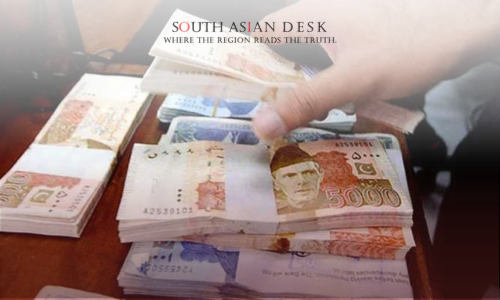
In the first half of fiscal year 2025 (July–December 2024), Pakistan’s federal government allocated Rs616 billion to support struggling state-owned enterprises (SOEs), marking a 42% increase from the Rs433 billion provided during the same period in 2023. This significant bailout, primarily directed toward the power and utility sectors, underscores the persistent financial challenges posed by loss-making public entities.
The funds were distributed as follows: Rs333 billion in subsidies, reflecting a 46% rise year-on-year, Rs113.52 billion in grants, Rs92 billion in loans, and Rs77.49 billion in equity injections. The power sector, plagued by inefficiencies and circular debt, remains the largest recipient, with distribution companies and outdated infrastructure contributing to mounting losses.
Analysts have raised concerns about the growing reliance on government bailouts, warning that these funds are diverting resources from critical development and welfare programs. The power sector’s circular debt, estimated at Rs2.4 trillion, continues to strain public finances, exacerbated by transmission constraints and governance issues. Posts on X have echoed these sentiments, highlighting the fiscal burden of SOEs, with some estimating losses at nearly Rs2 billion daily.
Despite these challenges, there are glimmers of progress. According to past reports, the net equity of SOEs has risen in recent years, supported by marginal asset growth. However, concerns persist about overall efficiency, with many enterprises still posting operational losses. Without comprehensive reforms, including privatization and improved governance, the financial health of SOEs is likely to remain a significant concern for Pakistan’s economy.
The government has committed to structural reforms, as emphasized in recent discussions with the International Monetary Fund, to address these inefficiencies and reduce fiscal pressures. Whether these measures will curb the dependence on bailouts and foster sustainable growth remains a key question for policymakers and stakeholders.
Published in SouthAsianDesk, July 13th, 2025
Follow SouthAsianDesk on X, Instagram and Facebook for insights on business and current affairs from across South Asia.