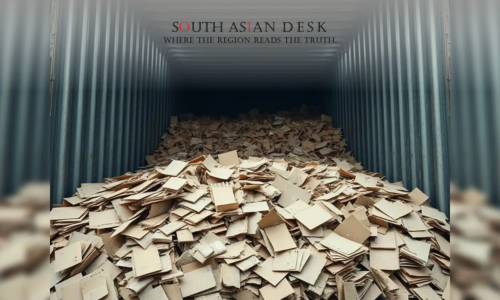
Pakistan’s paperboard industry warns of job losses and factory closures due to Chinese surplus paperboard dumping. On Wednesday, September 3, 2025, Pakistan’s paperboard industry raised alarms over Chinese paperboard surplus flooding the market, urging the National Tariff Commission Pakistan (NTC) to revise import prices to protect local manufacturers.
The surge in Chinese paperboard imports threatens Pakistan’s packaging industry, risking job losses, reduced profitability, and diminished customs revenue, with broader implications for South Asia’s trade dynamics.
Surge in Chinese Paperboard Imports
Pakistan’s paperboard industry, critical for packaging in pharmaceuticals, food, and exports, is grappling with a flood of underpriced Chinese imports. Industry sources report that local mills are rapidly losing market share and profitability due to undervalued shipments. An industry source stated, “While India is shielding its capacity, employment, and investment, Pakistan is becoming a dumping ground for Chinese surplus.”
The coated bleached board, also known as folding box board, is a key material in Pakistan’s packaging sector. Domestic manufacturers claim they have sufficient capacity to meet 100% of national demand, yet imports continue to erode their competitiveness. In 2024, Pakistan imported paper and paperboard worth US$460.79 million, with China as a major supplier.
National Tariff Commission’s Role
The National Tariff Commission Pakistan (NTC) has previously addressed dumping concerns. In 2018, the NTC imposed a 28% anti-dumping duty on Chinese paperboard, but it was never enforced, allowing under-invoiced imports to persist. The industry has urged the NTC to revise the Import Trade Price (ITP) in line with India’s benchmark to curb dumping and restore competitiveness.
The NTC, as Pakistan’s trade remedy authority, has conducted 1481 anti-dumping investigations since 2002, covering industries like paperboard, steel, and chemicals. However, enforcement remains a challenge, with under-invoicing nullifying protective measures.
Packaging Industry Impact on Paperboard Dumping
The influx of cheap Chinese paperboard has severe consequences for Pakistan’s packaging industry. Local manufacturers, who have invested heavily in machinery and co-generation plants, face declining profitability. The surge in imports has led to reduced capacity utilisation, threatening factory closures and job losses. The industry also claims that under-invoiced shipments deprive the government of legitimate customs revenue, exacerbating fiscal challenges.
Globally, Chinese paperboard surplus stems from overcapacity, with exports targeting markets like Pakistan due to weakened demand in Europe since the Ukraine conflict. This mirrors trends in other industries, such as polyester staple fibre, where Chinese dumping has forced factory closures in Pakistan.
Background
Pakistan’s paperboard industry has long battled unfair trade practices. In 2021, the All Pakistan Paper Merchants Association (APPMA) highlighted high customs duties on paperboard (27% plus anti-dumping duties) compared to near-duty-free printed materials, straining the packaging sector. The NTC’s past interventions, such as duties on steel and chemicals, have bolstered local industries, but paperboard remains vulnerable. The 2025 import surge reflects global trade shifts, with China redirecting surplus to South Asia amid tariffs elsewhere.
What’s Next
The National Tariff Commission Pakistan must act swiftly to address paperboard dumping in Pakistan, balancing trade policies to protect the packaging industry while ensuring fair market access. Strengthened enforcement and revised import prices could safeguard jobs and revenue, setting a precedent for regional trade resilience.
Published in SouthAsianDesk, September 3rd, 2025
Follow SouthAsianDesk on X, Instagram, and Facebook for insights on business and current affairs from across South Asia.