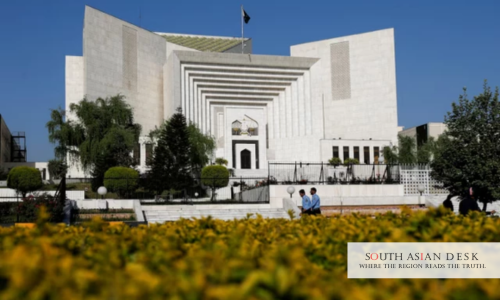
Islamabad, Saturday, January 17, 2026 – In a significant judgment, the Supreme Court of Pakistan has declared pension declared legal right for all government employees. The apex court set aside the earlier decision of the Federal Service Tribunal that had denied pension benefits to a retired civil servant solely because he applied for them 13 years after his resignation.
This landmark Supreme Court pension ruling in Pakistan provides much-needed clarity and protection to thousands of retired and resigned public servants who have faced repeated delays and denialofs in pensions due to bureaucratic hurdles and misinterpretation of rules.
Supreme Court Pension Ruling, Pakistan: Background of the Case
The case involved Muhammad Usman, who served as a senior auditor (BS-11) in the office of the Military Accountant General, Rawalpindi. He completed over 20 years of qualifying service before submitting his resignation in September 2007, which was duly accepted by the authorities.
Following the 2001 amendment to the Civil Servants Act, 1973, the minimum qualifying service for pension entitlement was reduced from 25 years to 20 years. Usman clearly met this revised threshold.
In 2020, he formally applied for his pension benefits. The department rejected the claim, primarily citing the long delay since the resignation and an incorrect interpretation of Civil Service Regulations (CSR) Regulation 418.
The Federal Service Tribunal upheld the department’s decision on July 3, 2024. Dissatisfied, Usman approached the Supreme Court.
A three-member bench, comprising Justice Muhammad Shafi Siddiqui, Justice Naeem Akhtar Afghan, and Justice Miangul Hassan Aurangzeb, heard the matter. The court converted the petition into an appeal, allowed it, and directed the authorities to process and release Usman’s full pensionary benefits in accordance with the law.
Pension Declared Legal Right in Pakistan: Core Legal Principles Established
The Supreme Court’s detailed judgment is clear and emphatic. It states: “Pension is neither a concession nor charity but a constitutional and legal right of a government employee, which cannot be denied merely on the grounds of delayed application or resignation.”
The bench further observed: “The right to pension accrues immediately upon retirement or upon acceptance of resignation and cannot be extinguished merely due to delay.”
Importantly, the court ruled that neither the doctrine of laches (unreasonable delay) nor the law of limitation applies to legitimate pension claims. Resignation after completing the qualifying service does not forfeit the entitlement to a pension.
The judgment criticised the misapplication of CSR Regulation 418, clarifying that the regulation deals with the counting of service periods and does not provide grounds for denying vested pension rights.
This ruling directly addresses and resolves long-standing issues related to resignation pension Pakistan and pension delay denial Pakistan that have affected numerous government employees over the years.
Resignation Pension Pakistan: Wider Impact on Civil Servants
By declaring pension a protected constitutional right, the Supreme Court’s pension ruling in Pakistan removes major administrative and procedural obstacles that departments frequently used to reject or delay claims.
The decision is expected to benefit a large number of civil servants, including those from defence-related departments, audit offices, and other public sector institutions, who resigned after meeting the qualifying service but were denied a pension on technical grounds.
It strengthens employees’ legal position and reduces the likelihood of future litigation over similar matters.
Background
The Pension Rules and related regulations govern pension entitlements for civil servants in Pakistan. The 2001 amendment significantly eased access to pensions by lowering the qualifying service requirement.
Over the decades, the Supreme Court has repeatedly affirmed that a pension constitutes deferred salary for faithful service rendered and is protected by the Constitution.
This case once again highlights persistent administrative challenges in Pakistan’s pension system, where technicalities are often invoked to withhold rightful benefits.
What’s Next
The authorities are now legally bound to process Muhammad Usman’s pension claim without further delay and release all due benefits.
The precedent set by this judgment is likely to influence hundreds of similar pending cases involving pension delays and denials in Pakistan and resignation pensions across various departments.
Government institutions may be required to review and align their internal policies with the Supreme Court pension ruling in Pakistan to prevent future violations and unnecessary litigation.
The pension declared a legal right in Pakistan marks an important step toward greater fairness, transparency, and security in the retirement benefits of public servants.
Published in SouthAsianDesk, January 17th, 2026
Follow SouthAsianDesk on X, Instagram and Facebook for insights on business and current affairs from across South Asia.