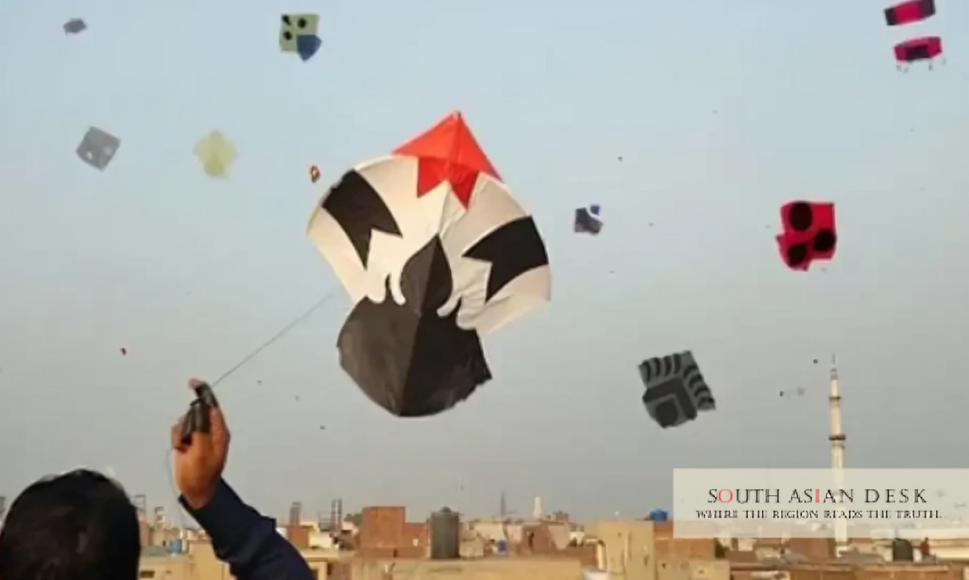
Lahore, Pakistan – The Punjab Basant ban lifted on the upcoming Basant festival on Tuesday, December 2, 2025, paving the way for controlled kite flying celebrations after nearly two decades. Chief Minister Maryam Nawaz Sharif announced the move through the Punjab Kite Flying Ordinance 2025, targeting safety amid past fatalities.
This decision revives a cherished spring tradition in Lahore and beyond, blending cultural heritage with modern safeguards. The ordinance addresses historical risks from hazardous strings and unregulated events, ensuring the Basant festival revival does not endanger lives. For South Asia, where kite flying symbolises joy and community, the step signals a balanced approach to preserving festivals in urban settings.
New Kite Flying Regulations in Punjab
The Punjab Basant ban lifted marks a shift from prohibition to permission-based activities. Under the ordinance, kite flying requires approval from deputy commissioners at designated sites. This framework replaces the 2007 ban, which halted celebrations due to rising injuries.
Officials emphasise traceability and compliance. “The Punjab Kite Flying Ordinance 2025 has been issued,” Chief Minister Maryam Nawaz Sharif stated on her official Facebook page. She highlighted the need for responsible participation to honour the tradition.
Key rules prohibit metallic or chemical-coated strings, allowing only thread-based materials. Manufacturers and sellers must register with local authorities, paying a fee for licences. Each kite carries a QR code linking to the vendor’s details, enabling quick enforcement.
Age Restrictions and Parental Responsibility
Children under 18 face a complete ban on kite flying. Violations hold parents or guardians accountable. “Children under 18 will not be allowed to fly kites, and in case of violation the parent or guardian will be held responsible,” Sharif added in her statement.
This measure stems from data on past incidents, where young participants suffered severe cuts from stray strings. The ordinance empowers sub-inspectors to issue arrest warrants and seize illegal materials during Basant 2025 Lahore events.
Penalties Under the Ordinance
Fines start at PKR 50,000 for first offences, doubling to PKR 100,000 for repeats. Non-payment triggers action against guardians. Serious breaches, like using banned strings, attract three to five years in prison and fines up to PKR 2 million.
The Government of Punjab reinforced these in an official post on X. “Basant Returns But with Safety First,” it read. “Punjab’s Kite-Flying Ordinance 2025 makes registration mandatory for kite sellers and manufacturers. Violations carry heavy fines and jail time. Children under 18 cannot fly kites. Every kite and vendor now traceable via QR codes. Celebrate tradition responsibly!”
Whistle-blower protections encourage reporting, with rewards for tips leading to convictions. These kite flying regulations Punjab-wide aim to deter recklessness, drawing from over 1,000 documented injuries since 2000, including motorcyclist decapitations in narrow Lahore lanes.
Basant 2025 Lahore: Revival Plans Take Shape
Excitement builds in Lahore, the epicentre of Basant festivities. The Punjab Basant ban lifted opens doors for events in the second week of February 2026, aligning with Basant Panchami. Designated zones in areas like Gulberg and Model Town will host flying sessions from dawn to noon.
Local associations welcome the Basant festival revival. Registered groups plan workshops on safe techniques, targeting 500 vendors by January. “This controlled return safeguards our youth while honouring roots,” said a Lahore Kite Flying Association spokesperson, echoing government calls.
The ordinance mandates environmental checks, banning celebratory gunfire entirely. Past Basant 2025 Lahore searches spiked 300% on Google Trends, per recent data, reflecting pent-up demand. Punjab authorities allocate PKR 100 million for enforcement teams, including drones for aerial monitoring.
Historical Context of the Ban
The Basant festival traces to the 19th century under Maharaja Ranjit Singh, who hosted annual fairs in Lahore’s Walled City. Kite flying symbolised spring’s arrival and crop prosperity, blending Hindu and Sikh influences into Punjabi culture.
Tensions rose in the early 2000s as commercialisation introduced glass-laced strings, causing fatalities. An emergency law in 2001 curbed excesses, but the full ban hit in 2007 after a string of deaths, over 500 reported by 2006, per health ministry figures.
Previous attempts faltered. In 2018, a 12-year lift promise dissolved amid safety fears. The 2025 ordinance, promulgated by Governor Sardar Saleem Haider Khan, seeks permanence through legislative approval. It balances revival with lessons from those dark years, ensuring the Punjab Basant ban lifted endures.
What’s Next for Kite Enthusiasts
Provincial assembly debate resumes Thursday, December 4, 2025, to ratify the ordinance into law. Successful passage could expand sites to Rawalpindi and Multan. Enforcement trials begin next week, with public awareness campaigns via billboards and social media.
Stakeholders urge swift QR code rollout, estimated at PKR 500,000 per district. As preparations unfold, the focus remains on safe skies. The Punjab Basant ban lifted offers hope, but compliance will define its success in fostering a vibrant yet secure Basant festival revival.
In conclusion, this policy pivot underscores Punjab’s commitment to cultural continuity. With robust kite flying regulations Punjab enforces, the skies over Lahore may soon fill with colour safely.
Published in SouthAsianDesk, December 4th, 2025
Follow SouthAsianDesk on X, Instagram, and Facebook for insights on business and current affairs from across South Asia.