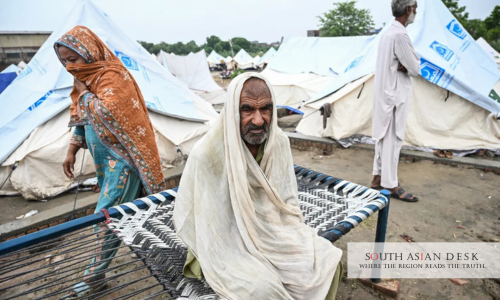
The Punjab government, led by Chief Minister Maryam Nawaz, announced on Friday, September 19, 2025, the formation of local flood relief committee at district and tehsil levels across the province to coordinate aid distribution and rehabilitation; this follows floods impacting 3,775 villages in 27 districts since early September 2025, triggered by heavy monsoon rains and a Sutlej River breach, with committees employing digital tools for transparency.
In a region prone to seasonal deluges, Punjab’s initiative for flood relief at the local level signals a proactive shift towards decentralised disaster response, vital for South Asia where climate-amplified floods displace millions annually and strain national resources.
Punjab Launches Flood Relief Committee at District Level
Chief Minister Maryam Nawaz chaired a high-level meeting in Lahore on Friday, September 19, 2025, where officials resolved to establish dedicated flood relief committees in all 27 affected districts and 64 tehsils of Punjab. These bodies, comprising representatives from the Provincial Disaster Management Authority (PDMA), revenue, agriculture, and urban units, alongside the Pakistan Army, aim to streamline surveys, compensation, and reconstruction efforts. The decision addresses the urgent needs of 1.17 million people displaced by inundations that damaged over 63,000 concrete houses and 309,000 mud structures.
The floods, exacerbated by a breach in the Sutlej River at Noraja Bhutta, have particularly ravaged southern districts including Multan, Lodhran, and Bahawalpur, submerging 150 additional villages such as Nowshera Jadeed, Saadullahpur, and Jalalpur Pirwala. PDMA Director General Irfan Ali Kathia reported that 1.5 million people and 1.47 million livestock have been evacuated, with medical aid extended to 451,978 individuals and 848,119 animals through 1,145 relief camps operational since mid-September 2025.
Maryam Nawaz emphasised equitable aid, stating: “A survey form, a mobile application and a central monitoring dashboard will ensure effective aid distribution and oversight.” She further assured: “We will compensate each individual for their losses so that no one is deprived of their rightful relief.” This digital integration, developed in collaboration with the Punjab Information Technology Board, allows real-time tracking of flood relief at the local level, preventing duplication and ensuring funds reach intended recipients.
Coordinating Local Flood Relief Committee at Tehsil Level
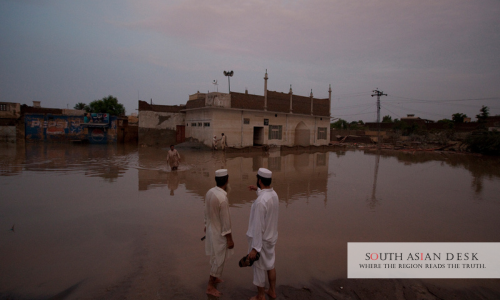
At the tehsil tier, committees will oversee on-ground operations, including the deployment of joint survey teams to assess crop losses—estimated at 1.17 million acres of farmland and 1.25 million acres of destroyed standing crops. Multan Division Commissioner Amir Karim Khan, supervising operations in Jalalpur Pirwala, confirmed that a breached bridge section has been filled, while alternate routes via national highways from Shah Shams and Uch Sharif interchanges mitigate disruptions on the M-5 Motorway, where 10-12 km remains underwater and a 22-km stretch is closed.
The Punjab government’s approach builds on existing frameworks like the Punjab Floods Disaster Management System, which has historically facilitated post-flood damage assessments through satellite imagery and automated dashboards. According to the PDMA, these local-level flood relief committees will also establish additional distribution points for essentials such as food, medicine, and shelter materials, targeting the 1,112 inundated villages where access remains challenging due to damaged infrastructure.
Broader Flood Relief Efforts in Punjab
Beyond committee formation, the administration has mobilised the National Highway Authority and Motorway Police for rapid infrastructure repairs, with a technical panel deliberating on controlled breaches of the M-5 Motorway to divert excess waters into the Chenab River. This measure, if approved, could alleviate pressure on southern Punjab’s vulnerable lowlands.
Political stakeholders have weighed in on enhancing flood relief at the local level. PPP Acting President Yusuf Raza Gilani, in a meeting with Adviser to the Prime Minister Rana Sanaullah on Wednesday, September 18, 2025, urged integration of the Benazir Income Support Programme (BISP) for direct cash transfers to victims. Gilani highlighted PPP Chairman Bilawal Bhutto-Zardari’s call for BISP’s expanded role, though Sanaullah’s response on feasibility remains pending. Such collaborations underscore the multi-partisan push for efficient aid amid a death toll that climbed to 123 in Punjab, including 45 in the southern region.
The PDMA’s ongoing operations include weather advisories for flash floods until Sunday, September 28, 2025, anticipating further risks in upper catchments. Over 1.17 million acres of agricultural land face long-term threats, prompting agriculture department teams within the new committees to prioritise seed distribution and livestock fodder for affected farmers.
Challenges in Delivering Local Flood Relief
Logistical hurdles persist, with remote tehsils like those in Bahawalpur facing delayed supplies due to submerged roads. Kathia noted that while 1,145 camps provide immediate succour, scaling up to encompass all 3,775 impacted sites requires enhanced coordination at the district level. The government’s allocation of PKR 5 billion to a dedicated Chief Minister’s Flood Relief Fund, announced earlier in September 2025, will underpin these efforts, focusing on housing reconstruction and economic rehabilitation.
Background
Punjab has endured recurrent floods since the intensified 2022 deluge, which affected over 30 million across Pakistan. The 2025 crisis, driven by anomalous monsoon patterns, echoes those patterns, with the Sutlej breach amplifying damages in canal-dependent agrarian belts. Prior initiatives, such as PDMA’s flood maps and early warning systems, have informed the current decentralised response, yet experts call for climate-resilient infrastructure to mitigate future local-level vulnerabilities.
What’s Next
With rehabilitation operations slated to commence imminently, Punjab’s flood relief committees at the local level hold promise for restoring normalcy, provided digital tools and inter-agency synergy sustain momentum through the impending winter.
As Punjab navigates this deluge’s aftermath, its commitment to localised flood relief underscores a resilient blueprint for community-led recovery in the face of escalating climate perils.
Published in SouthAsianDesk, September 20th, 2025
Follow SouthAsianDesk on X, Instagram, and Facebook for insights on business and current affairs from across South Asia.