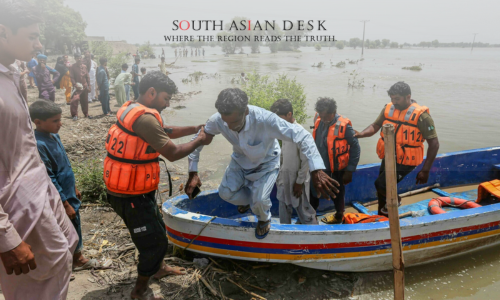
Rescue operation and evacuation efforts persist in Pakistan’s Punjab province as rising water levels in the Sutlej and Ravi rivers displace thousands due to heavy monsoon rains. Pakistani authorities ramped up rescue operations along the Sutlej River on Monday, August 25, 2025, evacuating over 2,400 villagers and 500 livestock from flood-hit areas in Sahiwal District. Meanwhile, similar efforts in Narowal and Kasur addressed flash floods caused by monsoon downpours and water releases from India, aimed at safeguarding lives and property.
The ongoing floods along the Sutlej and Ravi rivers underscore South Asia’s heightened exposure to climate change impacts, where erratic monsoon patterns and transboundary river management issues between Pakistan and India exacerbate vulnerabilities, potentially disrupting agriculture, livelihoods, and regional stability for millions in the Indus basin.
Rescue Operations in Flood-Hit Districts
Rescue teams from Punjab’s Emergency Services Department, known as Rescue 1122, have been at the forefront of operations. In Narowal district along the Ravi river, rescuers saved 61 people—including 21 men, 20 women, and 16 children—from village Dawood Bhani, where they were trapped in floodwater. Additionally, four Rangers personnel were extracted from a border post near the Pakistan-India frontier. District Emergency Officer Muhammad Aurangzeb reported that the operation followed a distress call to the control room, highlighting the rapid response amid rising waters.
Further south along the Sutlej river, high-level flooding inundated riverine areas in Sahiwal, Okara, Pakpattan, and Bahawalnagar districts. Over 85 villages were submerged, displacing residents and livestock. In Sahiwal, rescuers worked around the clock, using boats to evacuate those affected. Deputy Commissioner Asif Raza dismissed social media rumours of drownings in the Sutlej, stating no such incidents were confirmed.
In Kasur district, where a red alert was issued by the Provincial Disaster Management Authority (PDMA), 595 people and 101 animals were evacuated on Monday alone, bringing the total to 2,281 people and 1,068 animals shifted to safety. Officials resorted to forced evictions in some low-lying areas due to residents’ reluctance to leave, deploying 169 rescuers and 64 boats at key points like Ganda Singh. Eyewitness accounts described a 40-kilometre stretch from Pir Ghani to Irazi Bali Dilawar as fully submerged, with water entering homes and fields without prior warning.
Federal Minister for Information and Broadcasting Attaullah Tarar assured that the situation along the Sutlej river is under control, with PDMA teams actively providing relief and restoring essential services. Over one million people have been shifted to safe places in districts adjacent to the Sutlej, with emergency transport provided to two million and preventive medicine administered to 1.5 million cattle, according to relief updates.
Impact of Flash Floods and Monsoon Rains
The flash floods stem from very heavy to exceptionally heavy rainfall in upstream regions, including Kashmir and Rajasthan, as forecasted by the Flood Forecasting Division in Lahore. India’s release of additional water into the rivers has compounded the situation, leading to breaches in protective embankments along the Sutlej and displacing thousands. The National Disaster Management Authority (NDMA) issued a medium flood alert for the Ravi river over the next 48 hours, noting Thien Dam at 86 per cent capacity.
No fatalities have been reported in these specific riverine floods, but villagers like those in Kund Naan Singh expressed frustration over inadequate warnings, saying floodwater reached doorsteps before notices arrived. Overall, Pakistan’s 2025 monsoon season has been devastating, with more than 700 deaths recorded since late June due to floods and related incidents across the country.
Government response includes establishing 13 relief camps in Sahiwal, 14 rescue posts in Narowal, and medical and livestock camps across affected areas. Vaccination drives for humans and animals are underway, with round-the-clock monitoring of river levels. Prime Minister Shehbaz Sharif directed NDMA to expedite relief, though his focus has been on northern districts like Swat and Buner, where separate flash floods have caused significant damage.
Background
Pakistan’s 2025 monsoon has been marked by intense rains since late June, leading to widespread flooding. While northern provinces like Khyber Pakhtunkhwa faced cloudbursts and landslides killing hundreds, Punjab’s riverine areas along the Sutlej and Ravi have seen overflows due to accumulated runoff and cross-border inflows. NDMA’s pre-monsoon plans anticipated low to medium floods in these rivers, but actual events have exceeded forecasts in some spots. Historical data shows similar events in 2022 and 2023, displacing millions and causing economic losses estimated at billions of PKR.
What’s Next
With more rainfall predicted through September, authorities are preparing for a potential escalation in flood levels, urging residents to heed evacuation orders. The rescue operation along the Sutlej river will remain active, with enhanced coordination between PDMA and Rescue 1122 to mitigate further risks from the ongoing monsoon.
Published in SouthAsianDesk, August 26th, 2025
Follow SouthAsianDesk on X, Instagram, and Facebook for insights on business and current affairs from across South Asia.