A dramatic rescue operation saved 200 people in Gilgit-Baltistan’s Ghizer district after a glacier burst triggered a devastating flood, blocking the Ghizer River and threatening downstream communities. The incident, reported on August 22, 2025, underscores the growing dangers of glacial lake outburst floods (GLOFs) in a region increasingly vulnerable to climate change.
Glacier Burst Triggers Catastrophic Flooding
Late on Wednesday night, a glacier burst in the Tildas and Rawshan villages of Gupis valley unleashed a torrent of water, known as a glacial lake outburst flood (GLOF), which overwhelmed the Ghizer River. According to Rescue 1122, the river was blocked for several hours, creating a temporary lake that posed a severe risk of high-level flooding downstream. The floodwaters swept through the villages, destroying approximately 80 per cent of homes and infrastructure, leaving many residents traumatised and displaced.
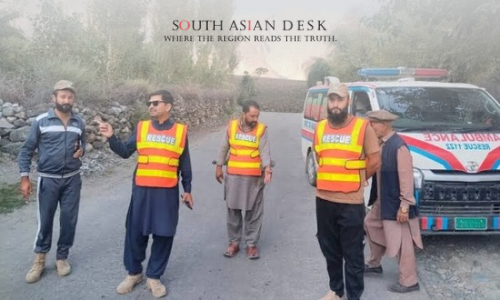
Rescue 1122, under the direction of District Emergency Officer Engineer Tahir Shah, swiftly mobilised personnel to the affected areas. A statement from the agency confirmed that 200 individuals were rescued and relocated to safer locations in Ghizer’s Yangal and Samal areas. Medical assistance was provided to those in shock, many of whom had lost their homes to the relentless floodwaters. The operation was supported by local volunteers and Pakistan Army helicopters, which played a crucial role in evacuating stranded residents.
Community Resilience Amid Devastation
The scale of destruction in Tildas and Rawshan villages was staggering, with GB Secretary Fida Hussain reporting that the flood “swept away everything” in its path. Yet, a glimmer of hope emerged through the quick actions of local shepherds, who, stationed near the glacier, alerted villagers via mobile phones around 2:50 AM. This timely warning allowed many to evacuate before the floodwaters struck, preventing any reported casualties. Abdul Wahid, a local resident, credited the shepherds’ vigilance for saving countless lives, though the loss of homes and livelihoods remains a heavy blow.
The Ghizer River, blocked for eight hours, began spilling over the debris, raising fears of further flooding in low-lying areas. GB Minister for Law, Parliamentary Affairs, and Tourism, Ghulam Muhammad, noted that the standing water, stretching three to four kilometres, threatened hundreds of homes if the river’s flow was not restored. The emotional toll on the community is profound, with families grappling with the loss of their homes and the uncertainty of rebuilding in a region prone to such disasters.
Climate Change Fuels Glacier Risks
Pakistan, home to over 13,032 glaciers, faces increasing risks from glacial melting driven by climate change. Experts warn that approximately 10,000 glaciers in Gilgit-Baltistan and Chitral are receding due to rising temperatures, heightening the frequency of GLOFs. This incident follows a similar glacier burst in Bagrot Valley on August 1, which claimed one life, and another from the Shishper Glacier earlier this month, which damaged the Karakoram Highway. The recurring nature of these events has intensified calls for robust climate adaptation measures.
Social media posts on X reflect public concern, with users praising the rescue efforts while urging authorities to address the root causes of glacial instability. The Pakistan Meteorological Department has forecasted heavy rainfall in Gilgit-Baltistan from August 23 to 27, further complicating recovery efforts and raising fears of additional flooding.
A Call for Urgent Action
The successful rescue of 200 people in Ghizer is a testament to the bravery of Rescue 1122, local volunteers, and the Pakistan Army. However, the destruction of homes and infrastructure highlights the urgent need for long-term solutions to mitigate the impacts of glacier bursts. GB Chief Minister Haji Gulbar Khan has directed all available resources to support the affected communities, with ongoing efforts to ensure the safety of those near the Ghizer River. As climate change continues to threaten Pakistan’s northern regions, this rescue operation serves as a stark reminder of the need for proactive measures to protect lives and livelihoods from the growing menace of glacial floods.
Published in SouthAsianDesk, July 17th, 2025
Follow SouthAsianDesk on X, Instagram, and Facebook for insights on business and current affairs from across South Asia.