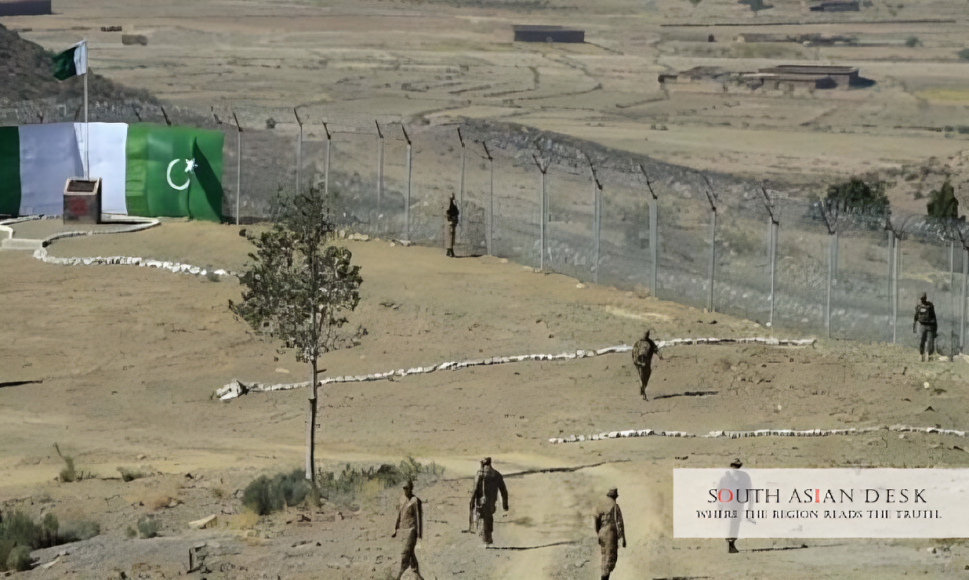
Moscow, 13 October 2025: Russia called for restraint in Pakistan and Afghanistan after fierce border clashes over the weekend left 23 Pakistani soldiers dead and prompted conflicting claims of heavy casualties on both sides, halting trade at key crossings like Torkham and Spin Boldak. The clashes highlight ongoing instability along the Durand Line, a porous border that has long fuelled disputes between Islamabad and Kabul. In South Asia, where security ties intersect with powers like India and China, such escalations risk broader conflict, disrupting trade routes and refugee flows that affect millions.
Details of the Border Clashes
Fighting erupted late on 11 October 2025, when Afghan Taliban forces launched attacks on Pakistani border posts in retaliation for alleged Pakistani airstrikes in Kabul and Paktika province earlier that week. Pakistani officials reported that Afghan forces opened fire in multiple areas, including Chitral, Bajaur, Mohmand, Angoor Adda, Kurram in Khyber Pakhtunkhwa province, and Bahram Chah in Balochistan.
Pakistan’s military stated that 23 of its soldiers were killed in the exchanges, which involved small arms, artillery, and drones. In response, Pakistani forces claimed to have eliminated over 200 Taliban fighters and affiliated militants, destroying 19 targets. A senior Pakistani security official, speaking anonymously, confirmed the clashes ceased around midnight on 12 October 2025.
On the Afghan side, Taliban spokesman Zabihullah Mujahid reported that Afghan forces captured 25 Pakistani army posts, killed 58 Pakistani soldiers, and wounded 30 others. Mujahid added that a significant amount of Pakistani weapons fell into Afghan hands. He denied any threats originating from Afghan territory, stating, “There is no kind of threat in any part of Afghanistan’s territory.”
The border remained closed for a second day on 13 October 2025, stranding hundreds of trucks and people. Trade between the two nations, valued at USD 1.5 billion annually, came to a halt, impacting goods like fruits, vegetables, and coal.
Russia’s Urge for Restraint Amid Tensions
Russia urged Kabul and Islamabad to exercise restraint on the border, welcoming signs of stabilisation. In an official statement from the Russian Foreign Ministry, it noted, “According to the latest information, the situation has been stabilising as of late. We welcome this process. We call upon Kabul and Islamabad to show restraint and resolve all differences through political and diplomatic methods.”
Maria Zakharova, spokeswoman for the Russian Ministry of Foreign Affairs, echoed this in a briefing: “Moscow is concerned about the escalation of tension on the Pakistan-Afghanistan border. We call on the Parties to exercise restraint and to engage in constructive dialogue.”
Russia’s involvement stems from its growing ties with the Taliban since recognising their government in July 2025, the first major power to do so. Moscow has hosted Taliban delegations at forums like the St Petersburg International Economic Forum in 2022 and 2024, positioning itself as a mediator in Afghan affairs post-US withdrawal in 2021.
Other nations joined the calls. China expressed hope that Kabul and Islamabad would “remain calm and restrained” to resolve concerns through dialogue. Iran, Saudi Arabia, and Qatar also urged restraint, with Saudi Arabia’s stance notable amid its recent defence pact with Pakistan signed in September 2025.
Background
Tensions between Pakistan and Afghanistan have simmered since the Taliban regained power in 2021. Islamabad accuses Kabul of harbouring the Tehreek-e-Taliban Pakistan (TTP), a militant group responsible for attacks inside Pakistan. According to the Centre for Research and Security Studies in Islamabad, at least 2,414 fatalities occurred in the first three quarters of 2025 from such violence, potentially making it one of Pakistan’s deadliest years.
Kabul rejects these claims, countering that Pakistan supports anti-Taliban groups. The Durand Line, established in 1893, remains disputed, with Afghanistan never fully recognising it. Recent Pakistani efforts to fence the border and deport Afghan refugees, over 800,000 by 2025 have further strained relations.
Russia’s call for restraint in Pakistan-Afghanistan ties into its broader Central Asian strategy, where border stability affects counter-terrorism efforts against groups like ISKP (Islamic State Khorasan Province). Moscow views the Taliban as allies against such threats, as stated by President Vladimir Putin in 2024.
What’s Next Restraint in Pakistan and Afghanistan
Diplomacy may take centre stage. Pakistan’s Foreign Minister Ishaq Dar voiced concerns over the clashes, while Afghanistan’s Foreign Minister Amir Khan Muttaqi paused operations temporarily but warned of responses to further attacks. Analysts suggest mediation by Qatar or Saudi Arabia could lead to talks, but unresolved issues like TTP sanctuaries pose risks. Russia calls for restraint from Pakistan and Afghanistan to prevent further escalation on the border, emphasising dialogue as key to regional peace.
Published in SouthAsianDesk, October 14th, 2025
Follow SouthAsianDesk on X, Instagram, and Facebook for insights on business and current affairs from across South Asia.