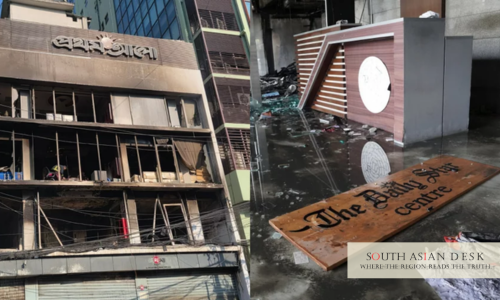
Rights groups condemn Bangladesh media attacks following coordinated assaults on December 18, 2025. Mobs targeted the offices of Prothom Alo and The Daily Star with vandalism, looting, and arson. Chhayanaut faced similar vandalism in Bangladesh. A joint statement highlighted threats to freedom of expression and cultural heritage.
The incidents trapped journalists inside burning buildings. Staff faced life-threatening risks. Both newspapers temporarily suspended their print and online editions. Operations resumed gradually after security assessments.
Prothom Alo Daily Star Attacks Escalate Concerns
Prothom Alo and Daily Star attacks involved hundreds of assailants in Dhaka. They stormed the Karwan Bazar and Farmgate premises. Rioters smashed windows, set fires, and looted equipment.
Computers, cash, and valuables disappeared. Vehicles in compounds suffered damage. Fire services responded but faced delays entering secured areas.
Police arrested 17 individuals by December 22. Multiple cases were registered against hundreds of unidentified persons. Investigations continue.
The assaults followed the death of activist Sharif Osman Hadi on December 18. He died from injuries sustained in a shooting on December 12 during protests.
Rights groups condemn the attacks on the Bangladesh media as a grave escalation against independent journalism. They noted apparent coordination and planning.
Prothom Alo and The Daily Star represent prominent voices in Bangladesh. Their coverage spans politics, society, and human rights. Temporary shutdowns disrupted public information flow.
Journalists reported intimidation and direct threats. Some escaped through rear exits as flames spread.
Chhayanaut Vandalism Bangladesh Signals Broader Hostility
Chhayanaut vandalism in Bangladesh struck the Dhanmondi cultural centre. Attackers damaged rare musical instruments, artworks, and archival documents. Sections of the building caught fire.
Chhayanaut promotes Bengali cultural heritage through music and arts. Founded in 1961, it symbolises secular traditions and New Year celebrations.
The incident reflects growing hostility toward institutions fostering diversity. Rights groups linked it to patterns of intolerance.
Joint statement on media freedom in Bangladesh described the vandalism as an assault on cultural life. It warned of shrinking space for artistic expression.
Joint Statement Media Freedom Bangladesh Calls for Urgent Action
Six prominent organisations issued a joint statement on media freedom in Bangladesh. Signatories include Access Now, the Bangladesh Legal Aid and Services Trust (BLAST), Human Rights Watch, the International Truth and Justice Project (ITJP), Journalists for Democracy and Human Rights in Sri Lanka (JDS), and the Tech Global Institute.
They expressed deep alarm over the violence. The statement condemned attacks on media houses and cultural institutions.
Rights groups condemn Bangladesh media attacks amid reports of minority targeting. They cited the public beating and burning of Dipu Chandra Das in Mymensingh. Allegations centred on derogatory remarks about religion.
Online hate speech fuelled much of the unrest. Platforms hosted incitement without adequate moderation.
The statement urged technology companies to curb the dissemination of harmful content. Authorities must investigate and prosecute perpetrators.
Bangladesh bears obligations under the International Covenant on Civil and Political Rights. Its constitution guarantees freedom of expression and the media.
Rights groups called for the protection of journalists and cultural workers. Impunity encourages repetition.
Background: Unrest and Press Freedom Challenges
Events trace to protests after Sharif Osman Hadi’s death. Demonstrations demanded justice and accountability. Some groups escalated into violence.
Prothom Alo and Daily Star attacks disrupted leading outlets reaching millions. Chhayanaut vandalism in Bangladesh targeted a pillar of national identity.
Bangladesh faced prior waves of media suppression. Journalists encountered assaults during political transitions.
Impunity rates remain high for crimes against reporters. The Committee to Protect Journalists ranks Bangladesh among the most risky environments.
The recent interim government promised reforms. Implementation lags amid security priorities.
Rights groups condemn the attacks on the Bangladeshi media in this broader context. Democratic space contracts when voices are silenced.
International attention is focused on the upcoming 2026 elections. Free media is essential for a fair process.
Cultural institutions like Chhayanaut foster pluralism. Attacks undermine social cohesion.
What’s Next
Interim authorities face mounting pressure for safeguards. Demands include independent probes and journalist protection units.
Technology firms must enhance content policies. Hate speech monitoring requires urgency.
Joint statement on media freedom in Bangladesh seeks alignment with global standards. Reforms could rebuild trust.
Public discourse depends on diverse voices. Recovery for affected institutions continues.
Rights groups condemn the attacks on the Bangladesh media as a signal of a critical juncture. Upholding freedoms determines the trajectory toward stability and inclusivity.
Long-term measures address the root causes of intolerance. Education and dialogue offer paths forward.
Regional neighbours monitor developments. South Asian press solidarity grows.
Rights groups condemn attacks on the Bangladeshi media, underscoring the importance of universal principles. Protection of expression remains foundational.
Published in SouthAsianDesk, December 22nd, 2025
Follow SouthAsianDesk on X, Instagram and Facebook for insights on business and current affairs from across South Asia.