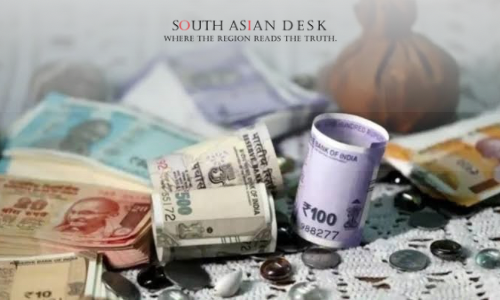
The Indian rupee depreciation to a record low of INR 88.29 against the US dollar, driven by US tariffs, threatening textiles and jewellery exports, risking job losses. On Friday, August 29, 2025, the Indian rupee (INR) plummeted to an all-time low of INR 88.29 against the US dollar in Mumbai, triggered by a new 25% US tariff on Indian goods, raising total duties to 50%. The Reserve Bank of India (RBI) intervened, selling dollars to stabilise the currency at INR 88.12 by 2:10 PM IST. This rupee fall, the worst in Asia this year with a 3% decline, stems from trade tensions and could disrupt India’s export-driven sectors.
Why It Matters
The rupee’s depreciation significantly affects South Asia’s largest economy, particularly India’s labour-intensive textiles and jewellery sectors, which account for 2.2% of GDP. A weaker rupee may increase export competitiveness but risks higher import costs and job losses, impacting millions of livelihoods.
Economic Fallout from Rupee Depreciation
The rupee’s slide past INR 88, breaching its previous low of INR 87.95 from February 2025, has raised alarms for India’s USD 87 billion export market to the US. Textiles, gems, jewellery, leather, and marine products face heightened risks, with 55% of India’s US-bound exports vulnerable to the 50% tariff. Economists estimate a 60–80 basis point reduction in India’s GDP growth if tariffs persist, potentially slowing the projected 6.5% growth for the fiscal year ending March 31, 2026.
Anindya Banerjee, head of foreign exchange research at Kotak Securities, noted, “Once the rupee hit INR 87.60, unhedged importers rushed to buy dollars, triggering stop losses as it crossed INR 88.” He highlighted INR 89 as the next critical level to monitor. The tariff-led drag could exacerbate India’s trade deficit, already strained by weak foreign portfolio inflows, with USD 9.7 billion in Indian debt and equities sold in 2025.
Central Bank’s Response to Rupee Fall
The RBI’s intervention on August 29, 2025, involved dollar sales through state-run banks to curb the rupee’s decline. However, traders reported limited initial action, allowing the currency to slip past INR 88 before rebounding to INR 88.12. The central bank’s efforts follow a pattern of interventions, with USD 6.9 billion sold in the spot market during the week ending August 1, 2025, contributing to a USD 9.3 billion drop in foreign exchange reserves to USD 688 billion.
Broader trade implications
The US tariffs, imposed over India’s continued purchase of Russian oil, have sparked diplomatic tensions. India’s Ministry of External Affairs called the duties “unfair, unjustified, and unreasonable” on August 11, 2025, emphasising India’s right to energy decisions. Sectors like pharmaceuticals and semiconductors remain exempt, preserving some supply chain stability. However, the rupee’s 1.6% monthly decline against the Chinese yuan, hitting 12.3307, underscores competitive pressures, as Chinese goods face lower 30% US tariffs.
Hari Shyamsunder, vice president at Franklin Templeton, warned that a tariff-led export slowdown could strain India’s trade balance, particularly with ongoing foreign portfolio outflows. India’s diversified export base and domestic demand may cushion some impacts, but labour-intensive sectors face significant risks.
Background
The rupee’s depreciation follows a series of US tariff hikes, starting with a 25% duty on August 1, 2025, and an additional 25% effective August 27, 2025. These measures, linked to India’s Russian oil imports, have strained US-India trade relations. The rupee’s 3% fall in 2025 marks it as Asia’s worst-performing currency, contrasting with gains in the Taiwanese dollar and South Korean won.
What’s Next
India’s government is pursuing diplomatic talks to mitigate tariff impacts, targeting a fair-trade agreement by autumn 2025. Commerce Minister Piyush Goyal has proposed support for micro, small, and medium enterprises (MSMEs) through loan guarantees and reduced certification fees. The rupee depreciation’s impact on textiles and jewellery exports will hinge on these negotiations and the RBI’s ability to stabilise the currency.
Published in SouthAsianDesk, August 29th, 2025
Follow SouthAsianDesk on X, Instagram, and Facebook for insights on business and current affairs from across South Asia.