Russia turns to India and Sri Lanka to address its deepening labour shortage amid war and demographic pressures.
Russia labor crisis, with officials estimating a need for 11 million additional workers by 2030. Moscow has signed agreements with New Delhi to ease migration procedures, while talks with Colombo aim to recruit Sri Lankan workers. This shift follows a surge in work permits for Indians, driven by workforce gaps in construction and manufacturing.
The move holds significance for South Asia, where millions seek overseas jobs. Remittances from Russia could boost economies in India and Sri Lanka, hit hard by recent crises. India alone saw work permits rise from 5,000 in 2021 to 56,000 in 2025, creating pathways for skilled labour.
Russia Foreign Labour Shortage Deepens
Russia’s foreign labour shortage has intensified due to multiple factors. Labour Minister Anton Kotyakov stated in 2025 that the economy requires 2 million workers annually over five years to replace retirees and fill vacancies. “By 2030 we need to bring 10.9 million people into the economy,” he said during a meeting with President Vladimir Putin.
The war in Ukraine has exacerbated the issue, with mobilisation and emigration draining the workforce. Official data from Rosstat shows unemployment at historic lows, but vacancies persist across sectors. Construction firms report shortages of 20-30 percent, while manufacturing and transport face similar strains.
Central Asian migrants, once the main source, have declined due to stricter policies and economic factors. Moscow now looks south, targeting populous nations like India and Sri Lanka for reliable labour.
Russia India Labour Migration Gains Momentum
Russia India labour migration has accelerated following a December 2025 agreement. Signed during Putin’s visit to New Delhi, the pact simplifies temporary work visas for skilled Indians.
The Indian Ministry of External Affairs welcomed the deal in a joint statement: “The Sides welcomed the signing of agreements related to mobility of skilled workers.” This builds on a framework for safe migration, promoting vocational training.
Data indicates impact. Over 70,000 Indians work in Russia, with plans for 40,000 more in 2026. Permits jumped to 56,000 in 2025, focusing on roles in Moscow and St Petersburg. Indian Ambassador Vinay Kumar noted many hail from poor regions, adapting to new environments.
This aligns with India’s push for overseas jobs. Prime Minister Narendra Modi’s press statement highlighted: “We will work together on vocational education, skilling.” The agreement addresses Russia’s labour crisis while aiding India’s employment goals.
Russia Sri Lanka Workers Recruitment Emerges
Russia Sri Lanka workers’ recruitment is a newer focus. Reports suggest Moscow engages Colombo to tap Sri Lanka’s workforce, hit by economic turmoil.
Sri Lanka’s Foreign Ministry reported record remittances of USD 7.8 billion in 2025, with 312,000 citizens finding foreign jobs. Russia ranks among top tourist sources, but labour ties are growing.
The Russian-Asian Union of Industrialists and Entrepreneurs met Sri Lankan officials in 2025 to develop mechanisms for skilled migrants. Purpose: Increase flows to Russia, establishing training centres.
Sri Lankan Minister Vijitha Herath outlined reforms for equitable access to jobs. Combined with tourism earnings, remittances reached USD 11 billion in 2025. Russia Sri Lanka workers could add to this, filling gaps in Russia’s foreign labour shortage.
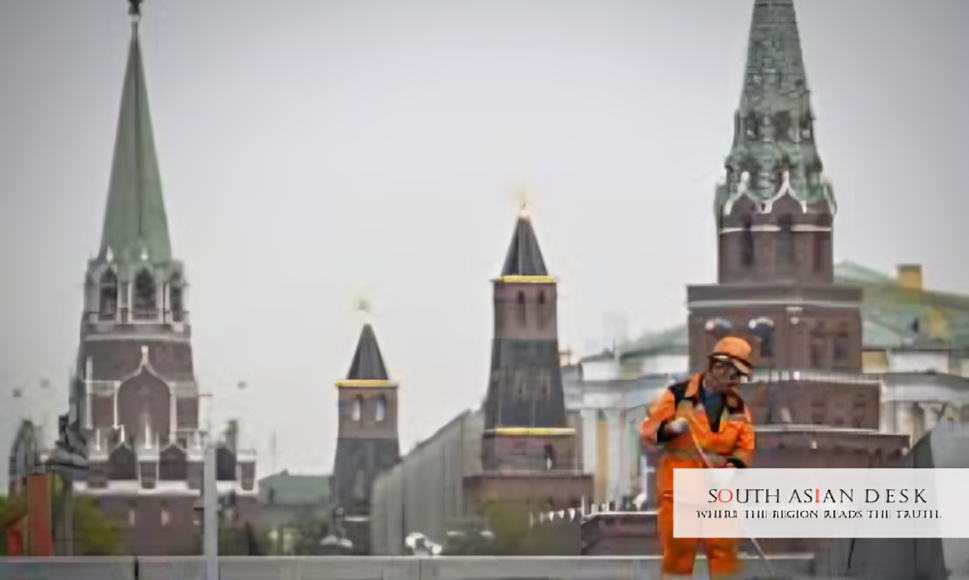
Challenges remain. Migrants face harsh winters and cultural shifts. Videos show Indians struggling with snow clearance, highlighting adaptation needs.
Background: Roots of Russia Labor Crisis
Russia’s labour crisis stems from long-term trends. Low birth rates since the 1990s have shrunk the working-age population. Emigration spiked post-2022, with skilled professionals leaving.
War demands diverted manpower. Factories run overtime, but output lags due to shortages. Economy grew 3.6 percent in 2025, yet inflation hit 8 percent amid wage pressures.
Government responses include incentives for families and automation. Yet, foreign labour remains key. Putin warned in 2025 that population decline threatens Russia’s future.
South Asian recruitment diversifies sources. Beyond India and Sri Lanka, talks involve Bangladesh and Nepal. This strategy aims to sustain growth despite sanctions.
What’s Next
Russia plans a skilled visa route from April 2026, offering residency without language tests. This could attract more from South Asia, easing the labour crisis.
Officials target 11 million by 2030, with annual quotas rising. Success depends on integration and geopolitical stability.
The Russia labour crisis persists, but South Asian partnerships offer a path forward.
Published in SouthAsianDesk, February 8th, 2026
Follow SouthAsianDesk on X, Instagram and Facebook for insights on business and current affairs from across South Asia.