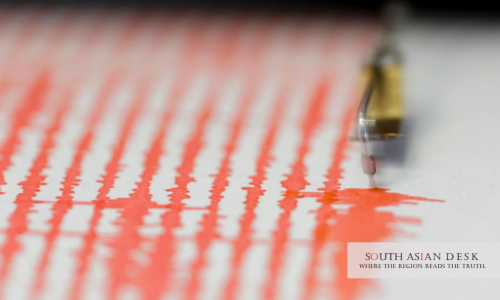
A 3.3-magnitude Savar Baipail earthquake struck at 10:36 am on Saturday, November 22, 2025, sending tremors through Baipail and nearby areas in Savar, Dhaka district. The event, confirmed by the Bangladesh Meteorological Department (BMD), follows Friday’s 5.7-magnitude quake that killed at least 10 people and injured hundreds. No damage or casualties occurred from this second earthquake in Savar, but it heightened anxiety among locals already on edge.
The Baipail tremor today is centred 29km west of BMD’s Agargaon seismic station, at a shallow depth of 10km. Residents reported a brief jolt that lasted seconds, prompting some to evacuate their buildings. Officials urged calm, stating that the mild quake’s aftershock in Savar posed no immediate threat.
Event Details and Official Confirmation
The Savar Baipail earthquake registered 3.3 on the Richter scale, according to BMD data released hours after the event. Nizamuddin Ahmed, a BMD official, confirmed the timing and location in statements to local media. “The tremor occurred in the Baipail area under Ashulia Thana of Savar upazila,” Ahmed said. The epicentre lay approximately 29km west of the Agargaon seismic centre, placing it within the densely populated outskirts of Dhaka.
BMD’s monitoring systems detected the quake instantly, with no discrepancies in international readings. The United States Geological Survey (USGS) recorded a similar 3.2 magnitude nearby, aligning closely with BMD figures. Depth estimates hovered at 10km, typical for shallow events that amplify surface shaking.
This Baipail tremor today marked the second earthquake in Savar within 24 hours. Friday’s precursor, a 5.7-magnitude event at 10:38 am, originated in Madhabdi, Narsingdi, 13km east of Agargaon. That quake caused widespread panic, with buildings swaying for 26 seconds. At least four deaths occurred in Dhaka from falling debris, five in Narsingdi, and one in Narayanganj, per health ministry reports. Over 500 injuries followed, many from panic-induced falls or structural failures.
In contrast, the mild quake Savar aftershock produced no such chaos. Eyewitnesses in Baipail described a “gentle rumble” felt in homes and factories. One garment worker in Ashulia said, “We felt a small shake, but remembered yesterday’s terror and ran outside anyway.” No structural assessments revealed issues, and emergency services stood down quickly.
Regional Impact and Public Response
The second earthquake in Savar rippled beyond Baipail, with faint tremors reported in parts of Dhaka, Gazipur, and Narayanganj. Schools and offices in Savar paused briefly, allowing evacuations. Traffic halted on key roads, such as the Dhaka-Aricha highway, as drivers pulled over.
Health officials from the Directorate General of Health Services (DGHS) monitored for stress-related cases but reported none tied to this event. A DGHS spokesperson noted, “Post-Friday, we have seen a spike in anxiety consultations, but today’s mild event did not trigger emergencies.
Garment factories in Savar, a hub employing thousands, resumed operations within minutes. The Bangladesh Garment Manufacturers and Exporters Association (BGMEA) issued guidance reminding workers of evacuation drills. Yesterday’s quake damaged several facilities in Gazipur, injuring over 200 due to locked exits, but today’s Baipail tremor spared the sector further disruption.
Social media buzzed with #SavarQuake posts, blending relief and worry. Users shared videos of swaying lights in Baipail homes, captioned “Second earthquake in Savar – when will it stop?” Searches for “Baipail tremor today” surged, reflecting the public’s thirst for real-time updates.
Seismic Context in Bangladesh
Bangladesh faces a high seismic risk, as it lies between the Indian and Eurasian tectonic plates. Active faults like the Dauki and Madhupur crisscross the north and centre, fuelling frequent quakes. Dhaka ranks among the world’s 20 most vulnerable cities, according to global risk indices, due to its soft soil that amplifies tremors and inadequate building codes.
BMD data show 60 earthquakes since 2024, with three above 4.0 magnitude and 31 between 3.0 and 4.0 magnitude. Historical records document five major events from 1869 to 1930 with magnitudes exceeding 7.0, including the 1897 Great Assam quake that devastated Sylhet. Recent decades have been quiet, but experts warn that this lull precedes a buildup.
The Savar Baipail earthquake fits a pattern of aftershocks. Friday’s 5.7 event qualifies as a mainshock, with this 3.3 as a likely mild aftershock of the Savar earthquake. Md Momenul Islam, BMD director (current charge), explained to the media: “Proximity to Dhaka intensifies felt effects, even for lower magnitudes.” He linked the intensity to the epicentre’s nearness, urging retrofitting in high-risk zones.
Urban growth exacerbates threats. Dhaka’s population tops 20 million, with many structures on liquefiable sediment. A 2018 World Bank study estimated that a 7.0 earthquake could result in 87,000 deaths and displace millions, costing BDT 200 billion (approximately USD 1.7 billion). Savar’s industrial belt, which includes export factories, amplifies the economic stakes.
This second earthquake in Savar underscores gaps in preparedness. Only 10% of buildings in Dhaka meet seismic standards, according to government audits. Rural-urban migration swells Savar, straining infrastructure. The Baipail tremor today, though minor, spotlights the need for community drills and early warning systems.
Government and Expert Actions
Authorities mobilised swiftly. The Disaster Management Division, under the Ministry of Disaster Management and Relief, activated helplines to field calls on quake safety. Fire Service and Civil Defence teams patrolled Baipail, inspecting bridges and high-rises. No alerts issued, given the low magnitude.
BMD ramped up surveillance, deploying extra seismographs in Savar. “We monitor 24/7 for aftershock patterns,” a department release stated. International partners, such as the USGS, shared data, confirming that there is no tsunami risk.
Seismologists view this as routine. “Aftershocks decline over days, but vigilance remains key,” said a BMD researcher in a TBS interview. Public advisories emphasized the “drop, cover, hold” response during jolts and post-event checks for structural cracks.
In South Asia, the event echoes regional vulnerabilities. Neighbouring India felt Friday’s tremors in Kolkata, prompting bilateral talks on shared monitoring. Bangladesh’s position facilitates cross-border cooperation, which is vital for a quake-prone belt stretching from the Himalayas to the Bay of Bengal.
Background: Friday’s Devastating Quake
The precursor to this Savar Baipail earthquake unfolded on Friday, November 21, 2025, at 10:38 am. A 5.7-magnitude jolt from Madhabdi shook Dhaka for 26 seconds, toppling walls in Old Dhaka and leaning structures in Kalabagan. Casualties mounted quickly: a newborn died in Rupganj from a collapsed wall, while panic claimed others.
Hospitals overflowed with 500+ injured, many of whom were garment workers from Gazipur. Rescue operations pulled survivors from the debris, with army units aiding the civil defense. Economic fallout hit hard, halting factories and markets. BMD’s initial alert reached mobiles seconds after, a first for the system.
This event revived memories of 2004’s 6.0 quake near Dhaka, which killed two. It highlighted retrofitting lags, with experts calling for enforced codes since.
What’s Next: Bolstering Resilience
Authorities plan seismic audits in Savar by mid-December. BMD forecasts low odds of aftershocks but prepares for various scenarios. Community workshops are scheduled to roll out next week, teaching participants how to respond to earthquakes. In the long term, a national resilience fund aims to allocate BDT 50 billion for upgrades.
Residents in Baipail and beyond eye the horizon warily. As seismic whispers persist, Bangladesh fortifies against nature’s tremors. The Savar Baipail earthquake, though mild, signals the urgency of action in this quake-shadowed land.
Published in SouthAsianDesk, November 22nd, 2025
Follow SouthAsianDesk on X, Instagram, and Facebook for insights on business and current affairs from across South Asia.