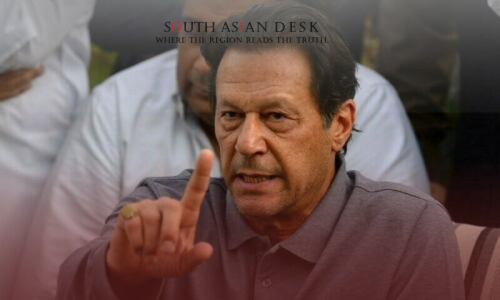
Amid the lingering shadows of political turmoil that have left many Pakistanis feeling a profound sense of injustice and uncertainty, the SC Imran khan bail appeal will resume on 12 August, offering a glimmer of possibility for former Prime Minister Imran Khan in his ongoing legal battles. The Supreme Court, led by a three-judge bench under Chief Justice Yahya Afridi, alongside Justices Muhammad Shafi Siddiqui and Miangul Hassan Aurangzeb, is set to hear arguments in the case stemming from the denial of post-arrest bail in eight incidents linked to the May 9 disturbances.
A Test for Justice in Pakistan’s Political Storm After Imran Khan Bail Appeal
Khan, the founding chairman of Pakistan Tehreek-e-Insaf, faces charges related to alleged attacks on various sites in Lahore, including Askari Tower, Pakistan Muslim League-Nawaz offices, Shadman police station, and the burning of police vehicles near the corps commander’s residence, as well as violence at Sherpao Bridge. His arrest on 9 May 2023, from the Islamabad High Court premises, triggered widespread unrest and led to multiple first information reports in Lahore and Islamabad. Supporters across the nation, who have endured the emotional strain of seeing their leader detained, cling to the hope that this hearing might bring relief after prolonged hardship.
Background of Bail Rejection
The appeal challenges the Lahore High Court’s decision on 24 June 2025, which upheld the anti-terrorism court’s earlier refusal of bail on 27 November 2024. Khan’s legal team contends that the prosecution’s case relies on delayed supplementary statements from police officials, introduced without clear justification, which they describe as fabricated evidence aimed at implicating him through vague accusations of conspiracy and abetment. They argue that Khan could not have been involved, as he was already in custody with the National Accountability Bureau at the time of the alleged offences, a point that resonates deeply with families who feel the weight of what they perceive as targeted persecution since his removal from office in 2022.
Previous sessions of the appeal were postponed due to the absence of Khan’s senior counsel, Salman Safdar, but with the bench now reconvening, attention turns to whether the court will consider the lack of direct evidence and the prosecution’s inconsistent narratives. The petition asserts that no convincing links tie Khan to the events, and questions why authorities failed to act on supposed prior knowledge of a plot as early as 7 May 2023, labelling such claims as illogical and driven by motives beyond the pursuit of truth. It also highlights that arrests were not pursued diligently for months, despite Khan’s known location in Adiala jail, suggesting the process served as an instrument of suppression rather than genuine investigation.
Pakistanis and The Bail Case
This case evokes raw emotions among ordinary Pakistanis, many of whom recall the chaos of those days and yearn for a fair resolution that could restore faith in the judicial system. As communities divided by political loyalties reflect on the human cost of these protracted disputes, the hearing represents more than a legal proceeding; it symbolises the fragile quest for equity in a nation grappling with division. With eyes fixed on the Supreme Court, the SC Imran khan bail appeal continues to stir hearts, embodying the collective longing for clarity and compassion in turbulent times.
Published in SouthAsianDesk, August 10th, 2025
Follow SouthAsianDesk on X, Instagram, and Facebook for insights on business and current affairs from across South Asia.