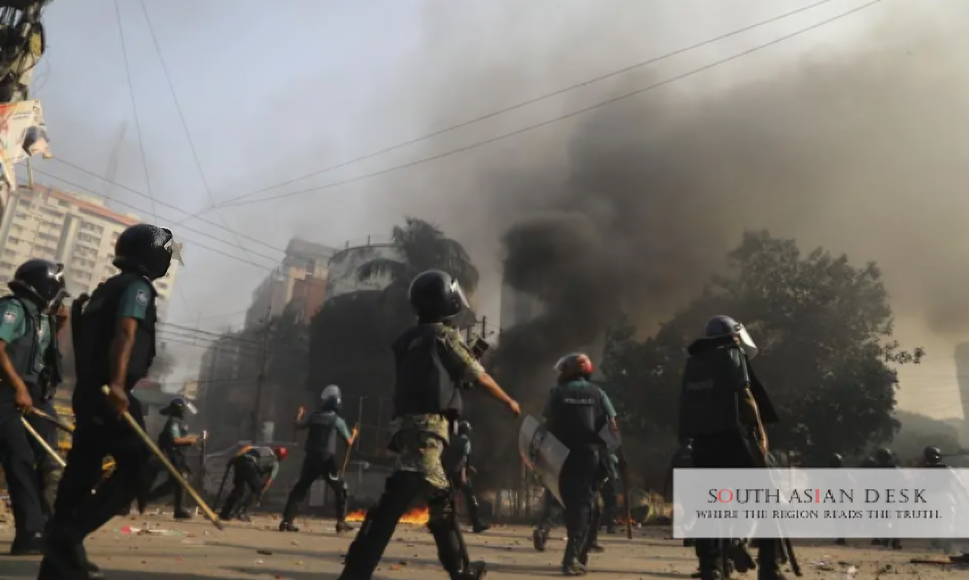
Sheikh Hasina supporters protest erupted across the nation on Thursday, triggering widespread violence including 32 crude bomb explosions and multiple arson attacks amid a called lockdown by the Awami League.
The unrest, centred in the capital and other cities, underscores deep divisions in Bangladesh’s fragile transition. With a verdict due on Monday in Hasina’s trial for crimes against humanity, the demonstrations highlight risks to regional stability in South Asia, where exiled leaders and interim regimes fuel cross-border tensions.
Awami League Nationwide Protest Hasina Verdict Escalates Tensions
Supporters of former Prime Minister Sheikh Hasina, led by her Awami League party, initiated a nationwide lockdown on November 13 to oppose the upcoming verdict in her trial. The action, described by the party as a peaceful stand for democracy, quickly devolved into disorder. Police reported 32 crude bomb detonations on Wednesday, followed by two more near Dhaka’s airport late Thursday. No deaths occurred from the airport blasts, but the incidents paralysed transport networks.
In Gopalganj district, Hasina’s ancestral home a fire bomb struck a government office. Separately, arsonists torched a Grameen Bank branch in eastern Bangladesh, an institution founded by interim leader Muhammad Yunus. Dozens of buses burned nationwide, forcing schools in Dhaka and major cities to shift classes online. These Sheikh Hasina Awami League disruptions halted daily life, with shops shuttered and roads empty by midday.
The Awami League, banned from February’s elections, framed the lockdown as resistance against “illegitimate power.” In an official statement posted on X, the party urged activists to maintain peace while demanding Yunus’s resignation. “This lockdown is not about restriction; it is about resistance,” the statement read. It accused the regime of sponsoring violence to disCredit the movement and vowed to continue until “rights are restored.”
Authorities responded swiftly. Bangladesh police arrested 31 Awami League members in Dhaka for alleged preparations tied to the lockdown, according to a Dhaka Tribune report citing official sources. Broader arrests reached dozens nationwide for suspected involvement in explosions and sabotage. The interim government deployed 400 Border Guard soldiers to Dhaka, bolstering checkpoints and banning public gatherings.
Muhammad Yunus, chief adviser of the interim administration, inherited a “completely broken political system,” he stated in a recent address. His press secretary, Shafiqul Alam, described the situation as “war-like,” blaming banned Awami League elements for destabilisation attempts. These measures aim to avert further escalation before Monday’s ruling.
Bangladesh Lockdown Hasina Trial Supporters Face Crackdown
The protests stem from Hasina’s ongoing trial in absentia at Dhaka’s International Crimes Tribunal. Accused of masterminding a deadly crackdown on 2024 student demonstrations sparked by a job quota system, prosecutors seek the death penalty. Hasina, who fled to India in August 2024 amid mass unrest that killed up to 1,400 per UN estimates, denies all charges.
In a BBC interview aired Friday, Hasina called the proceedings a “farce” by a “kangaroo court.” “The trial was destined to deliver a pre-ordained guilty verdict,” she said. She admitted “mistakes were certainly made by security forces” but rejected personal orders to fire on civilians. “I categorically deny such allegations,” Hasina added, vowing to fight what she terms politically motivated liquidation of her party.
The Awami League echoed this in X posts, labelling the tribunal unconstitutional. One statement highlighted public outrage over “corruption and plundering” under Yunus, claiming 80 per cent of Bangladeshis demand elected governance. Party leaders, including Hasina’s son Sajeeb Wazed, have rallied online support, insisting the movement embodies Bangabandhu ideals.
Violence marred the lockdown from the outset. On November 12, crude bombs targeted transport hubs, injuring several. Friday’s airport blasts prompted airport closures for hours. Rights group Odhikar reported ongoing impunity for abuses, even under Yunus, with extrajudicial killings persisting. These Sheikh Hasina supporters protest actions risk broader unrest, as BNP-Jamaat alliances exploit divisions.
Economically, the disruptions cost millions. Traders reported BDT 500 million (Bangladeshi Taka) in losses from halted commerce. Farmers faced unsold harvests, while garment factories, key to 4 million jobs operated at half capacity. Transport unions halted services, stranding thousands.
Why This Matters: Sheikh Hasina Awami League Disruptions and South Asian Stability
In South Asia, Bangladesh’s turmoil reverberates beyond borders. Hasina’s exile in India strains Dhaka-New Delhi ties, with Yunus accusing her of provocative speeches. Indian media reports suggest Modi rebuffed requests to silence her, citing free speech. Potential refugee flows could burden West Bengal and Assam, already tense over migrant issues ahead of 2026 polls.
The crisis tests Yunus’s reform agenda. A July charter proposes constitutional overhaul, but a February referendum ties it to elections. Critics, including Hasina, decry it as authoritarian. With Awami League banned, polls risk low legitimacy, empowering Islamists or BNP. UN investigators warn of 1,400 deaths from 2024 violence, urging accountability to prevent cycles of reprisal.
Regionally, economic fallout looms. Bangladesh’s garment exports worth USD 45 billion annually support South Asian supply chains. Disruptions could spike inflation in India and Pakistan. Diplomatically, Pakistan’s alleged terror links, per Hasina, heighten rivalries. As Yunus pushes unity, protests expose fractures that could destabilise the Bay of Bengal hub.
Background: From Uprising to Trial
Hasina’s 15-year rule ended in August 2024 after student protests turned deadly. Security forces’ response drew global condemnation for disappearances and killings. Yunus, a Nobel laureate, assumed power, banning Awami League activities in May 2025 amid ban protests. The tribunal indicted Hasina in July, charging systematic attacks.
Hasina’s defenders cite development gains: GDP growth hit 7 per cent yearly, poverty halved. Detractors highlight autocracy, with 600,000 arrests per rights groups. The lockdown marks the boldest Awami League defiance since the ban.
What’s Next for Sheikh Hasina Supporters Protest
Monday’s verdict could ignite fresh waves. If guilty, extradition bids from India face hurdles. Awami League plans extended shutdowns through November 17, per X announcements. Yunus eyes reforms, but security lapses risk escalation. Analysts predict mediated talks, yet Sheikh Hasina supporters protest persist as a rallying cry for the ousted regime’s return.
As Bangladesh navigates this flashpoint, the world watches: will justice heal or harden divides?
Published in SouthAsianDesk, November 14th, 2025
Follow SouthAsianDesk on X, Instagram, and Facebook for insights on business and current affairs from across South Asia.