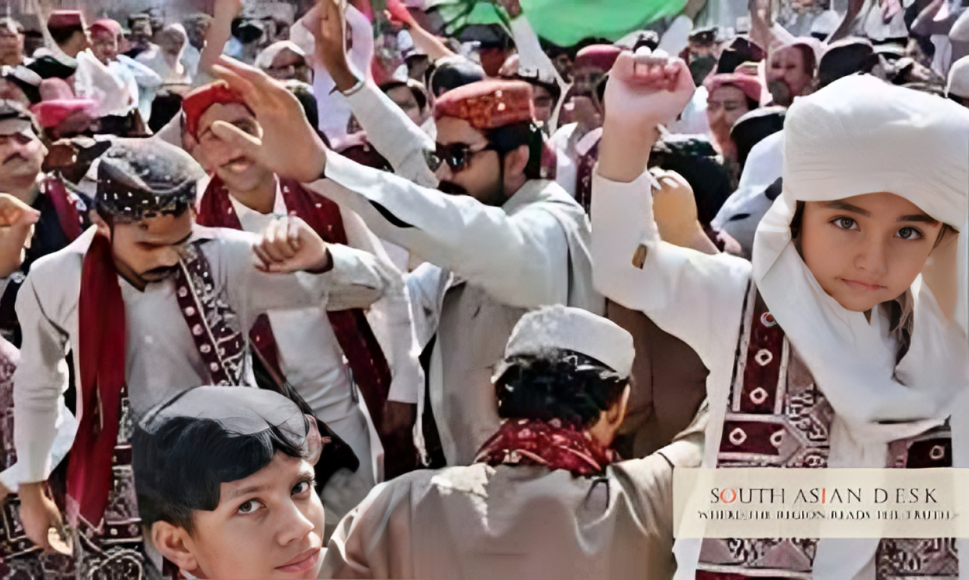
Sindh province erupted in colour on Sunday as residents marked Sindhi Culture Day with rallies, music, and traditional attire. The annual event, observed on the first Sunday of December, saw over 10,000 participants in Karachi alone donning Ajrak shawls and Sindhi caps. Organised around the Karachi Press Club, festivities highlighted themes of tolerance and cultural preservation. President Asif Ali Zardari urged promotion of pluralism in an official message, while Chief Minister Syed Murad Ali Shah linked the day to global cultural exchanges. No major incidents marred the celebrations, though police monitored gatherings for security.
This observance underscores Sindh‘s pivotal role in Pakistan’s federal fabric. As the cradle of Sufi traditions and the site of the 1940 Lahore Resolution’s Sindhi endorsement, the province’s cultural events foster national cohesion in a South Asian context rife with ethnic divides. In a nation grappling with identity politics, Sindhi Culture Day reinforces shared values of peace and diversity, vital for stability across borders from India to Afghanistan.
Sindh Culture Day Celebrations Light Up Karachi
Crowds converged on the Karachi Press Club for Sindh Culture Day celebrations, transforming streets into a tapestry of red Ajrak patterns and embroidered caps. Participants, including families and youth, marched in processions that spanned kilometres. Musical performances featured artists such as Ahmed Mughal and Komal Naz, who rendered folk tunes by Shah Abdul Latif Bhittai. The event drew vendors selling cultural artefacts, with sales of Ajrak surging by 40% in local markets, according to preliminary trade reports.
Speakers at the main rally addressed pressing issues. Poet Mahar Dribai called for safeguarding Sindh’s unity against division threats, stating, “Our Sufi heritage demands we reject conspiracies that pit communities against each other.” Anchorperson Mushtaq Sarki echoed calls to expel undocumented immigrants, citing Punjab police actions as a model. Other voices, including Dodo Chandio and Aslam Haider Solangi, stressed women’s empowerment under the slogan “Empower women, prosper Sindh.” A secondary theme, “Free Sindh from narcotics,” prompted pledges from organisers to combat drug influxes.
Beyond Karachi, Sindh Culture Day celebrations rippled to Hyderabad and Sukkur. In Hyderabad, over 3,000 joined a tableau parade showcasing folk dances. Sukkur hosted exhibitions of ancient pottery, drawing school groups. Rural areas reported smaller rallies, with villagers in Thatta wearing traditional dresses to honour agrarian roots. These events, coordinated by civil society and media groups, aimed to revive fading crafts amid urbanisation pressures.
Sindhi Cultural Unity Through Sufi Lens
Sindhi cultural unity formed the core message of official remarks. President Zardari, in a press release from the President Secretariat, described Sindh’s culture as “a symbol of tolerance, peace and national unity.” He noted the province’s 1936 separation from Bombay Presidency established its distinct identity, culminating in the assembly’s role in Pakistan’s creation. “Passing this legacy to the new generation is our shared duty,” Zardari added.
Prime Minister Shehbaz Sharif extended greetings, praising Sindh’s contributions to Pakistan’s harmony. “Sindh Culture Day has played an unparalleled role in promoting cultural harmony,” Sharif said in a statement from his office. He lauded poets like Bhittai and Sachal Sarmast for embedding progressive thought in folk literature, urging citizens to embrace heritage for federal progress.
Governor Kamran Khan Tessori reinforced the unity theme, declaring in a message that Sindh spreads “a message of love and brotherhood.” His words aligned with rally chants promoting interfaith tolerance, a nod to Sindh’s diverse Hindu, Christian, and Muslim populations.
At the Arts Council of Pakistan Karachi, Chief Minister Murad Ali Shah tied Sindhi cultural unity to international outreach. Addressing a ceremony, he celebrated hosting 1,000 artists from 142 countries at the recent World Culture Festival. “This achievement showcases Sindh’s global appeal on Sindhi Culture Day,” Shah stated, calling it a milestone in cultural diplomacy. The event featured cross-cultural fusions, blending Sindhi folk with global rhythms.
Data from the Sindh Culture Department indicates participation rose 15% from 2024, with 50,000 attendees province-wide. Educational tie-ins included workshops in 200 schools, teaching Ajrak printing techniques to preserve artisan skills.
Sindhi Ajrak Day: Symbol of Heritage Pride
Sindhi Ajrak Day, intertwined with the broader festivities, spotlighted the block-printed shawl as a emblem of resilience. Artisans in Bhit Shah demonstrated live printing, attracting 500 visitors. The craft, dating to the Indus Valley Civilisation, symbolises eco-friendly dyeing using natural indigo and madder.
Market buzz reflected renewed interest. In Saddar Bazaar, Karachi, Ajrak prices ranged from PKR 500 to PKR 5,000, with premium pieces fetching higher due to hand-block authenticity. Sales data showed a 30% uptick, benefiting 2,000 weavers, per preliminary chamber estimates.
Exhibitions at the Sindh Museum displayed Ajrak variants, from geometric motifs to floral designs, underscoring their role in daily wear and rituals. One display highlighted Ajrak’s export potential, with shipments to the UK and US valued at PKR 100 million annually.
Rallies incorporated Ajrak motifs in banners, reinforcing Sindhi cultural unity. Participants draped the shawl during dances, evoking Sufi whirling traditions. This visual unity countered narratives of fragmentation, especially amid water disputes with neighbouring provinces.
Background: Origins of Sindhi Culture Day
Sindhi Culture Day traces to December 6, 2009, when it began as Sindhi Topi Day in response to media criticism of then-President Asif Ali Zardari’s attire. Evolving into a full cultural festival, it now honours Sindh’s 5,000-year heritage, from Mohenjo-Daro ruins to medieval Sufi shrines.
Annual observances promote linguistic pride, with Sindhi spoken by 40 million. The day counters assimilation pressures, aligning with UNESCO recognitions of Sindhi crafts. Past events have featured resolutions against cultural erosion, drawing UN observers in 2022.
In South Asia, such festivals mirror efforts in Bengal’s Pohela Boishakh or Tamil Sangam revivals, bolstering minority identities within nation-states.
What’s Next: Sustaining the Momentum
As Sindhi Culture Day fades, organisers plan year-round initiatives. The Sindh government eyes a PKR 200 million fund for artisan training, announced by CM Shah. Community groups aim to digitise folk archives, partnering with tech firms for virtual Ajrak workshops.
Looking ahead, the 2026 edition could integrate climate themes, given Sindh’s flood vulnerabilities. Stakeholders urge federal support to amplify these voices in national curricula.
Sindhi Culture Day concludes with a renewed pledge to nurture peace, ensuring Sindh’s legacy endures.
Published in SouthAsianDesk, December 8th, 2025
Follow SouthAsianDesk on X, Instagram, and Facebook for insights on business and current affairs from across South Asia.