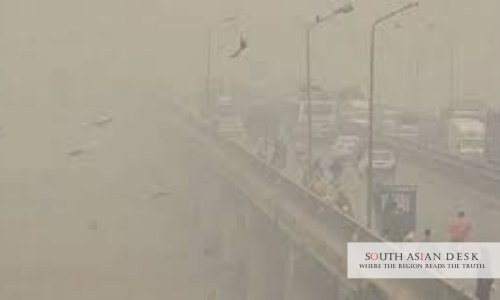
Thick smog envelops Punjab Pakistan on Friday, November 21, 2025, pushing air quality to hazardous levels across major districts. Bahawalpur recorded an AQI of 469, while Lahore’s levels fluctuated between 197 and 366. Officials from the Punjab Environmental Protection Agency (EPA) declared a public health emergency, citing crop burning and vehicle emissions as primary causes.
The crisis disrupted daily life, prompting school closures in 18 districts. This marks the fourth consecutive day of severe pollution, with enforcement actions intensifying under Chief Minister Maryam Nawaz’s directives. The Punjab smog crisis underscores a recurring environmental threat in South Asia, where seasonal haze from agricultural practices and industrial activity crosses borders, straining healthcare systems and economies.
In a region home to over 1.5 billion people, unchecked air pollution contributes to thousands of premature deaths annually, eroding productivity and exacerbating climate vulnerabilities. For Pakistan’s densely populated Punjab province, with its 127 million residents, the crisis amplifies risks for vulnerable groups like children and the elderly, demanding regional cooperation on emissions controls.
Punjab Smog Crisis: Lahore AQI Hazardous, Visibility Drops to Zero
Lahore, Punjab’s capital, grappled with the Punjab smog crisis as its AQI peaked at 366 by 9 AM on Friday. Monitoring stations at key sites reported varying readings: Chauburji at 305, Chungi Amar Sidhu at 342, and Model Town at 448. The city’s ranking as the world’s second-most polluted urban area on Thursday evening highlighted the severity. IQAir data confirmed PM2.5 levels exceeded 30 times the World Health Organisation guideline, turning the air toxic for residents.
Across Punjab Pakistan, the smog blanketed urban centres, reducing visibility to near zero in some areas. Faisalabad clocked an AQI of 436 at 9 AM, Multan 308, and Sialkot 226. Bahawalpur’s 469 reading at 8 AM stood as the province’s highest, classifying all levels above 300 as hazardous. Commuters navigated fog-like conditions, with traffic snarls reported on major highways. The Punjab EPA attributed the spike to stagnant weather patterns, absent rainfall since September, and unchecked emissions from vehicles and industries.
Health experts warn that prolonged exposure risks respiratory illnesses, eye irritation, and cardiovascular issues. Hospitals in Lahore noted a 40 per cent rise in cases of smog-related ailments since early November. UNICEF highlighted that 11 million children under five in Punjab face acute dangers, with potential long-term effects on lung development. Pregnant women and the elderly report heightened vulnerabilities, prompting advisories for indoor stays and mask usage.
Anti-Smog Measures: Fines Top PKR 225 Million in Crackdown
Punjab authorities escalated anti-smog measures amid the crisis, registering 2,749 cases since the campaign’s launch. Fines exceeded PKR 225.7 million, with 2,422 arrests for violations including crop residue burning and operating smoke-emitting vehicles. In the last 24 hours alone, 23 cases led to arrests across districts like Lahore and Faisalabad. The Punjab police, in tandem with the EPA, enforced a zero-tolerance policy, impounding vehicles for repeat offenders.
EPA spokesperson Sajid Bashir stated, “Two thousand delivery challans were issued in just four days, and action will be further intensified.” Punjab Inspector General of Police Dr Usman Anwar directed officers to target highways, industrial zones, and agricultural fields. Construction sites faced scrutiny, with Rs1.35 million in fines on 556 individuals for failing to implement dust controls like green covers and water sprinkling.
The government introduced the Green Punjab smartphone app for citizens to report violations, such as garbage burning or non-compliant kilns.
Under the Smog Prevention and Control Act 2023, double fines apply to second offences, escalating to vehicle seizures on third violations. Senior Minister Marriyum Aurangzeb, chairing a recent strategy meeting, outlined short-, medium-, and long-term plans. These include mapping industrial zones, solarising government buildings, and distributing 1,000 super seeder machines to farmers in districts like Okara and Sialkot to curb stubble burning.
Budget allocations support these efforts, with PKR 50 million dedicated to cleaner practices in transportation, energy, and waste management. The initiative promotes zigzag technology for brick kilns and establishes smog coordination units in departments. International collaborations provide technical aid, focusing on policy reforms and public awareness campaigns at the grassroots level.
School Closures Grip 18 Districts in Health Emergency
The Punjab air pollution health emergency triggered widespread school closures as anti-smog measures prioritised student safety. All public and private institutions in 18 districts, including Lahore and Multan, shut until November 17, later extended amid persistent haze. Universities shifted to online classes, while parks, zoos, and sports events faced bans. Markets enforced early closures, exempting essential services like pharmacies and fuel stations.
These steps addressed the hazardous AQI, protecting over 11 million school-aged children from toxic exposure. Construction halted province-wide, and outdoor dining ceased in affected areas. The EPA’s circular on November 16 imposed hose pipe bans and promoted water conservation to mitigate dust. Educational reforms now integrate climate studies, with internships on environmental protection.
Despite a PKR 137 billion Lahore Development Plan, site inspections revealed lapses in EPA guidelines. Officials noted particulate matter from unchecked construction worsened the smog envelops Punjab Pakistan scenario. Enforcement teams visited over 50 sites, issuing warnings and fines to ensure compliance.
Background: Recurring Smog Threat in Punjab Pakistan
The Punjab smog crisis traces to annual winter patterns, intensified by crop burning post-harvest and inversion layers trapping pollutants. In November 2024, Lahore’s AQI surpassed 1,200, overwhelming hospitals with respiratory cases. This year’s episode, though peaking lower at times, maintains unhealthy averages in the mid-200s, per EPA data. Historical trends show pollution shortening life expectancy by seven years in Lahore, per the Air Quality Life Index.
Transboundary flows from India add complexity, with Punjab officials urging joint Punjabs’ collaboration. Fossil fuel reliance, urban expansion, and inadequate public transport fuel the cycle. Previous campaigns registered thousands of violations, yet enforcement gaps persist. The Climate Resilient Punjab Vision 2024 outlines long-term goals like greening 10,000 trees in Karol Forest and waste reduction targets by June 30, 2026.
What’s Next: Intensified Enforcement and Regional Dialogue
Forward momentum includes reconstituting a cabinet committee on smog and forming district-level taskforces. The EPA plans track-and-trace systems for emissions sources, with institutional frameworks ready in three months. Public campaigns emphasise anti-smog machinery use, while international partners fund kiln upgrades. As smog envelops Punjab Pakistan, sustained rains and stricter border talks could ease the burden, but experts stress immediate zero-emission shifts for lasting relief.
Authorities anticipate further crackdowns, with vehicle checks doubling next week. The health emergency persists until AQI drops below 150, urging residents to monitor updates via official apps.
Published in SouthAsianDesk, November 21st, 2025
Follow SouthAsianDesk on X, Instagram, and Facebook for insights on business and current affairs from across South Asia.