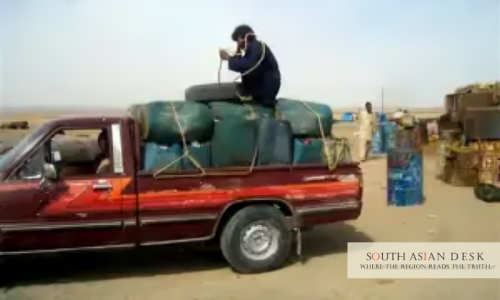
Smuggled Iranian diesel, totaling 1,764,615 liters, was seized in Balochistan on Tuesday, December 9, 2025. The Pakistan Coast Guards (PCG) conducted raids in the Uthal, Gwadar, and Pasni areas. Maritime patrols netted 18,000 litres more. The fuel is being transported to Karachi via both road and sea. Authorities valued the haul at Rs487.03 million. Investigations probe the smuggling network. This bust highlights ongoing Iran-Pakistan fuel smuggling in 2025, where cheaper Iranian diesel undercuts local markets and drains revenue.
The seizure underscores vulnerabilities in Pakistan’s southwestern border. Balochistan serves as a key transit for illicit trade, sustaining 2.4 million livelihoods but fuelling black markets worth $1 billion annually. In South Asia, it strains energy security, as smuggled fuel evades taxes and supports informal economies in Afghanistan and Iran. Disruptions here ripple to urban centres like Karachi, inflating prices and challenging IMF-mandated fiscal reforms. Enhanced PCG efforts signal a crackdown, yet porous routes persist amid regional tensions.
PCG Seizes Smuggled Diesel in Balochistan: Multi-Site Raids Unfold
PCG seizes smuggled diesel. Balochistan operations target land and sea routes simultaneously. Intelligence tips led teams to road check posts in Uthal and Gwadar. Patrols intercepted 1,746,615 litres loaded in trucks and tankers. The vehicles now sit impounded at PCG stations.
A PCG spokesperson detailed the action. “Intelligence-based operations were carried out in several parts of Balochistan, including Uthal, Gwadar, and Pasni road check posts as well as through sea routes.” Maritime units boarded suspect vessels off Pasni, recovering 18,000 litres in barrels. Crews face questioning on origins.
The diesel bore Iranian markings, per initial scans. Quality tests confirm it matches subsidised grades sold below PKR 200 per litre across the border, versus PKR 250 locally. Smugglers exploit price gaps by routing via the Makran coast trails. PCG has logged no arrests yet, but fingerprints and GPS data aid in the tracing process.
This marks the most significant single diesel haul in Balochistan this quarter. Prior ops in October 2025 yielded 500,000 litres near Turbat. PCG reports a 20 percent rise in fuel interceptions since July, attributed to seasonal demand spikes.
Iran Pakistan Fuel Smuggling 2025: Border Trade’s Dark Underbelly
Iran-Pakistan fuel smuggling in 2025 has surged, with Balochistan seizures topping 5 million litres year-to-date. Iranian diesel floods the market due to Tehran’s subsidies, priced at half the rate of Pakistan. Routes span 900km of shared frontier, from Taftan to Gwadar.
Federal Board of Revenue data indicate that annual losses exceed PKR 100 billion due to evaded duties. Smugglers blend diesel into legitimate shipments or sell directly to filling stations. In 2025, PCG dismantled three syndicates, recovering vehicles worth PKR 200 million.
A government estimate pegs informal trade at $1 billion yearly, employing 500,000 people in Balochistan alone. Yet it erodes formal refineries like PARCO, which supplied 70 percent of diesel before the 2023 floods. Iran exports 10 million litres of oil daily informally, according to think-tank reports.
Bilateral talks in Tehran last month yielded pacts on joint patrols. Pakistan pushed for tariff alignments, but sanctions limit progress. Afghan transit adds layers, with 30 per cent of seized fuel bound for Kabul markets.
Balochistan Diesel Seizure Rs487 Million: Economic Blow to Networks
The seizure of Rs487 million worth of diesel in Balochistan disrupts a web worth that sum alone. The confiscated fuel and 15 vehicles include 10 trucks and five tankers. PCG auctioned similar assets last year, netting PKR 300 million for the treasury.
Officials quantified the impact. “The confiscated fuel and vehicles were valued at approximately Rs487.03 million.” Taxes dodged total PKR 150 million, per excise calculations. Recipients in Karachi’s industrial zones lose access to cheap inputs, potentially increasing transport costs by 5 percent.
Local traders in Pasni decry the bust. One anonymous dealer noted dependency on Iranian grades for fishing fleets. “Without it, boats idle, and catches rot.” PCG counters that legal channels suffice, with OGDCL expected to boost output by 10 percent in 2025.
The seizure aligns with national anti-smuggling drives. Interior Ministry directives mandate 24/7 checkpoints. Balochistan’s share in total busts increased to 40 percent, up from 25 percent in 2024.
Background of Smuggled Iranian Diesel
Fuel smuggling dates back to the 1979 Iranian Revolution, when the introduction of subsidies created an arbitrage opportunity. Pakistan’s 2023 import curbs amplified flows, as refineries idled following the floods. Balochistan’s terrain facilitates evasion, with 70 percent of the border unpoliced.
PCG, formed in 2012, patrols a 1,000km coastline. Annual budget: PKR 5 billion. Past hauls include 2024’s 2 million litre meth-diesel mix near Ormara. Iran-Pakistan ties, strained by the January 2024 strikes, thawed through the SCO forums.
Economic surveys link smuggling to the funding of insurgencies. Baloch groups allegedly skim 10 percent of the trades. Reforms like digital tracking at the Gabdrik pass aim to curb this.
What’s Next: Intensified Patrols and Probes
PCG plans to expand drone surveillance in January 2026—bilateral exercises with the IRGC resume in Chabahar. Investigations into the Rs487 million haul could yield indictments by March.
Courts fast-track smuggling cases, with fines tripling to PKR 1 million. Importers eye legal Iranian deals under new FTAs. Yet, experts warn that a rebound without root fixes, such as subsidy cuts, is likely.
The seizure of smuggled Iranian diesel in Balochistan highlights persistent gaps in enforcement. Sustained vigilance protects Pakistan’s fiscal front.
Published in SouthAsianDesk, December 10th, 2025
Follow SouthAsianDesk on X, Instagram, and Facebook for insights on business and current affairs from across South Asia.