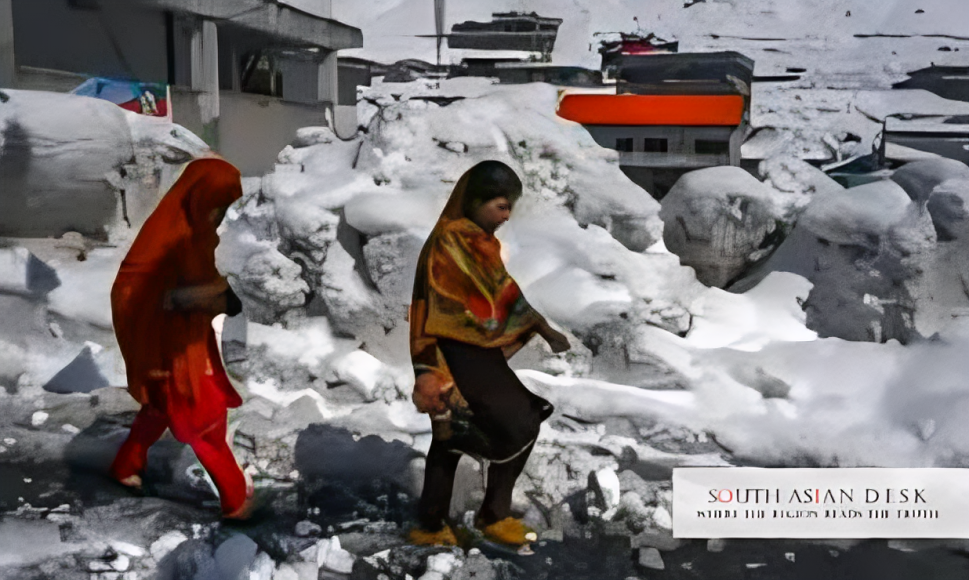
Heavy snowfall in Pakistan has disrupted daily life across Balochistan, Murree, and Gilgit-Baltistan, closing roads and causing power outages amid freezing temperatures.
Residents in snow-hit areas of Pakistan faced severe disruptions on Tuesday as snowfall in Pakistan reached up to nine inches in Murree and six inches in parts of Gilgit-Baltistan. Freezing temperatures dropped below minus 15 degrees Celsius in upper regions, blocking key highways and isolating communities. Authorities issued advisories to avoid travel, with relief efforts underway to clear paths and support affected families.
This snowfall in Pakistan highlights vulnerabilities in remote South Asian highlands, where harsh winters exacerbate challenges for disaster-prone populations. In a region reliant on seasonal tourism and agriculture, such events strain infrastructure and heighten risks of food shortages and health issues, underscoring the need for robust disaster preparedness across Pakistan and neighbouring areas.
Heavy Snowfall in Balochistan Disrupts Traffic
Heavy snowfall in Balochistan struck Quetta and surrounding areas overnight into Tuesday, blanketing the region and halting routine activities. Officials reported snowfall starting around midnight in Quetta, continuing until noon with brief intervals. Ziarat received intense accumulation, leading to the closure of the Quetta-Ziarat Road and suspension of all traffic.
In other parts of Balochistan, snowfall affected Zhob, Muslim Bagh, Qila Abdullah, Chaman, the Khojak Pass, Kan Mehtarzai, Khanozai, Toba Kakari, Toba Achakzai, Qila Saifullah, Harnai, Duki, Sanjavi, Mastung, Kalat, Surab, Noshki, Dalbandin, and Taftan. The Quetta-Zhob-Dera Ismail Khan highway saw hampered movement due to snow and ice, impacting inter-provincial connectivity.
Residents in Quetta welcomed the break from a prolonged dry spell, but the heavy snowfall in Balochistan compounded difficulties for daily commuters and traders. Hanna Urak valley, 20 kilometres from Quetta, drew families despite the weather, though authorities monitored the situation closely.
According to the Pakistan Meteorological Department (PMD), a westerly wave influenced the upper parts of the country, contributing to this heavy snowfall in Balochistan. PMD data indicated moderate to heavy snowfall in isolated locations, with warnings of potential landslides and road closures extending into Wednesday.
Snow in Murree Draws Tourists Amid Safety Measures
Snow in Murree covered the hills with up to nine inches at the observatory and one to two inches in upper elevations. Temperatures plummeted to minus 3 degrees Celsius, prompting temporary traffic restrictions on the GT Road. The district administration reopened the route in the afternoon after snowfall subsided.
Deputy Commissioner Agha Zaheer Shirazi stated that vehicular movement was limited to locals and visitors with hotel bookings during the peak. The Murree Expressway remained operational, while main roads were cleared. Some link roads stayed under clearance due to lingering snow.
Divisional Commissioner Amir Khattak reviewed arrangements during a visit, directing machinery to stay active and roads to be opened promptly. He emphasised avoiding unnecessary closures and advised tourists to follow instructions, contact helplines, and steer clear of risky travel.
Hospitals in Murree operated normally with adequate medicine stocks, and no major electricity breakdowns occurred. The snow in Murree attracted visitors, but officials prioritised safety amid the ongoing snowfall in Pakistan.
PMD forecasted that the weather would clear by Wednesday morning, though temperatures might drop further. This aligns with broader patterns of snowfall in Pakistan affecting popular hill stations.
Freezing Temperatures in Gilgit-Baltistan Isolate Communities
Freezing temperatures in Gilgit-Baltistan intensified hardships as snowfall continued on Monday and Tuesday, bringing life to a standstill. Up to six inches fell in Skardu, Astore, Ghanche, Shigar, Kharmang, Hunza, Nagar, and Ghizer, with upper areas recording below minus 15 degrees Celsius.
Roads including the Karakoram Highway (KKH), Ghizer-Shandur Road, and Baltistan Road were blocked, suspending travel between Gilgit-Baltistan and other regions. Police reported slippery conditions and rockfall risks on the KKH’s Gilgit-Kohistan section.
Shafqat Ali, a resident of Astore, said road links to Shounter, Dasskharam, Tirshing, Rattu, Gultari, Minimarg, Bobin, and other areas were severed. In Hunza, Nagar, Shigar, and Ghanche, heavy snow made travel hazardous, isolating localities.
Earthquake-affected families in Chipurson and flood-hit communities in Ghizer faced worsened conditions, many in tents or temporary shelters. Ali Ahmed, a Chipurson resident, noted that over 200 families struggled since a recent earthquake, with snowfall in Pakistan hampering relief.
In Diamer, snowfall paralyzed upper areas like Tangir, Daril, Thak Babusar, and Goharabad, causing electricity outages and fears of food shortages. Ghizer officials reported cut-offs to Yasin, Phander, and Ishkoman.
Caretaker Chief Minister Justice (retd) Yar Muhammad directed the Gilgit-Baltistan Disaster Management Authority (GBDMA), district administrations, and Communications and Works Department to clear highways and mitigate damage. He urged residents to avoid travel and instructed departments to use all resources for public relief.
PMD reported cold conditions persisting, with temperatures at Leh minus 8 degrees Celsius, Gupis minus 6, and Skardu minus 5 on January 19. Recent forecasts warned of heavy snowfall in upper Khyber Pakhtunkhwa and Kashmir, potentially affecting Gilgit-Baltistan.
Background on Winter Weather Patterns
Pakistan’s northern regions experience annual snowfall, but this January 2026 spell follows a dry period, making impacts more pronounced. PMD attributed the event to a persistent westerly wave, leading to widespread rain and snowfall over hills in Khyber Pakhtunkhwa, Kashmir, and Gilgit-Baltistan.
Earlier in the month, on January 15, PMD noted very cold weather at tourist destinations. By January 22-23, heavy snowfall triggered avalanches in Serigal village, Damil area of Khyber Pakhtunkhwa, according to media reports citing PMD.
NDMA issued advisories on potential travel disruptions due to heavy snowfall in northern highlands, highlighting risks of landslides and road blockages. This snowfall in Pakistan fits a pattern of climate instability, with late-winter snow in rare areas signaling shifts, as per expert analyses.
What’s Next for Affected Areas
PMD predicts rain-wind and thunderstorms with snowfall over hills in Khyber Pakhtunkhwa, Kashmir, Gilgit-Baltistan, and upper Punjab through Wednesday. Heavy rain and moderate to heavy snow are expected in Chitral, Dir, Swat, Kohistan, Mansehra, Abbottabad, Shangla, Battagram, Buner, Galliyat, Kashmir, and Gilgit-Baltistan.
Authorities anticipate continued efforts to restore connectivity, with GBDMA and NDMA coordinating relief. Tourists should monitor updates, as freezing temperatures in Gilgit-Baltistan and snow in Murree may persist briefly.
Communities brace for potential shortages, while the government emphasises timely measures. This snowfall in Pakistan may ease drought concerns but requires vigilant monitoring to prevent further disruptions.
As snowfall in Pakistan subsides, focus shifts to recovery and preparedness for future spells.
Published in SouthAsianDesk, January 28th, 2026
Follow SouthAsianDesk on X, Instagram and Facebook for insights on business and current affairs from across South Asia.