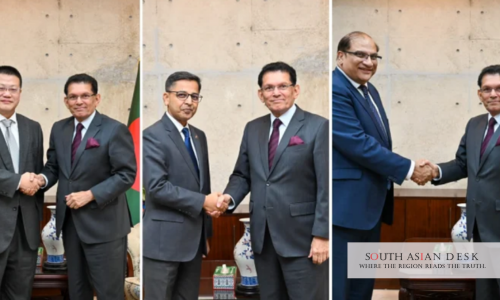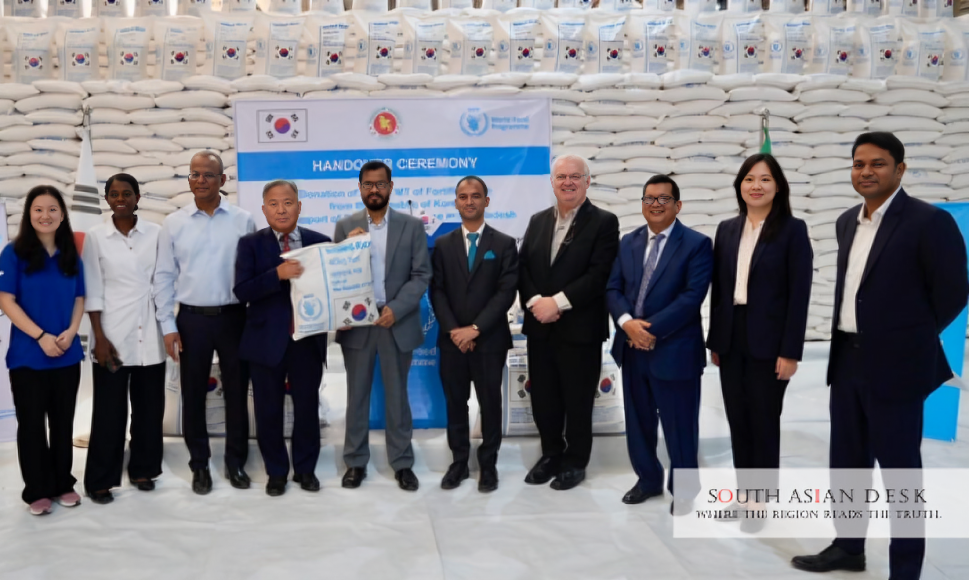
South Korea rice donation Rohingya refugees received a major boost on Wednesday when the Republic of Korea handed over 20,265 tonnes of rice to the World Food Programme (WFP) in Bangladesh. The ceremony at WFP’s Alongkar Warehouse in Chittagong marked the second such contribution this year, following 15,000 metric tonnes in 2024. Officials from Bangladesh’s Ministry of Disaster Management and Relief, the Korean embassy, and WFP attended the event, timed with Korea’s Farmers’ Day on November 11. This aid targets over 1.1 million Rohingya in Cox’s Bazar camps, where acute hunger affects 40 per cent of the population.
Korea 20000 Tonnes Rice Rohingya Refugees Enhances Nutrition
The South Korea rice donation Rohingya initiative includes fortified rice kernels blended at a 1:100 ratio with regular grains. These kernels pack essential nutrients such as vitamin A, B1, B12, zinc, iron, and folic acid. Such fortification tackles malnutrition, vital for children’s cognitive growth amid the protracted crisis.
Dom Scalpelli, WFP Country Director in Bangladesh, hailed the gesture. “This generous donation from the people of the Republic of Korea is a powerful testament to their solidarity and compassion,” he said. “Their journey from receiving aid to becoming a valued donor is truly inspiring.” The shipment covers rations for the entire Rohingya population for nearly two months, easing pressure on dwindling stocks.
HE Young Sik Park, Ambassador of the Republic of Korea to Bangladesh, underscored Seoul’s commitment. “We are pleased to contribute to WFP’s lifesaving work in Bangladesh,” Park stated. “Decades ago, Korea was one of the largest recipients of WFP assistance. Today, we are proud to stand on the other side – as a committed donor supporting those in need.” This aligns with Korea’s broader pledge of 150,000 tonnes of rice to WFP operations across 17 countries in 2025.
Md Mostafizur Rahman, Secretary of Bangladesh’s Ministry of Disaster Management and Relief, expressed gratitude. “We thank the Republic of Korea for being a steadfast partner in the Rohingya response,” he noted. “As humanitarian funding continues to decline while needs rise sharply, this contribution is both timely and vital.” Rahman called on global donors to ramp up support for sustainable solutions.
WFP Korea Rice Aid Bangladesh Camps Addresses Rising Needs
WFP Korea rice aid Bangladesh camps forms a cornerstone of the humanitarian response. The organisation distributes the rice alongside e-vouchers, allowing refugees to buy vegetables and proteins. In Cox’s Bazar, home to 33 camps, over 130,000 new arrivals have fled Myanmar’s Rakhine State since early 2024 due to escalating violence.
The 2025 Integrated Food Security Phase Classification (IPC) report paints a stark picture. It projects 446,000 Rohingya – 40 per cent of the total – in severe food insecurity. Nearly 223,000 face emergency levels (IPC Phase 4), risking famine without intervention. South Korea fortified rice Rohingya crisis intervention counters this, providing 420 grams per person daily when blended.
Logistics ensure swift delivery. Rice from Korean farmers ships from Gunsan Port, undergoes quality checks, and arrives in Chittagong. WFP handles blending and trucking to camps. “Every grain of rice reflects your hard work and kindness,” said Mohammad Rokibul Alam, WFP Bangladesh Programme Officer. This process supports not just survival but dignity for stateless families.
Bangladesh hosts the refugees under immense strain. The government allocates land and resources, yet funding gaps loom. WFP’s 2026 outlook signals disruptions from April if pledges falter. Korea’s aid bridges this, but experts warn of broader shortfalls.
Fortification’s Role in South Korea Fortified Rice Rohingya Crisis
Fortified elements in the South Korea rice donation Rohingya shipment combat micronutrient deficiencies. Children, comprising half the camp population, suffer stunting rates above 30 per cent. Iron and folic acid prevent anaemia; vitamins bolster immunity against camp diseases like diarrhoea.
Shinjae Kim, Director of Global Agricultural Development at Korea’s Ministry of Agriculture, Food and Rural Affairs (MAFRA), explained the shift. “Having transformed from an aid recipient to a donor country, the Republic of Korea is deeply committed to giving back,” Kim said. MAFRA oversees procurement from farmers like 85-year-old Suwoong Han, who endured post-war hunger. “Hunger is one of the most difficult hardships to endure,” Han reflected. “I truly understand what it means to be hungry.”
Angie Lee, Director of WFP’s Seoul Global Office, praised the reliability. “Korean rice is a lifeline for some of the world’s hungriest people,” she affirmed. “We are grateful for this vital and predictable contribution, which delivers not just food, but hope.” In 2025, this reaches over eight million vulnerable individuals globally.
Background: The Enduring Rohingya Plight
The Rohingya crisis erupted in 2017, driving nearly a million across the border after Myanmar’s military crackdown. Now in its ninth year, voluntary returns remain elusive amid Rakhine conflicts. Camps sprawl over 13 square kilometres, with bamboo shelters prone to fires and floods.
WFP has delivered 2.5 million tonnes of food since 2017, yet rations dipped to 60 per cent in 2024 before partial recoveries. Korea entered as a donor in 2018, scaling up threefold. This latest South Korea rice donation Rohingya underscores evolving partnerships.
Md Morshedur Rahman Talukder, Director of the Myanmar Wing at Bangladesh’s Ministry of Foreign Affairs, valued the ties. “We deeply value the Republic of Korea’s steadfast partnership with Bangladesh,” he said. “We also express our sincere appreciation to the ROK for supporting humanitarian and diplomatic initiatives concerning the Rohingya issue.”
Refugee voices echo relief. Leila, a mother of five who fled in 2017, recalled last year’s batch. “It was very tasty… I thank the Korean people for the rice,” she shared. Such stories humanise the data, highlighting aid’s tangible impact.
What’s Next: Sustaining the Momentum
As winter approaches, camps brace for colder nights and higher illness rates. WFP plans nutrition drives alongside the Korea 20000 tonnes rice Rohingya refugees allocation. Yet, long-term repatriation hinges on Myanmar’s stability.
The South Korea rice donation Rohingya effort signals hope, but calls intensify for $593 million in 2026 funding. Dom Scalpelli urged action. “WFP remains steadfast in our commitment to both communities, but we urgently need additional support.” Bangladesh and partners eye multilateral talks to advance durable solutions.
In a region where displacement ripples from Myanmar to India, this aid reinforces South Asian resilience. The fortified grains may nourish bodies, but collective resolve feeds futures.
Published in SouthAsianDesk, November 12th, 2025
Follow SouthAsianDesk on X, Instagram, and Facebook for insights on business and current affairs from across South Asia.