Pakistan, Bangladesh, and India rush Sri Lanka cyclone aid to Cyclone Ditwah survivors, deploying rescue teams and 200+ tons of supplies as death toll nears 410 and 1.4 million face displacement.
Pakistan dispatched a 47-member urban search and rescue team to Sri Lanka on 3 December 2025 via C-130 aircraft. Bangladesh sent 10 tons of emergency relief aboard a C-130J the same day. India deployed teams alongside Sri Lanka’s forces. Cyclone Ditwah struck on 28 November, killing 410 and displacing 233,000. The UN activated coordination systems. Sri Lanka declared a state of emergency. This aid addresses urgent needs in flooded districts. How will it aid recovery?
Sri Lanka cyclone aid from South Asian neighbours bolsters regional resilience against climate threats, fostering unity in the Bay of Bengal basin where cyclones disrupt millions annually and test shared resources.
Sri Lanka Cyclone Aid: Regional Response Accelerates
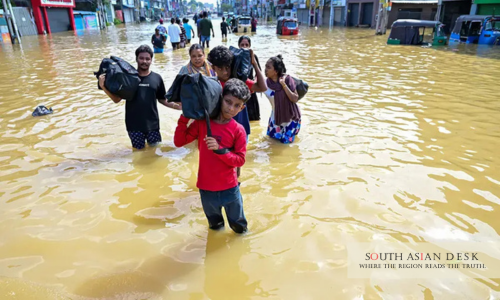
Sri Lanka cyclone aid mobilised swiftly after Cyclone Ditwah’s landfall. The storm triggered floods and landslides across 25 districts. Over 407,594 families suffered impacts. The Disaster Management Centre reported 565 houses destroyed and 20,271 damaged. Nearly 1,441 shelters housed 233,000 displaced.
The UN’s Office for the Coordination of Humanitarian Affairs tracked 998,918 affected by 1 December. Access challenges persisted along the Kelani River near Colombo. Northern districts like Jaffna faced power and communication blackouts. Clean water shortages raised health alarms.
President Anura Kumara Dissanayake appealed for international help on 30 November. “This is the largest and most challenging natural disaster in our history,” he stated. The government requested food, medical supplies, and shelter aid. UN agencies scaled responses with partners.
South Asia cyclone Ditwah support emerged as a priority. Neighbours coordinated via bilateral channels. The UN in Sri Lanka praised the efforts. “India and Pakistan have deployed emergency teams to work alongside Sri Lanka’s armed forces in the worst-hit districts,” OCHA noted on 1 December.
Pakistan Aid to Sri Lanka Cyclone: Rescue Team Deploys
Pakistan aid to Sri Lanka cyclone focused on search operations. A 47-member urban search and rescue team left Islamabad on 3 December aboard a Pakistan Air Force C-130. The group included experts in debris clearance and victim extraction.
NDMA Chairman Lt Gen Inam Haider Malik oversaw the dispatch. “Pakistan has committed all-out support since 28 November when the cyclone impacted Sri Lanka,” he said at a ceremony. The team will operate in central hill districts like Badulla and Kandy, where landslides claimed most lives.
Pakistan sent 200 tons of cargo on 2 December, including tents, food, and medicines. Parliamentary Affairs Minister Tariq Fazal Chaudhry attended the send-off. “Everything that is possible for the government of Pakistan to do will be done. We stand with you in these testing times,” he affirmed.
Prime Minister Shehbaz Sharif ordered full backing. Radio Pakistan reported his grief over the deaths and directive for ongoing relief. The mission aligns with Pakistan’s history of cyclone responses, drawing on experience from 2022 floods.
The team remains deployable as long as needed. NDMA coordinated with Sri Lanka’s Disaster Management Centre. This effort underscores Pakistan’s role in South Asia cyclone Ditwah support, aiding access to isolated villages.
Bangladesh Relief Cyclone Ditwah: 10 Tons Delivered
Bangladesh relief Cyclone Ditwah targeted immediate survival needs. A Bangladesh Air Force C-130J carried 10 tons of supplies from Dhaka on 3 December. Items included tents, dry food, mosquito nets, torchlights, gumboots, vests, hand gloves, rescue helmets, and medicines.
Air Commodore Mohammad Sahidul Islam led the 15-member crew, plus representatives from the Armed Forces Division and Ministry of Foreign Affairs. The flight delivered to Colombo and returned the same day. The Armed Forces Division supervised under government directives.
The Bangladesh Armed Forces issued a statement. They expressed hope the aid eases suffering for disaster-hit people. They reaffirmed commitment to global humanitarian causes. Sri Lanka’s Ministry of Foreign Affairs requested the assistance via the Bangladesh High Commission. Cyclone Ditwah left 334 dead and 200 missing by early December, per initial tallies. Over 20,000 homes damaged. Some 123,000 sheltered in government facilities.
This marks Bangladesh’s prompt response despite its own flood vulnerabilities. The relief supports water and vector-borne disease prevention, as warned by WHO. Bangladesh’s interim government under Chief Adviser Muhammad Yunus prioritised the mission.
South Asia Cyclone Ditwah Support: UN and Neighbours Unite
South Asia cyclone Ditwah support expanded through multilateral channels. The UN activated its emergency system on 30 November. UNICEF delivered water to 25 centres in Badulla. The International Organization for Migration provided non-food items to 209,000 displaced.
WHO released US$175,000 from its South-East Asia Regional Health Emergency Fund on 2 December. Funds target rapid response teams for health services and surveillance. “The funds will be used for rapid response teams to support essential health services for the affected communities, and for strengthening health information management and surveillance,” said Dr Rajesh Pandav, WHO Representative to Sri Lanka.
India pledged aid on 28 November. Prime Minister Narendra Modi expressed condolences on X. “In solidarity with our closest maritime neighbour, India has urgently dispatched relief,” he posted. Two military aircraft carried 21 tons on 29 November, plus six tons earlier. An Indian warship donated rations in Colombo. National Disaster Response Force teams joined rescues.
The US committed $2 million. Ambassador Julie Chung stated: “The United States stands in solidarity with Sri Lanka. Today, we are committing $2 million to support urgent relief efforts.” The UK allocated £675,000 via Red Cross and UN. China, Japan, Australia, and New Zealand followed with pledges.
Sri Lanka Red Cross Secretary-General Mahesh Gunasekara highlighted needs. “Relief needs have been increasing. After two days, water has still been swelling. Although the cyclone is slowly moving away from the country, it is not over for us yet,” he said.
Opposition leaders in Sri Lanka pushed for parliamentary debate on preparedness. A 2023 UNDP report noted 48.8% of Sri Lankans lacked disaster readiness.
Background
Cyclone Ditwah formed on 26 November offshore Sri Lanka’s southeast coast. The India Meteorological Department tracked its path. It intensified to 70-90 km/h winds before landfall near Batticaloa. Rainfall topped 300 mm in spots.
The storm crossed the island and re-entered the Bay of Bengal by 29 November. It weakened due to wind shear. Northeast monsoon rains worsened effects. Central hills saw 71 deaths in Badulla alone. Sri Lanka endured floods in the 2000s. Tourism and tea exports face hits from infrastructure damage. The Bay of Bengal generates 7% of global cyclones but 80% of fatalities due to population density.
What’s Next
Joint UN assessments shape a response plan. Rebuilding focuses on homes and roads. Health monitoring curbs outbreaks. Early warning systems may strengthen via SAARC. Sri Lanka cyclone aid from neighbours sets a model for future collaboration.
Published in SouthAsianDesk, December 3rd, 2025
Follow SouthAsianDesk on X, Instagram, and Facebook for insights on business and current affairs from across South Asia.