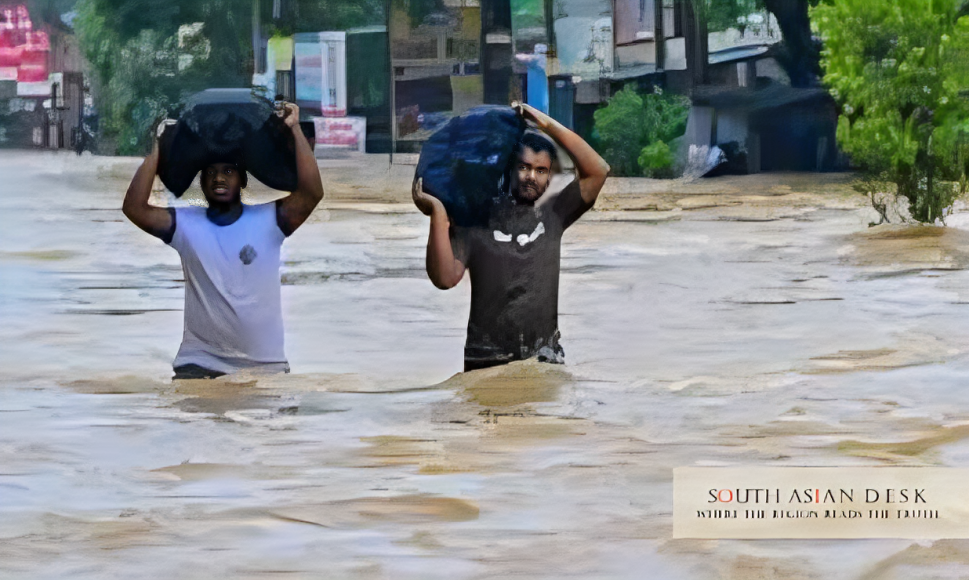
Colombo, Sri Lanka (South Asian Desk) – Fresh heavy rains battered southern and south-western Sri Lanka Cyclone floods recovery, which shows efforts just days after the storm claimed at least 486 lives. The cyclone made landfall on 28 November, unleashing floods and landslides that affected all 25 districts. Over 341 people remain missing, with 170,000 displaced into relief centres.
President Anura Kumara Dissanayake declared a state of emergency on Saturday to coordinate rescue and aid operations. How? Authorities deployed military teams for evacuations, while international partners provided supplies. The disaster marks Sri Lanka’s worst flooding in decades, straining resources amid economic woes.
This catastrophe underscores vulnerabilities in South Asia’s island nations, where climate-driven storms disrupt lives and economies. Cyclone Ditwah recovery Sri Lanka now hinges on swift global support to prevent disease outbreaks and food shortages. For Pakistan and India, neighbours with shared monsoon risks, the event highlights the need for regional disaster pacts. Sri Lanka’s plight could ripple through trade routes and remittances, affecting stability across the subcontinent. With reconstruction costs eyed at $6-7bn, the storm tests Colombo’s resilience and calls for unified aid from the Global South.
Death Toll Climbs Amid Sri Lanka Floods
The Sri Lanka floods death toll 2025 stands at 486 confirmed fatalities as of Friday, per government tallies, with 341 missing in landslide-hit central hills. The World Health Organization reported 410 deaths and 336 missing earlier this week, noting the toll’s rapid rise due to inaccessible areas. Floodwaters submerged Colombo suburbs and Gampaha district, where hospitals faced inundation and health services buckled under pressure.
Landslides in Kegalle and Central Province buried villages, complicating searches. Over 50,000 homes sustained damage, including 565 fully destroyed and 20,271 partially affected, according to UN data. Nearly one million people felt initial impacts, swelling to 1.4 million as secondary rains hit. Power outages persist in remote zones, with three-quarters of the grid restored by Thursday. Telecom lines in Central Province remain down, isolating communities.
President Dissanayake called the rescue “the most difficult in our nation’s history.” He announced compensation: LKR 25,000 ($83) for home clean-ups and LKR 2.5 million ($8,300) for rebuild starts. Essential services commissioner Prabath Chandrakeerthi leads distribution, prioritising water and medical kits.
Cyclone Ditwah Recovery Sri Lanka Faces New Hurdles
More than 130mm of rain fell in 15 hours on Thursday, triggering fresh landslides and halting road repairs. Friday forecasts predict 75mm in southern areas, keeping mountainsides unstable and barring home returns. Relief centres in Colombo and southern districts house 170,000, with UNICEF estimating 275,000 children among the affected.
Recovery crews cleared debris from Colombo streets but paused amid downpours. Military helicopters airlifted supplies to cut-off hills, where blocked routes delay aid. The UN’s OCHA activated emergency coordination on Sunday, mobilising teams for unified response. “We stand in solidarity with affected communities,” said UN Resident Coordinator Marc-André Franche.
Health risks loom large. Floods entered hospitals, disrupting care. WHO released $175,000 for rapid teams to bolster surveillance and prevent outbreaks. “The funds support essential services and disease detection,” said Dr Rajesh Pandav, WHO Representative to Sri Lanka. Nutrition and WASH clusters coordinate to avert cholera spikes in crowded shelters.
Economic fallout mounts. The cyclone wrecked infrastructure, including bridges like Deduru Oya in Kurunegala. Livelihoods in fishing and farming collapsed, with early estimates pegging damages at billions. IMF officials signalled extra support ahead of a 15 December board meeting. “We are looking into options for recovery,” said Julie Kozack, IMF Communications Director.
Pakistan Aid Sri Lanka Cyclone Bolsters Regional Ties
Pakistan aid Sri Lanka cyclone efforts underscore South Asian solidarity. Islamabad dispatched 200 tonnes of sea cargo on Tuesday, including tents and blankets, after air delays. A 47-member urban search and rescue team arrived via C-130, carrying 6.5 tonnes of gear. Pakistan Navy vessels joined evacuations in worst-hit zones.
Prime Minister Shehbaz Sharif vowed “all possible assistance.” “We dispatch urgently needed help and continue support as Sri Lanka recovers,” he said during a call with President Dissanayake. National Disaster Management Authority Chairman Lt Gen Inam Haider Malik oversaw the mission. “Pakistan committed full support since 28 November,” Malik noted at the send-off.
An additional 80 tonnes flew via SriLankan Airlines on Thursday, per NDMA statements. The aid targets flood victims in Gampaha and Kurunegala. Foreign Office confirmed the sea route ensured timely delivery despite logistics hurdles.
Other nations stepped up. China granted $1 million plus RMB 10 million in supplies, handed over by Ambassador Qi Zhenhong to Foreign Minister Vijitha Herath. “A friend in need is a friend indeed,” the statement read. Japan sent tents, blankets and a medical team via JICA. India deployed teams under Operation Sagar Bandhu, with Prime Minister Narendra Modi pledging solidarity. “India stands firm with Sri Lanka,” Modi told Dissanayake.
The influx aids Cyclone Ditwah recovery Sri Lanka but exposes coordination gaps. Volunteers in Colombo run community kitchens, churning meals for isolated families. Activists from 2022 protests now distribute food, bridging state efforts.
Background: Cyclone Ditwah’s Fury
Cyclone Ditwah struck eastern Sri Lanka on 28 November before looping into the Bay of Bengal. It dumped record rains, worst since the 2000s, per UN assessments. Northeast monsoons amplified floods, swelling rivers and triggering slides. All districts reported damage, from urban Colombo to rural Kegalle.
Sri Lanka’s fragile economy, hit by prior crises, faces added strain. The storm disrupted ports and power, echoing 2019 floods that killed 250. Climate experts link intensified cyclones to warming oceans, urging resilient infrastructure.
Government data from the Disaster Management Centre tracked rising river levels through Tuesday, with alerts issued hourly. By Wednesday, evacuations reached 233,000 into 1,441 shelters.
What’s Next for Sri Lanka Cyclone Floods
Authorities aim to restore full power by Sunday and reopen key roads. International donors eye a pledging conference next week. President Dissanayake pushes unity: “Set aside differences to rebuild.” With rains easing, focus shifts to reconstruction, but Sri Lanka cyclone floods linger as a stark reminder of climate perils. Long-term aid will shape the island’s path forward.
Published in SouthAsianDesk, December 5th, 2025
Follow SouthAsianDesk on X, Instagram, and Facebook for insights on business and current affairs from across South Asia.