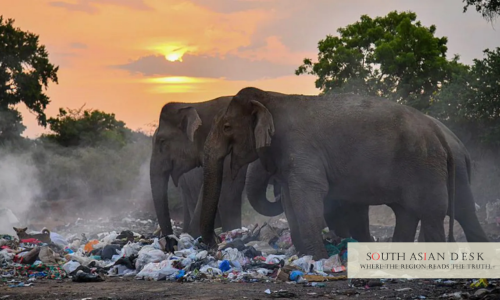
Sri Lanka elephant burning incident led to the arrest of three men on Thursday, December 18, 2025. Police detained the suspects after a viral video showed them setting a wild elephant on fire in the Mihintale area.
The men, aged 42, 48, and 50, face animal cruelty charges. Authorities remanded them until December 24. The elephant suffered severe burns and a gunshot wound before dying. Wildlife officials confirmed the animal had been shot first. Veterinary efforts failed to save it.
Details of the Sri Lanka Elephant Burning Incident
The Sri Lankan elephant burning occurred in Seepukulama village, Mihintale, within the Anuradhapura district. Villagers used flaming torches to chase the elephant away from the crops.
The male elephant, estimated at 50-55 years old and 9 feet tall, sustained critical injuries. A post-mortem revealed death from aggravated kidney and liver conditions, worsened by shock and burns.
Police acted swiftly after the video spread on social media. Mihintale Police identified and arrested the residents. The incident highlights extreme measures in human-elephant encounters. Farmers often resort to aggressive deterrence when elephants raid fields.
Sri Lanka Elephant Cruelty Arrests and Public Reaction
Sri Lanka elephant cruelty arrests followed widespread condemnation. The graphic footage triggered outrage among conservationists and the public.
Elephants hold a sacred status in Sri Lanka’s Buddhist culture. Laws protect them strictly. Killing an elephant carries the potential death penalty, though it is rarely enforced. The three suspects remain in custody. Investigations continue into the full circumstances.
This case underscores enforcement challenges. Protected status contrasts with frequent conflicts in rural areas.
Human-Elephant Conflict Behind Elephant Set on Fire in Sri Lanka
An elephant set on fire in Sri Lanka stems from escalating human-elephant conflict. Expanding agriculture encroaches on traditional elephant habitats.
Sri Lanka is home to approximately 7,000 wild elephants. Annual conflicts claim approximately 400 elephant lives and 200 human deaths over recent years. Farmers lose crops regularly. Elephants destroy paddy fields and home gardens in search of food.
Methods like firecrackers, explosives, and guns persist despite bans. Jaw bombs and shootings contribute to elephant deaths. Deforestation accelerates the problem. Loss of forest cover forces elephants into villages.
Conservation groups advocate non-lethal solutions. Electric fences, community patrols, and crop insurance gain traction. Tourism relies on elephant sightings. Incidents damage Sri Lanka’s reputation for its wildlife. Regional parallels exist in South Asia. India and other nations face similar conflicts.
Background to Sri Lanka Wild Elephant Killed Cases
Incidents of Sri Lanka’s wild elephants being killed occur amid rapid habitat fragmentation. Development projects reduce corridors for migration. Historical reverence for elephants coexists with modern pressures. Cultural festivals feature captive elephants, drawing separate criticism.
Government initiatives include the construction of elephant fences and translocation efforts. Effectiveness varies across regions. Anuradhapura, the site of the Sri Lankan elephant burning, lies in the dry zone with high conflict rates.
Past years saw train collisions and poisonings. Nearly 400 elephants died in 2025 from various causes, many human-related. Conservationists advocate for stricter penalties and increased education. Community compensation schemes aim to reduce retaliation.
International support funds mitigation projects. Long-term solutions require land-use planning.
What’s Next After Sri Lanka Elephant Cruelty Arrests
Court proceedings for the Sri Lankan elephant cruelty arrests are set to begin soon. Prosecution seeks maximum penalties under wildlife laws.
Authorities may expand probes if more individuals are involved. Community awareness programmes intensify in affected villages. Wildlife department plans enhanced patrols. Drone monitoring and rapid response teams deploy in hotspots.
The Sri Lanka elephant burning case prompts policy review. Sustainable coexistence strategies gain urgency.
Public pressure demands accountability. Intense action deters future cruelty. This Sri Lankan elephant burning tragedy exposes ongoing tensions. Balanced approaches protect both humans and elephants in the shared landscapes of South Asia. Renewed commitment from all stakeholders remains vital. A peaceful resolution benefits both communities and conservation.
Published in SouthAsianDesk, December 19th, 2025
Follow SouthAsianDesk on X, Instagram, and Facebook for insights on business and current affairs from across South Asia.